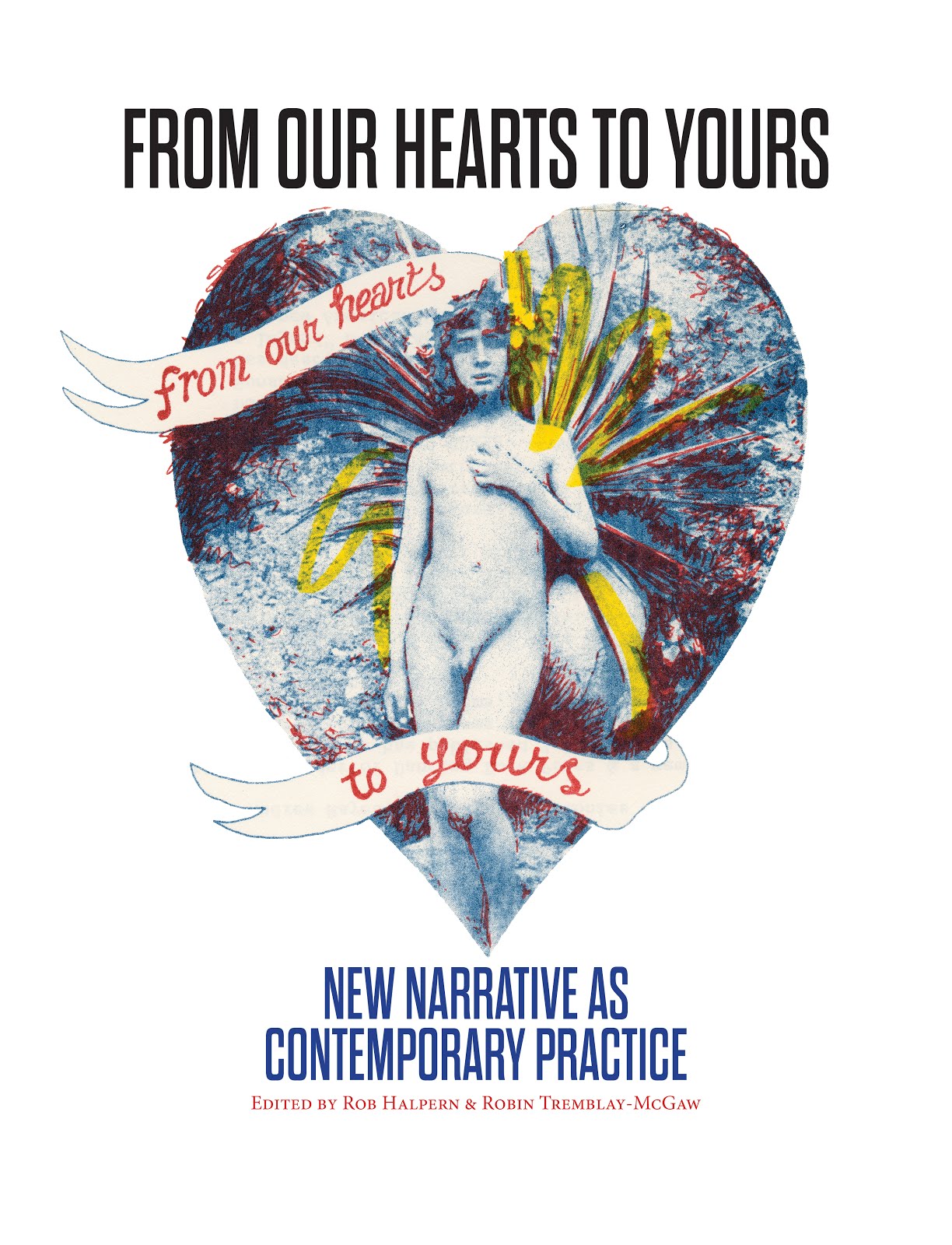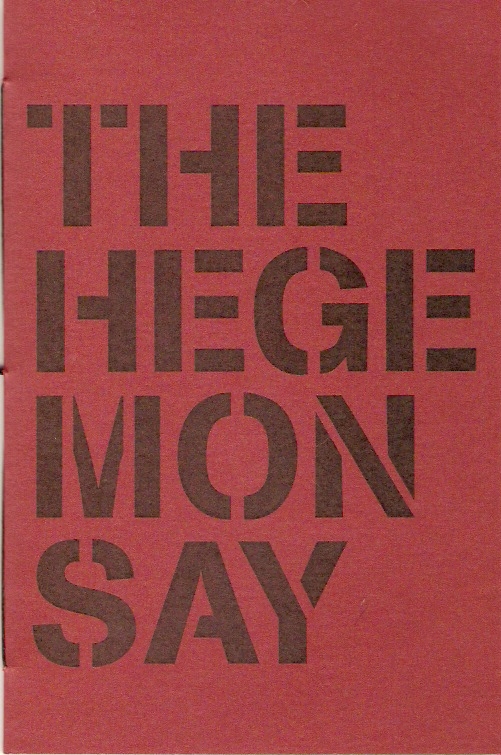
I am very
excited to announce the publication of Occupy Poetics, a collection of
writings, interviews, and statements that I produced with many others between
the fall of 2011 through the winter of 2014. Thank you to Andy Fitch and the staff at Essay Press for taking on
this project as part of their incredible chapbook series. I am profusely
grateful to my many collaborators and interlocutors in this book, for their
original participations and for allowing me to reprint their words: Brian Ang, Steve Benson, Ana Božičević, David
Brazil, Brandon Brown,
David Buuck, Anelise Chen,
Stephen Collis, Lara Durback, Jack Frost, Dan Thomas
Glass, Evan Kennedy, Ben Kinmont,
Lauren Levin, Richard
Owens, Jen Scappettone,
Suzanne Stein, Anna
Vitale, Jeanine Webb, Kathy Westwater,
and Brian Whitener. Occupy everything!
Wednesday, September 16, 2015
Friday, September 11, 2015
ATTN 1
The first issue features contributions from Amanda Ackerman, Harold Abramowitz, Will Alexander, Kimberly Alidio, Andrea Beltran, Sarah Campbell, Jessica Ceballos, Chen Chen, Ching-In Chen, Chiwan Choi, Norma Cole, Allison Noelle Conner, Beverly Dahlen, Janet Dandridge, Michelle Detorie, Spencer Dobbs, Thom Donovan, Julia Drescher, Rachel Blau DuPlessis, Esperanza, Susan Gevirtz, Robert Glück, Whit Griffin, Donald Guravich, Rob Halpern, Jen Hofer, Brenda Iijima, Bhanu Kapil, John Keene, Gelare Khoshgozaran, Kim Koga, Joanne Kyger, Sueyeun Juliette Lee, Aditi Machado, C.J. Martin, Cassie Nicholson, Connor Nicholson, Duncan Nicholson, Maximo Spinoza Ontiveros, Maryam Parhizkar, Kristin Prevallet, Andrea Quaid, Eléna Rivera, Carlos Soto Román, Jocelyn Saidenberg, Ash Smith, Margaret Tedesco, Shannon Tharp, Anne Waldman, Alli Warren, and Jane Wong.
Wednesday, August 19, 2015
Eleni Stecopoulos' VISCERAL POETICS for PRE-ORDER

ELENI STECOPOULOS’ VISCERAL POETICS
FOR PRE-ORDER
Pre-order pricing
$45 institutions
$25 individuals
Send cheques (payable to Michael Cross) to
ON Contemporary Practice
2556 Frances Street
Oakland, CA 94601
Pay online via Pay Pal at
https://on-contemporarypractice.squarespace.com
An inquiry into the languages of bodies and the bodies of languages, Eleni Stecopoulos’ Visceral Poetics enacts literary scholarship as somatic practice. Opening new directions in poetry and poetics as well as literature and medicine, Stecopoulos argues for the body’s poetic agency, for a criticism viscerally attuned to the treatments of language, and for a different understanding of the therapeutic potency of art.
Visceral Poetics articulates a remarkable field of correspondences between the formal and linguistic techniques of modern writers and the modalities and diagnostic techniques of holistic medicines. Focusing on works by Antonin Artaud and Paul Metcalf that connect voyage to somatic transformation, Stecopoulos illuminates a history of quests to heal what she calls “the chronic syndrome of the West.” Stecopoulos also enlists her own experiences with medicine in a dialogue between treating texts and treating one’s body. Blending virtuosic close readings, performative writing of the author’s encounters with diverse healing systems, interdisciplinary research, and poetry, Visceral Poetics gives us a body that can “overwrite discourses of pathology with currents of empathy.”
In new readings of some of the most opaque elements of Artaud’s oeuvre, Stecopoulos explores his collaboration with pain and use of energetic principles derived from modalities like homeopathy and acupuncture. She revisits the poetry and “translation therapy” of Artaud’s asylum years, understanding his exoticism as a technology of healing through world languages. Stecopoulos animates the complicated role of Artaud’s multiethnic background and ties his translations to histories of linguistic imagination situated in colonial encounter and nationalist and imperialist strategies. Visceral Poetics also includes one of the few sustained meditations on Metcalf’s documentary narrative Genoa: A Telling of Wonders, a hybrid text that becomes a navigation of Western disease and the imperial conceptions to which American letters bear witness.
A critique both of the ways institutions disembody us and the primitivism that persists in heterodox seeking, Visceral Poetics undertakes a profound journey through language and energy, kinship and estrangement. It joins the tradition of American poets’ scholarship exemplified by Charles Olson’s Call Me Ishmael and Susan Howe’s The Birth-mark, yet does something uniquely its own—a grand refusal of the division between who feels and who interprets.
Stecopoulos’s book is the second in ON Contemporary Practice’s Monograph Series, which features extensive essays and collections by single authors as well as collections by multiple authors regarding discourses in contemporary poetics.
PRAISE FOR VISCERAL POETICS
Eleni Stecopoulos is singularly aware of a healing power in poetry that touches the most obscure depths of our carnal existence. She seeks to uncover “how the body in its opaque poetry can be homeopathically treated by poetry—as aesthetic, not anaesthetic, therapy.” Eleni Stecopoulos’s researches open an important field for investigation and practice: the healing force of language, of poetry.
- Alphonso Lingis
Searching in real time, thinking/feeling as writing, this tour de force of authentic scholarship reaches far back to the matrix of writing/embodiment at the crux of human consciousness, far forward into a modernism (Artaud, Metcalf) that explores the edges of such embodied writing, and in all directions as Stecopoulos’s every insight emerges from and remains immersed in a surround of the immediately personal. This is a lyrical study of great depth, an epic poem of experiential erudition.
- Maria Damon
Eleni Stecopoulos’s brilliantly provocative, syncretic manifesto identifies idiopathic disease with ideolectical poetics, pathology with anomaly – the flesh of the text and the text of the flesh – bringing home the liberatory potential for visceral readings of the unintelligible. For Stecopoulos, diagnosis is a practice of aesthetic translation and poetry a quest for knowledge outside the disabling strictures of Western rationalism. Written in lyric bursts of telegraphic intensity, Stecopoulos follows her guides, Artaud and Metcalf, through veils of suffering in order to repossess, from the jaws of evisceration, her own life – and ours.
- Charles Bernstein
In a thick rich book of Artaudian trickster moves, Eleni Stecopoulos performs healing rituals upon medical practices and cultural prescriptions, writing toward her own healing process, with opacity as sustaining wayfarer and shield against early collapse. Disease emerges as narrative symptom for disconnect, and language becomes subtle homeopathy, weaves a new myth, for suffering writers and suffering war-torn worlds, in a visceral poetics based on Artaud’s asylum writings: “a rhythm of exorcism against the drying out of opium by conspiracies and consecrations” (Artaud, Selected Writings).
- Petra Kuppers
Experience what “radiates from a text,” “the gravity at the core of theater” in this long awaited critical work from Eleni Stecopoulos, the genesis of her Poetics of Healing—a curated series of stages in which these ideas are enacted and the isolated patient finds place in a complicated communal as both are changed. Placing the psychic reading of the body that refuses with will next to the reading of poetries claimed unreadable, she makes a document of vital forms for a new kind of scholarship, for a new and ancient kind of person or poet one and the same in the hopes that they won’t be re-swallowed by the dominant but will find their own breath. A breath that will resist and resist singularity and in the failures or blocks, the resetting, find the choral-tragic—through a different kind of reading/witnessing. The violences of a larger social body made visible though a syncope pressing right up against poetry. In this epic lyric, everything and nothing at once. In “a form that holds, rather than explains”—the mystery of how this beautiful important project came to be.
- Melissa Buzzeo
The central question of Visceral Poetics is how to be. How to be a body. How to be a body in pain, a body not in pain. How to be a thinker, a scholar, a writer about literary works. How to be a poem too. It is unusual for a piece of literary criticism to take on such weighty questions. And Eleni Stecopoulos gives us no easy answers as she consults various forms of literatures and healing, questioning all of them and her relationship to them too. And as she does this she writes a book that is beautiful and moving, a life’s work dedicated to the work of living.
- Juliana Spahr
Wednesday, August 05, 2015
Hiroshima-Nagasaki feature (essay)
HIROSHIMA, AUGUST 6, 1945 // NAGASAKI, AUGUST 9, 1945—the August 2015 issue of Evening Will Come (The Volta), feat. correspondence, drawings, essays, interactive erasures, journal entries, music, photography, poems, remembrances, sculptures, songs, stories, talks, and translations, by Etel Adnan, Jeffrey Angles, Roland Barthes, Daniel Borzutzky, David Buuck, Don Mee Choi, Dot Devota, Thom Donovan, Rokusuke Ei, April Naoko Heck, Brenda Iijima, Hiromi Ito, Joy Division, Yukiyo Kawano, Erika Kobayashi, Eve Andrée Laramée, Kenji C. Liu, Kyo Maclear, Wong May, John Melillo, Collier Nogues, Orchestral Manoeuvres in the Dark, Tomoe Otsuki, Ryuichi Sakamoto, Brandon Shimoda, Karen McAlister Shimoda, elin o'Hara slavick, Hiroshi Sunairi, Itaru Takahara, Roberto Tejada, Jalal Toufic, Hannah Weiner, Elizabeth Willis, Kenji Yanobe, Yasuhiro Yotsumoto, and Raúl Zurita. Photograph (above) by Shōmei Tōmatsu. Designed by Afton Wilky.
Thursday, June 18, 2015
Future Citizen (statement)
for TTTV's X21 series
Last year I was abroad
for most of the summer. One’s relationship to the US changes as soon as you
step outside of its borders. I resume a process of knowing what I do not know
when I am outside this deeply colonized and colonizing place. Outside, as Heriberto Yépez says, its dominant logic of “cybermnemetics” and
“neomemory” (if an outside can in fact really any longer exist in a thoroughly
Americanized global context). When I was in Germany, the wealthiest of all the
countries in the European Union, I witnessed—via the Internet—Palestinian
bodies described as “telegenically dead” by the Prime Minister of Israel. In
tandem, I watched Black bodies in the US routinely executed by police and the
reactions to these executions and the acquittal of the officers who would
perpetrate them by the people of Ferguson, Missouri. I still wonder how poetry
can bear witness to violence.
I still wonder whether it
can. There was a time when I posed this question—what is the relationship between poetry and witness?—in terms of
aesthetic form. Something in, say, Steve Reich’s “Come Out” does something to
my body to undergo the bodies of others when tape loop echoes and desynchs from
tape loop. Something happens in the ear itself, in the neurology of the hearing
process, which is both formal and physiological and cultural. Like hearing
one’s hearing themselves hearing. Like overhearing one’s self as a social
actor. Art and poetry I still think can bear witness in this way—“To make the
bruise blood come out.” To draw to the surface what must be felt in the (social)
body in order to create conditions for empathy—and a reaction to one’s empathy
that reactivates our senses of responsibility. This becoming visceral to the
pain of others. I still believe that art/poetry can perform this function. And that
it is not enough. The 21st Century requires that I put my own body,
ideas, emotions, time, breath, and resources on the line in order to build
relationships of solidarity and kinship with those who would attempt to usher
in (revolutionary) change—change that reorders the violent structures of our world.
This cannot happen on the page alone. It cannot only happen through discourse. It
has to happen somewhere else, somewhere that I believe poetry and art can still
condition, but that poetry and art
themselves can only rarely effect. Call this a commons, an ante-public space, or
a fugitive public, or the social body. Can poetry, in the words of BIFO,
reunite the general intellect with a social body, our technological and
epistemological capacities with a commons? Given the limited capacity of individuals,
I believe that it is crucial that one think about the decisions they make with
regards to who and what they publish, what they curate, what editorial projects
they take on, how they navigate various institutions, what materials they teach
as well as how they teach them, and how they conduct themselves in public
forums. These decisions contribute to a micropolitics; a non-official (or
non-statist) politics of collective enunciation. If one has the capacity to do
nothing else, it is to shape existing organizations and conversations and
create new ones that need to be had. It is also to make visible those who have
been submerged and displaced on account of violence and to withdraw one’s own
subjectivity when necessary. One can, one must in
fact, yield/wield their resources and appropriate agency for others. This is especially true
of those with privileges based on their gender, ethnicity, race, sexuality,
and/or class background. One needs to interrogate the value of their own
practice for the communities and discourses they would feel it most urgent to
serve. How do our words intend to affect others? Words also fuck us up. Words
also kill. And they redouble the violence of what or who has already been
killed. I don’t want words to redouble the objects of our despair. Which is not
an avoidance or sublimation of what is fucked up, but also not its miming,
however “radically.” Whether intended or not—and it would seem to me a mixture
of the two—Conceptual Poetry’s most visible practitioners have shown themselves
to be either ignorant or negligent to a broader context regarding race in the
US currently. This is a flaw not just of the person or their stated theoretical
positions, but their aesthetic. An aesthetic that redoubles the objects of our
despair. An aesthetic that re-kills. Last summer, when I was abroad, I wrote a
poem that drew upon the media environment of the Ferguson event as represented
on the Internet and via Twitter and Facebook. Looking at it again now, a flood
of images return. Not just images, but ideas. Not just ideas, but feelings. The
tear is still an intellectual thing. This poem has never been published except
on my weblog, but I feel a certain relief that it exists, if only as a
placeholder for thinking and feeling through things for myself. Perhaps this is
the first decolonizing gesture—writing the poem to explore the limits of one’s
own beliefs, feelings, thinking. To realize the vast extent of one’s ignorance
(and/or negligence). To push up against that limit (as though the first form
that resistance can take). Where we also acknowledge our culpability for what
we don’t know. And we recognize willful ignorance as an expression of malice. The
poem is a site of knowing what we don’t know and thinking through how this not
knowing can effect how we conduct ourselves in the world. What we say about our
work and our intentions for our work matters too. Not just as a rhetorical
performance, or as a denegation (speaking of things so as to not have to speak
about them), but as something that also reveals the limits of our understanding
and the integrity of our thinking. Something that, in other words, also
re/kills or chooses not to re/kill, that redoubles the objects of our despair
or attempts to transform a ubiquitous and unmitigated violence. I want to
oscillate the making of the poem—the poem that is often intuitive, and semi-discursive,
and gestural, and incomprehensible—with a more self-conscious work of social
practice, whether teaching, organizing, curation, parenting, editing, studying,
or an infinite number of daily activities.
The poems become
theoreticians directly in their immediate practice.
Tuesday, June 16, 2015
Discussion with Margarita Sánchez Urdaneta
Margarita Sánchez Urdaneta will screen her film Mouth Filled Ash. The work reflects on how accounts of forced disappearances, mass graves, and terror tactics are obtained and framed in Colombia. Margarita Sánchez Urdaneta will be joined by the Thom Donovan in an examination of the relationship between accountability and forensics.
The event is organized in conjunction with the Whitney Independent Study Studio Program Exhibition, on view June 9 - June 27, 2015 at EFA Project Space.
Tuesday, May 19, 2015
Interview with Maj Hasager
http://www.akademiesolitudeblog.com/2015/05/19/reopened-city/
"I do believe in a sort of
slow art, at least in terms of production, and your framing of »an art that is
careful to use time itself as a means of overcoming exploitation and
expropriation« resonates very well with my thinking around methodologies.
Specifically in the sense that there can be an alternative to the rush of newness
in the art world—both in terms of production of objects as commodities as well
as in relation to sociopolitically engaged art practices that can easily be
highly commodified as well. Working conditions for artists or any other
cultural producer often equate to a very short time frame and little pay to
develop substantial projects. I would say that to me, the artistic process is a
long-term commitment to people and places in order to be able to listen
carefully to their personal narratives, to gain a larger understanding of a
specific historical and cultural background—which does not necessarily stem
from my own cultural background and experiences—before making a visual and
textual interpretation.”—Maj Hasager
Subscribe to:
Posts (Atom)