The problem of discourse pragmatics has troubled poetry for some time. By discourse pragmatics I mean the same thing as when Wittgenstein writes “language games”. That is, what does it mean to speak in a certain way, through a certain set of rules, in a particular situation of address. Discourse pragmatics, as a problem in poetry, is here to stay. In fact, it may be the problem poetry is most suited to address, if not solve.
Why is this? Because page poetry (poetry that is written for the page) if it is relevant, is constantly concerned with the ways that it can mean, and beyond meaning, evoke discourse. By recognizing ways that it can mean it is not merely acting contemplatively or descriptively, but as a form of action. I believe this fact is what Gertrude Stein gets at through much of her writing, but especially in her lecture “Composition as Explanation”. It is also a problem often noted throughout George Oppen’s work, not least of which in his daybooks and papers where the poet speaks of the difference between political activism and poetic action:
"I think the question asked more frankly would be: is it more important to produce art or to engage in ˆtake political actionˆ. Of course I cannot pretend to answer such a question. I could point this out, however, that art and political action are in precise opposition in this regard: that it can always be quite easily shown that political action is going to be valuable; it is very difficult to ever prove that it has been in the past ˆthat political action has been valuableˆ. Whereas art is precisely the opposite case; it seems always impossible to prove that it is going to be valuable, and yet it is always quite clear that in the past it has been. ˆthe art of the past has been of value to humanity. I offer it only as a suggestion that art lacks in political action, not action. One does what he is most moved to do.ˆ" (Daybooks, 89; crossed-out passages have been indicated by bold font)
Certainty, as far as I understand it in Wittgenstein’s context, concerns the ways that belief, knowledge, and experience involve action, decision-making, and consequence. Why would we write anything if we didn’t mean it? Why would we say anything if we didn’t intend those words to have an effect?
It would be naïve to believe that the poet intends everything they write. But writing is a matter of craft, and craft is a problem of intention. When I write something I do not always know where the writing is going to lead me (in this way all writing is “experimental,” to use a term popular nowadays); but I do know that to continue writing will reveal what it means to write anything in time.
If one loves the world, poetry (or philosophy) will be just a small part of what they do. It will be a guide to action. It will be an action, that is, that can ground other actions, meanings, experiences, understandings, interactions. For me, personally, the poem is a learning tool, a processing device, a lab experiment, a disclosure of experience, a way of telling someone I am in love with them, or they are friend, or to fuck-off; it is also an ethic, insofar as it allows differences to enter into thought-processes that are not normally permitted, or allowed to be expressed adequately otherwise. I hope that my poems may give others pleasure, and be open to others’ experience, however indeterminacy is not the intention of my work. If anything, to reach the indeterminate, I believe one tends to do so only through a more rigorous mediation of their materials whether by procedure or the intensification of their practice via research, conversation, and further thinking.
In the past thirty years, the United States has been under attack from within. This attack has been political, economic, and legal. It has also been immensely cultural. The perpetrators of this political and economic attack include, primarily, our politicians and the economic superstructure that has put them into power. During this time, it seems no coincidence that the poetry that has been most popular, and garnered the most support from our politicians, is one whose battle cry is “common sense”. Most of these poets who call for a common sense—our laureates, for one—are poets that have opposed our politicians through their vote and through public statement. Yet, the fact that they have power and wield what power they have in the ways that they do makes them complicit with those powers that they would oppose in their statements about politics and through their votes. That these poets do not tend to equate language power—and the powers of poetry specifically—with political power, seems unforgiveable after the past century of political error.
But any poetry that really matters, any cultural production for that matter, overturns common sense for the sake of common sense. That is, it does not take common sense as a priori—something that is given within a culture facilitated by language—but questions language as the very ground for all experience whether ontological, political, ethical, legal or otherwise.
When I think of our various laureates of the Bush years, I lament that a poet like Robert Creeley, or Nathaniel Mackey, or Anne Waldman, or Susan Howe (for only four of many possible candidates) should not have become our national laureates instead of Billy Collins, Louise Gluck, Mark Strand and others. The fact that such poets should have become laureates, and come to champion common sense is a travesty for our country. It is concomitant with the other disasters the world has faced at the hands of United States.
The only poetry or art that should matter (and I would separate the status of poetry and art right now insofar as art has become a major commodity, while poetry remains something less valued as a commodity by our culture) is that vetted by a culture that cares about the history of poetry and art, and that makes work from the ground up—from the very ground that language is. This is different than producing a poem which can be understood by the most number of people, and is therefore populist in the most vulgar of ways.
Poetries create the conditions necessary to change culture, and via culture larger spheres of social activity, organization, consciousness, and behavior. In order to have the culture we want, we must also scrutinize the role of the arts, and the privilege of the poet to speak as both a member of a specialized discourse (poetry), and as a citizen who wishes to present their special view of the social through the ways they use language. All of this goes against one traditional view that poetry is useless, merely a luxury/leisure activity. Poetry may not be instrumental—or should not be—but has use value insofar as it provides a readership with a way to ground experience in language in both critically reflective and sensual ways. When poetry fails to ground language in such ways, a culture has failed. Despite the proliferation of poetry in the past thirty years, poetry culture and the culture at large have failed as such.
Think poetry, act locally. Those who love poetry’s prospects to change culture will organize for poetry at a local and personal level, recognizing all the while that advancing poetry is not what is in question as a goal or result. Rather, what is in question, is the transformation of culture through the ways language and other cultural valuables are used.
The organizers of this symposium have asked us to comment on the role of poetry in terms of "witness". To close, I think that bearing witness is one of the great values of poetry. This is because the problem of witness is always a problem of how language use establishes justice adequately. While many poets have sutured legal and poetic language games in the past century with very good reasons, this task of the poet goes on. What language expression can possibly present the case of those unlawfully detained, or displaced because of U.S.-centric geopolitics, or the victim of racial, class, gender, and sexual discrimination? The solution is not merely to elegize or represent the oppressed as so many poems do, but to act, gesture, perform, and present the case of how language itself has created the conditions for injustice that could produce a need for witness. By such means would poetry, or any language-based practice, create the conditions for justice and better living for all. How this happens happens through the most personal, intersubjective, and roundabout of means.
Sunday, April 05, 2009


Friday, April 03, 2009
from On Certainty
97. The mythology may change back into a state of flux, the river-bed of thoughts may shift. But I distinguish between the movement of the waters on the river-bed and the shift of the bed itself; though there is not a sharp division of the one from the other. [...]
99. And the bank of that river consists partly of hard rock, subject to no alteration or only to an imperceptible one, partly of sand, which now in one place now in another gets washed away, or deposited.
99. And the bank of that river consists partly of hard rock, subject to no alteration or only to an imperceptible one, partly of sand, which now in one place now in another gets washed away, or deposited.
Damn the Caesars blog
For those who may not have noticed it yet, Rich Owens has been publishing some substantial reviews and notes at his mag's blog, Damn the Caesars, including this one on Rob Halpern's and Taylor Brady's collaboration, Snow Sensitive Skin:
http://damnthecaesars.blogspot.com/2009/01/gaza-today-again-snow-sensitive-skin.html
and this on Michael Cross' In Felt Treeling:
http://damnthecaesars.blogspot.com/2009/03/michael-cross-in-felt-treeling-working.html
http://damnthecaesars.blogspot.com/2009/01/gaza-today-again-snow-sensitive-skin.html
and this on Michael Cross' In Felt Treeling:
http://damnthecaesars.blogspot.com/2009/03/michael-cross-in-felt-treeling-working.html
Wednesday, April 01, 2009
On Certainty
 Christopher Stackhouse has generously invited me to read work, and discuss Wittgenstein's On Certainty. I appreciate very much the opportunity to focus attention through a single text, and cross-examine problems shared by poetry and philosophy...
On Certainty - Readings at Bose Pacia
Saturday, April 4, 2pm-5pm
Thom Donovan
John Keene
Stuart Krimko
Katy Lederer
Organized by: Christopher Stackhouse
The readings will take place at:
BOSE PACIA
508 W 26th St 11C
New York NY 10001
This presentation is part of the project "On Certainty" curated by Sreshta Rit Premnath. More info here: www.oncertainty.net
“Lack of clarity in philosophy is tormenting. It is felt as shameful. We feel: we do not know our way about where we should know our way about. And nevertheless it isn’t so. We can get along very well without… knowing our way about here.”
“…In any serious question uncertainty extends to the very roots of the problem.”
-from “Remarks on Colour,” Ludwig Wittgenstein
“On Certainty” includes a group show, a new issue of the magazine Shifter (co-edited by the participating artists), and a series of public dialogues with economists, neurologists, physicists and writers. The participants contemplate the notion of certainty and its sibling, uncertainty: How and why do we constitute a unified self from which to speak and construe meaning in this world? When we say, “I know…” with certainty, what do we mean?
The title of the show, lifted from Ludwig Wittgenstein’s posthumously published book, signals our attempt not only to investigate knowledge and factuality, but furthermore, to interrogate the statement “I saw it with my own eyes.” What is the position of the witness (who represents an event) and the authentic subject (who represents a group) in knowledge production?
The interdisciplinary programming of the lecture series reflects the curatorial desire to use the gallery as an intellectual commons. As Edward Said has said, specialization sometimes “means losing sight of the raw effort of constructing either art or knowledge,” and by opening up an interdisciplinary conversation we hope to investigate the “choices and decisions” that produce these knowledges, and their certainties.
Thom Donovan
John Keene
Stuart Krimko
Katy Lederer
Organized by: Christopher Stackhouse
The readings will take place at:
BOSE PACIA
508 W 26th St 11C
New York NY 10001
This presentation is part of the project "On Certainty" curated by Sreshta Rit Premnath. More info here: www.oncertainty.net
John Keene
John Keene is the author of the award-winning novel Annotations (New Directions, 1995), and of the poetry collection Seismosis (1913 Press, 2006), with artwork by Christopher Stackhouse. He has published his fiction, poetry, essays and translations in a wide array of journals, including African-American Review, AGNI, Encyclopedia, Gay and Lesbian Review, Hambone, Indiana Review, Kenyon Review, New American Writing, and Ploughshares.
Stuart Krimko
Stuart Krimko is the author of Not That Light (2005) and The Sweetness Of Herbert (forthcoming), both published by Sand Paper Press, Key West. In 2005 he received a grant from The Fund for Poetry.
Katy Lederer
Katy Lederer is the author of the poetry collection, Winter Sex (Verse Press, 2002) and the memoir Poker Face: A Girlhood Among Gamblers (Crown, 2003), which Publishers Weekly included on its list of the Best Nonfiction Books of the Year and Esquire Magazine named one of its eight Best Books of the Year. Her second poetry book, The Heaven-Sent Leaf was published by BOA Editions in the fall of 2008.
Tuesday, March 31, 2009
Help Flux
Flux Factory, an artists collective and artist-run center, is seeking volunteers to help build its new communal home. Starting April 1st we will be renovating an 8,000 square foot building in the heart of Long Island City, Queens. The move follows our eviction from our former home this fall due to expansion of the Long Island Railroad. Our facilities will include work studios and offices for artists of all walks, a communal computer lab/office, woodshop, silk-screening facilities, two galleries, shared kitchens and bathrooms, and (for at least a little while) a three-story tall conveyor belt. We’re also hoping to set up a communal roof-top garden (even though we don’t know much about that and could use help). We are a community of artists, cultural producers, musicians, and all around awesome folks with gumption and enthusiasm. We're working under the direction of experienced Green contractors, though we'll be doing most of the work ourselves. We will be using as much salvaged and recycled material as possible. Volunteers with experience and with their own tools are especially welcome, but more important is enthusiasm and a willingness to get dirty. We’ll be offering guidance and construction workshops. We will need help with light duty demolition, sheet rocking, mudding, painting, flooring, cleaning, organizing, carrying stuff around and soon. If you don't want to get you hands dirty, we also need help trying to collect material donations from building supply companies. At first,we will need lots of administrative help (getting companies to give us free drywall, etc). There is always physical work to do, but this is important, too! We are also in need of tools, vehicles and building material donations. We will begin renovations on our new building starting April 1st 2009. We’ll be working most days throughout the spring months and would love your help at any point. You will be showered with rewards such as endless gratitude, pizza, occasionally brunch and beer (once all the power tools are put away for the day), and maybe art. If you want to get on the volunteer list, email jean [at] fluxfactory [dot] org with short answers to the questions listed below. We'll be sending out construction schedules and signing people up weekly. See you on the job. Flux Factory
Saturday, March 28, 2009
Interview with Cory Arcangel at MUSEO/11

Here is a link to an interview I conducted with Cory Arcangel for MUSEO magazine this past fall: http://www.museomagazine.com/11/main/
Friday, March 27, 2009
After Joe Dante (Deadpan)

-for Dottie, on her birthday
Nothing will beget nothing here across the
Distance of these thresholds remembering
Them posing tourists in another summer
Before terrorism or your youth outgrows
Itself swerves in another glass no memory
Will capture the summer here ways a sun
Doesn’t seem to comprehend things the
Eyes say to us at night cross like neighbors
My (Joe) Dante flings over this cartoon stru
ggle abysses nation the fantasy called nation
A way our childhoods flee from us like the
Wish had already come true flowers bloom
In retrospect suppress the wind everyone is
Evil writing their private poems addressing
Them if this is the address you meant to send
Me too will you be a Beatrice of sorts among
More desirous Gizmos Gitmos Quiznos this
Past week was the 20th anniversary of the
Exxon Valdez spill dear Orientalist dear neg
ative stereotyping you make our dreams come
True a cartoon coming on my head makes all ideas
Veritable the mirrors around our past booty call
This body when there is nothing to control no
More no more remote controls called subjects
Just this panning of the camera without an
Object upon which to rest its focus just this
Feedback cranked up beyond recuperation
Just this feeling no where left to go except
Up into singularity or poverty the gutter or
A c boundary where your former wishes are
Former selves and seeing ghosts is pretty
Much our everyday as one is not I anyway
Or we or the dead or any name we shall become
In the fire of our wishing in time that we
Should be called by but unheard we will
Not hear it called back by governmentability
Memories and screen fantasies approximate
Experience over-socialize another vision
A Baroque in love with their shadows again.
Tuesday, March 24, 2009
Atticus / Finch d.a. levy lives Event


Boog City presents
d.a. levy lives: celebrating the renegade press Atticus/Finch Chapbooks (Seattle) Tues., March 31, 6:00 p.m. sharp, free ACA Galleries 529 W. 20th St., 5th Flr. NYC Event will be hosted by Atticus/Finch editor Michael Cross
Featuring readings from
Thom Donovan Judith Goldman David Larsen Kyle Schlesinger
with music from
Julian T. Brolaski
There will be wine, cheese, and crackers, too.
Curated and with an introduction by Boog City editor David Kirschenbaum
------
**Atticus/Finch Chapbookshttp://www.atticusfinch.org/
Atticus/Finch balks emphatically at faux notions of newness. Rather, they present to you beautiful and affordable editions in the splendid aura of their fresh new-ity. Help them help you rabidly consume the future of poetry as it unfolds before your very eyes. They greatly appreciate your patronage.
*Performer Bios*
**Julian T. Brolaski http://www.atticusfinch.org/brolaski.htm
Julian T. Brolaski is the author of the chapbooks Hellish Death Monsters (Spooky Press, 2001), Letters to Hank Williams (True West Press, 2003), The Daily Usonian (Atticus/Finch, 2004) and Madame Bovary’s Diary (Cy Press, 2005) (under the name Tanya Brolaski) and Buck in a Corridor (flynpyntar, 2008). Brolaski received an MFA from Mills College and is a PhD candidate in English (UC Berkeley). Brolaski lives in Brooklyn where xe is writing xir dissertation on rhyme in medieval, Renaissance and Apache poetries.
**Thom Donovan http://whof.blogspot.com/
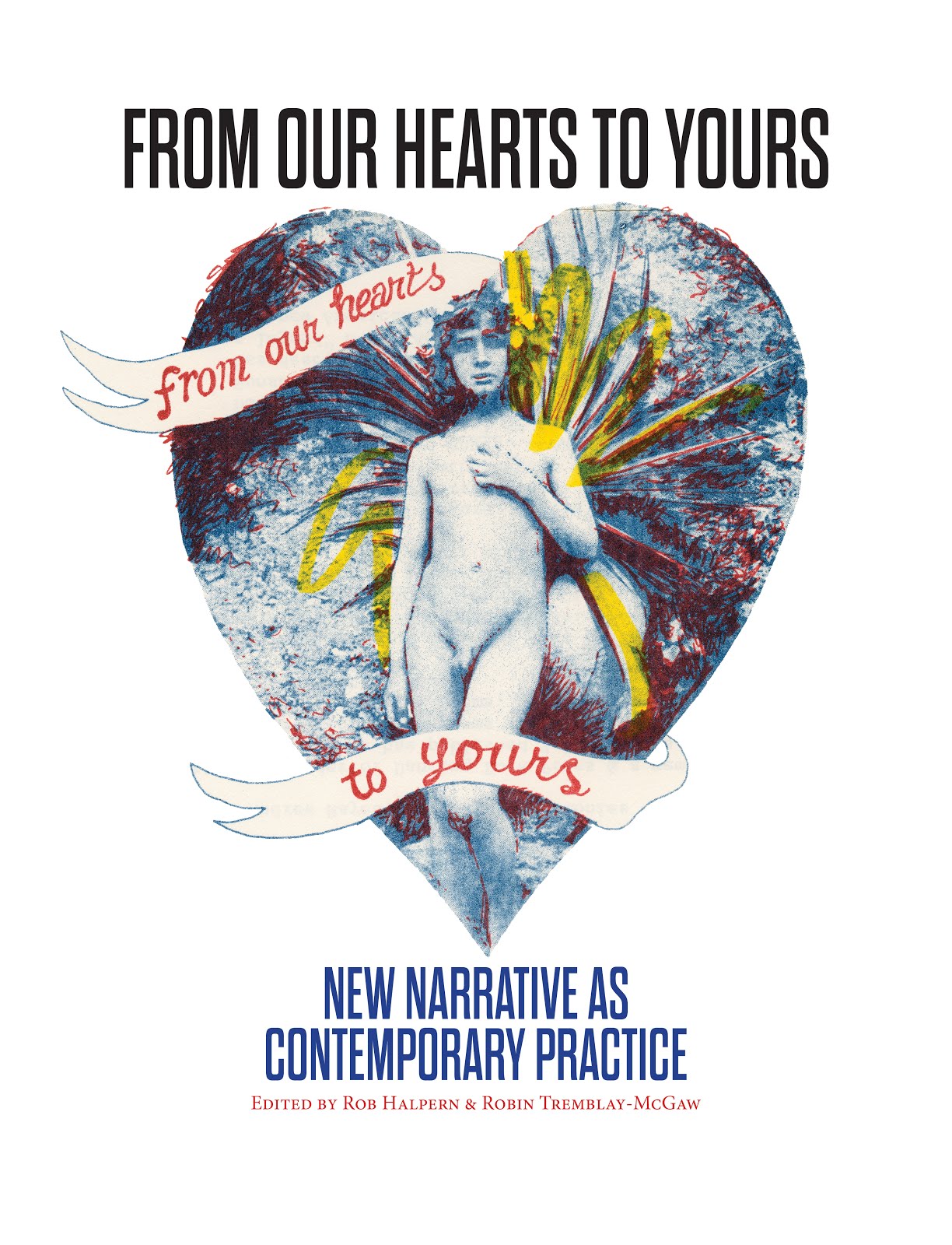
Thom Donovan is an ongoing participant in the Nonsite Collective, coedits ON Contemporary Practice, the first issue of which can be purchased now at SPD, edits Wild Horses of Fire weblog, and curates PEACE events series. His poems and critical writings have been published variously, including his Atticus/Finch collaboration with Kyle Schlesinger, Mantle.
**Judith Goldman http://www.obooks.com/books/death_star.htm
Judith Goldman is the author of two books of poetry, Vocoder (Roof) and DeathStar/Rico-chet (O Books), and the co-editor, with Leslie Scalapino, of War and Peace, an annual anthology of experimental writing against the war. Her chapbook The Dispossessions is forthcoming from Atticus/Finch.
**David Larsen http://www.spdbooks.org/Products/11908/the-thorn.aspx
Newly relocated from San Francisco's Bay Area, David Larsen is pursuing a career in postgraduate studies. His first book of poetry is The Thorn (Faux Press), and will soon be joined by his translation of Names of the Lion by Abu Abd Allah ibn Khalawayh (Atticus/Finch). From 2005-2007 he was co-curator of the New Yipes reading/video series at Oakland's 21 Grand.
**Kyle Schlesinger http://www.kyleschlesinger.com
Kyle Schlesinger’s books include The Pink, Hello Helicopter, and, with Caroline Koebel, Schablone Berlin. With Thom Donovan and Michael Cross, he edits ON, a poetics journal that focuses on contemporaries. He is the co-author, with Thom Donovan, of Mantle (Atticus/Finch).
----
Directions:C/E to 23rd St., 1/9 to 18th St.Venue is bet. 10th and 11th avenues
Next event:
Tues. April 28 Bird Dog magazine (Seattle)
--David A. Kirschenbaum, editor and publisher Boog City 330 W.28th St., Suite 6HNY, NY 10001-4754 For event and publication information:http://welcometoboogcity.com/T:
(212) 842-BOOG (2664)
Saturday, March 21, 2009
A helpful article on AIG at Democracy Now!
I found this article helpful for thinking about the recent AIG scandal in perspective:
http://www.democracynow.org/2009/3/19/the_great_american_stickup_veteran_journalist
http://www.democracynow.org/2009/3/19/the_great_american_stickup_veteran_journalist
Lionel Ziprin (1925-2009)

Thanks to Kyle Schlesinger for passing on word of Lionel Ziprin's passing. Ziprin, to my mind, was a great mystic and poet:
http://www.nytimes.com/2009/03/21/arts/21ziprin.html?ref=arts
Ziprin at UBU web: http://www.ubu.com/aspen/aspen9/sentential.html
Friday, March 20, 2009
Our Liquid Asses
to David Buuck
"mapquest/google-earth still believes the building hasn’t even burned yet"
Our liquid assets as the map
Make a poor front, its bubbles
Back-firing, bottoming-out
Pour forth in a gift economy
Whereever is the fairest faucet.
"mapquest/google-earth still believes the building hasn’t even burned yet"
Our liquid assets as the map
Make a poor front, its bubbles
Back-firing, bottoming-out
Pour forth in a gift economy
Whereever is the fairest faucet.
Thursday, March 19, 2009
Peterson on Bryant in Boog City
Tim Peterson has written a concise review of Tisa Bryant's book, Unexplained Presence for Boog City. You may check out Wanda Phipps on Stephanie Gray's Heart Stoner Bingo while you're at it...
Tuesday, March 17, 2009
America
-to Lawrence, Rob, and Robert
Yes, get
back
in that
“burning
plane” of
national
discourse
and news a
techno-
logy we
barely know
what a
body can
do there
is no
facility in
dying
fuck the
War on
Terror
America
your citiz
ens are
dying as
they al-
ways have
of what
could not
be said
without
effort or
they
couldn't
have known
what worlds
can be
get back
in that plane
it’s too
late to be
conditional
or eroti
cize these
bodies re-
moved
from our
domestic
wastes what-
ever we
wanted the
future to
have been
penetra-
ting
every body
every
blank in
history
being I
being you.
Monday, March 16, 2009
Sunday, March 15, 2009
Raised on Rap Music

I can appreciate this article by Chris Martin abt "avant rap". It wld be great to get others' takes on rap in fact, knowing it to be a much bigger influence on contemporary poetry than it's been given credit for... Michael Cross? Paolo Javier? Brandon Brown? ...wanna field this one?
Saturday, March 14, 2009
The Obsolescence of Lyric
-for Rob Fitterman and Rob Halpern
Antinomy is our coming
Which flips the record again
Revealing the blankness
That was our remembrance
A condition of remembrance
Whomsoever owns the air
Rights to element who will be subject
Some ways that we remained
In common when the bottom
Falls out who will be hailed
Rogue names put the capital here
Put their hands on economy
As though to heal our simple
Confidences
What voice of lyric what
Voices would resist the doing
Should syntax still be a sacrifice
Like cutting off one’s limbs
While still alive isn’t that
How Rimbaud put it before
He became an arms trader?
I want to amputate this voice
Disable a hole and occupy
What bright absence sensing
You were nearby like a fence
Around a ruin your cool arms
A certain area in a public air
What I dragged around the corpse
Of concepts brand name terrain
Video flashing just far away enough
To seem sublime along the overpass
Where it throws these voices a form
Of night shall lose control
Affect floats before it becomes
Fossilized estranged like bits
Floating lower and lower to
The Logos what rips forms faster
Than the master where the master should be
In all this “experiment”
Lose your taste for poetry
Words won’t be saved
Only your love may be saved
Only what little lights
Of the subject
What work undoes
Place-holders like one
Was the man on their throne
I spits up ways you have identified it
In relation to them
I is flexible, resilient in this chatroom
A social network recedes
And would mean paradise for whom.
Friday, March 13, 2009
Rob Halpern's Disaster Suites is NOW OUT with Palm Press

Below is the ad for Disaster Suites sent to me by Jane Sprague at Palm Press, plus a little excerpt from a double review I wrote last fall for the Poetry Project Newsletter (now available online in a PDF format) on Rob's book and Brett Evans' and Frank Sherlock's Ready-to-Eat Individual...
New from Palm Press:
Disaster Suites by Rob Halpern
"A paradox sets these disquieting Disaster Suites into motion. They produce a music--missing in the count now counts as one--reaching for the disappearance of the conditions that make it audible: war, so-called natural catastrophe, a public sphere where there is no / Public. As in the songs of William Blake and the sci-fi of Octavia Butler, these Suites sing against their own beauty and their seemingly perpetual present, which is why they seem so strangely archaic and futuristic at once.
In complex patterns of meter and rhyme, Disaster's "I" summons its own kind of "counting" against the physics of finance and exchange. Yet the music that results can only be heard--the drowned and the bombed--in between and against the other tracks which Halpern intricately lays down: the signing of capital, the burble of mass media, the daily noise of bodies who work, fuck and love. This stunning book made me fall in love with lyric poetry all over again."
—Sianne Ngai
"It’s hip to be deaf to the larger sounds of our time because the hip want a party, not THIS WORLD as it is! Fuck THAT! I want THIS poetry where the atonal crisis wails and sputters. Negotiate with yourself, it’s your life, in our world, at the line, and the next line of Halpern’s amazing book. Gross profits and grotesque guilty pleas align with the knife here. The stress of our injuries, you can feel your body ache while reading, now leave us to it Halpern, you’ve done your job better than anyone else could! I’m grateful for these poems."
—CA Conrad, author of Deviant Propulsion
"That disaster could be arranged—in the musical sense—for a human voice would be a thing too dreadful to celebrate were it not a realization of what it means to be an instrument of history. In Rob Halpern’s Disaster Suites, the lyric I is a disturbed, disturbing presence in a world we recognize as inadequate but ours, its song a reminder of our dreadful yet beautiful potential."
—Benjamin Friedlander
Disaster Suites by Rob Halpern
Poetry
Paper, 86 pages
Palm Press
ISBN 978-0-9789262-6-7
$15.00
www.palmpress.org
Palm Press titles are also available through SPD, Small Press Distribution.
"While in Ready-to-Eat Individual there is a sense that one is being invited into a local conversation, full of anger and frustration and concern, but also emboldened by a sense of solidarity—that people are bound together by the same fucked-up situation—it may be interesting how Rob provides a similar feeling in Disaster Suites, however in a non-localizing way. While Brett and Frank overcome the hardened, ironic voices of empire through a site-specific dialogue—the fact that their book prioritizes local particulars that necessarily touch other localities and global situations—Halpern allegorizes lyrical poetry’s complicity with an entire global network of social disasters which include Katrina, and even become determined by Katrina (Rob’s book was begun immediately after the storm, and completed as the first draft of a manuscript following the death of his close friend and colleague, kari edwards; Disaster Suites’ cover also features drawings, drawn from memory by the artist, after photographs of homes devastated by Katrina), but also encompass movements between sites, and beyond site itself towards all that is being made invisible, occulted by the fatal abstractions of capital.
To trace all that Disaster Suites relates would be too difficult a task for a short review like this one (please see my pieces at Wild Horses of Fire blog, at the Nonsite Collective’s website, and forthcoming at Jacket for more on Rob’s work). There is the Iraq war, the military-industrial complex, organ harvesting, genetic engineering, genetic modification of crops, land use, commodity exchange, labor exploitation—all of the bad effects of a beefed-up neoliberalism. But if I could emphasize a connection between these two books, it is the sense that both are searching for a new relationship between the writer/poem and reader, one mediated by affect, and the affective modalities, specifically, of one’s being related by inextricable disasters across an entire social nexus.
Through affection (which is not the antithesis of irony, and, in fact, probably its complement, or inversion) the form of the poem wants us to feel anew, as well as think anew through some felt aspect or tonality of the poem. Similar to some works by Robert Creeley, or the breeziness of much New Narrative, in the poems of Disaster Suites the reader finds themselves in the throes of a projectivist (that is, breath-based) negative dialectics. But whereas Creeley’s poetry is distinctly straight (despite recent attempts to queer it, such as in many of CAConrad’s wonderful poems from Deviant Propulsion, or Michael Davidson’s and Charles Altieri’s takes on Creeley and embodiment), Disaster Suites opens up to new erotic possibilities—erotic possibilities activated by Rob’s unique person of course, but also by an unprecedented historical situation that lyrical poetry and the arts at large are trying to respond to and find their way out of (as though from the singularity of a black hole). The wars in Iraq and Afghanistan, and forthcoming in any number of geopolitical “hot spots”; the intensifying regulation of social space; the Siren’s call of the mass media; the anesthetization of large parts of the population..."
—from the Poetry Project Newsletter, December/January 2008-2009
Thursday, March 12, 2009
Hollis Frampton back in print

Hollis Frampton's writings are finally back in print, after being out of print since the 80s. Don't be put off by the techey title. Some of the best writings by an artist about their art (photography and film). Right up there with Robert Smithson, among a handful of other gnomes...

Tuesday, March 10, 2009
OUR INSALVAGEABLE

I am very pleased to annouce the publication of my chapbook, Our Insalvageable, by the ever-mysterious Vigilance Society.
I am also heartened by Brenda Iijima's generous and concise feedback about the book, which I publish here with Brenda's permission:
"Epic, overwhelming terms are unmade by your delicate uncoiling into a social relation more personal, more local, more immediate than suspended, categorical formalisms. Your poems conjure what is on to and unto: to, until, by. The critiques that are felt here are somewhat obscured or belated by desires that reach out into participatory space seeking rather than proclaiming or stating. The statement being made is that these vital connections are conduits for activism to happen-or these relations are in themselves the activism. The fatalism of the singular despairing individual is rescued by these intimate social connections."
Rodrigo Toscano's write up of "Futurism and the New Manifesto"

Rodrigo Toscano has a useful write-up of the recent "Futurism and the New Manifesto" event at MOMA. Especially interesting is this statement from Luca Buvoli, and Buvoli's use of persons with "speech-difficultues" (aphasia, and other motor-coordination disabilities that affect speech) in his video animation of Marinetti's Futurist Manifesto:
“The centrepiece is the video animation Excerpts from: Velocity Zero, in which sections of the Futurist manifesto are read out loud by people with speech difficulties. The halting, difficult speech of the readers is contrasted with the values of speed and efficiency espoused by the Futurists. As the artist explains, “Marinetti’s original celebration of velocity and aggression from his Futurist text is neutralised by its readers’ speech disorders and my subsequent hand-drawn animation of the footage, which at times delays and overlaps images in mimicry of the Futurists’ representation of motion. The result is a sense of fragmentation and incompletion that parallels the struggle of the readers to capture the original text. The purpose of having the manifesto read by people with speech disorders was to utilise the difficulty of communication and the slowing of language in order to symbolically critique the rhetoric of velocity, aggression and violence in our society.”
Subscribe to:
Posts (Atom)