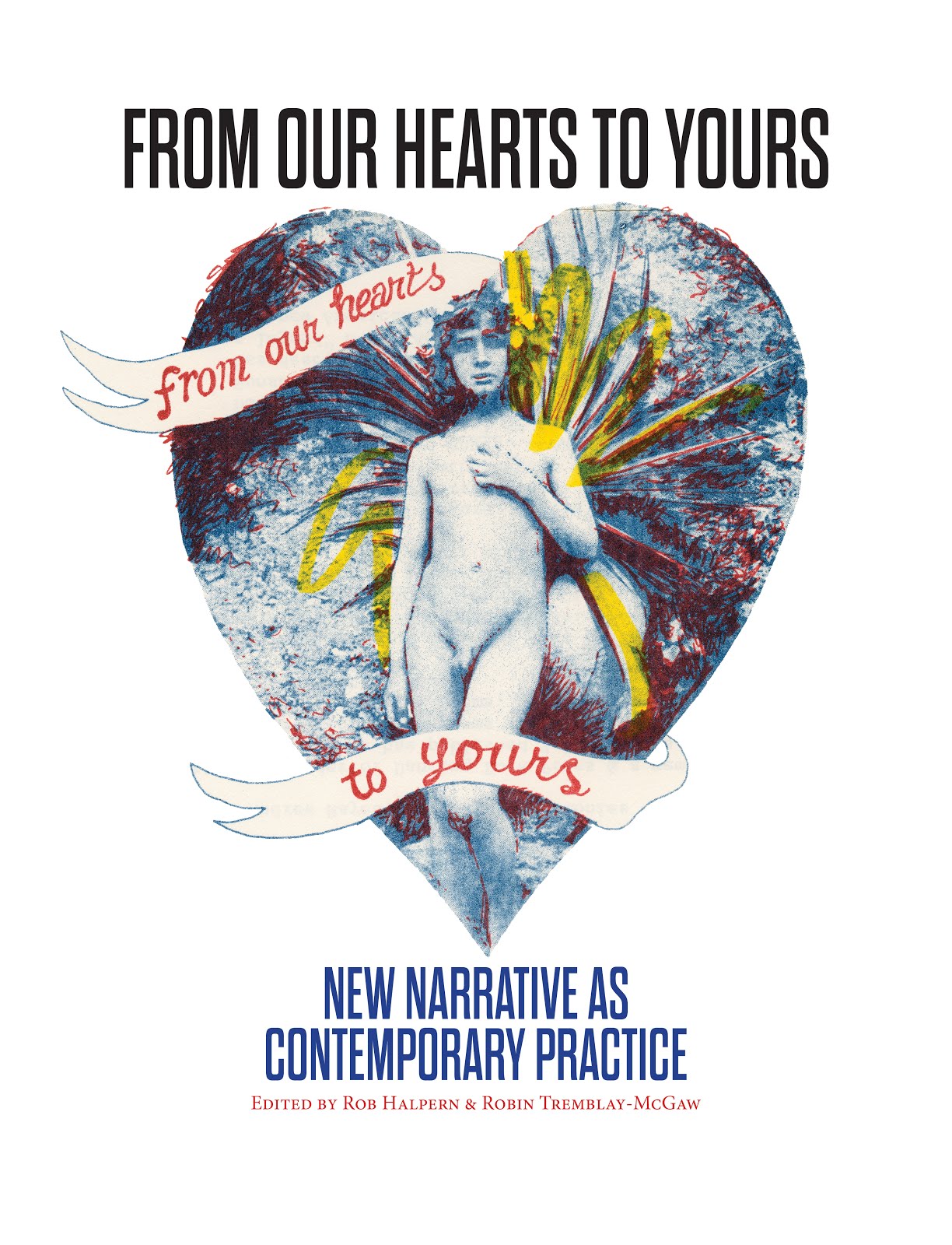
Wednesday, April 10, 2013


Monday, April 01, 2013
I Hope You Are in That Sun
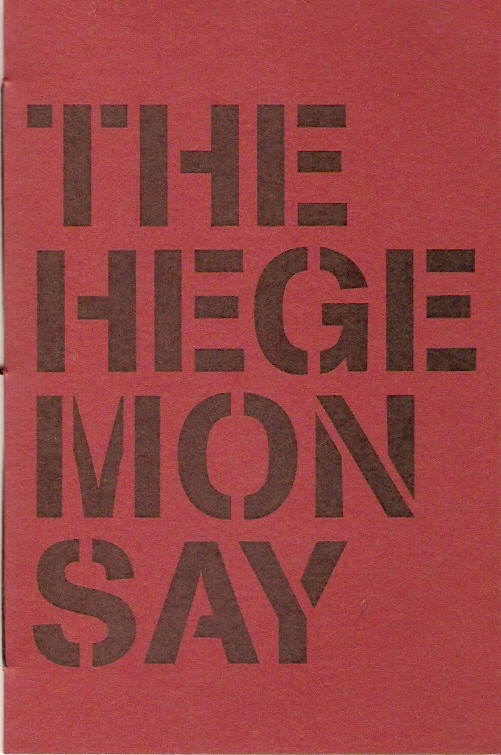
Burning your hegemony
In effigy to all
That is absent
Inasmuch as we are
But this skin of names
Burning on some
Other sound for now
In whose dreams
Did the sun appear
No sun at all
Like a light before
Light was
These notes stretch
All the sounds we can be
Forget the violence
Of their music
Other first principles
We can’t mean
Sweating in exile
From certain pedigree
Identity messes
Everyone up
The ego which was all
Disabling sings
A new name
This morning a kind
Of third thing no
Sun could ever be
Suffered like a drug
Everything we see
The world
Is an epigraph
So call grace its score
That knowing spreads
Its cure
Rhyming in a world
No one has seen
Sequenced like my Lord
Summoning an end
To music.
--for David Rattray
David Rattray: a Recognition (event)

Please
join us for an evening & an afternoon of readings, film & visual art
marking the life, work and ongoing influence of poet and translator David
Rattray (1936-1993) on the twentieth anniversary of his death.
On Friday April 5 at 7PM at the Leo Koenig
Gallery (545 W. 23) in Chelsea.
Lynne
Tillman
Nicole
Eisenman
Vincent
Fitzgerald & David Rattray
Dia
Felix
Basil
King & Martha King
Chris
Kraus
Betsy
Sussler
Liz
Kotz
Kevin
Cooney
Raymond
Foye
Eileen
Myles
Thom
Donovan
Jim
Fletcher
Ken
Chaya
and
Saturday April 6, 2PM
St.
Mark’s Poetry Project, 2nd Ave & E 10th St.
Joanna
Furhrman
Robbie
Dewhurst
Eileen
Myles
Gerrit
Lansing
Susie
Timmons
Garret
Caples
John
Godrey
Kim
Lyons
Chris
Kraus
David
Able
Ann
Rower
Jesse
Browner
George
Quasha
M.Mark
George
Green
|
Friday, March 29, 2013
Vital Forms: Healing and the Arts of Crisis (Conference)

The Poetry Center, San Francisco State University, presents a two-day symposium on the subject “Vital Forms: Healing and the Arts of Crisis.”
All events take place at the Subterranean Arthouse in Berkeley.
Conceived of and curated by Eleni Stecopoulos, in collaboration with the Poetry Center, the project “Poetics of Healing” is supported by the Creative Work Fund.
Friday APRIL 19
Saturday APRIL 20
Melissa Buzzeo, Thom Donovan, Margit Galanter, Bhanu Kapil, Beth Murray, Pavlos Stavropoulos, david wolach
2179 Bancroft Way, Berkeley (just south and east of downtown Berkeley BART)
• Friday, 7-9:30 pm, talks & performances, $10/$5
• Saturday, 2-4:30 pm, workshops integrating writing with movement/somatic work, $10/$5
• Saturday, 7-9:30 pm, talks & performances, $10/$5
VITAL FORMS: Healing and the Arts of Crisisa two-day Symposium featuring Eleni Stecopoulos and special guests:
All-events ticket at door first evening: $25/$15
intense autobiography.A mutual aid.B, A light touch.C land-escape / soundscape.D a charged space.E building the dream house that is the body, where we live.F self-organization as a devotional act.G poetry as radical organizing.D
What forms do we create in crisis, from crisis? What forms nourish us, heal us, free us to live?
A Thom Donovan, B Pavlos Stavropoulos, C Bhanu Kapil, D david wolach, E Melissa Buzzeo, F Beth Murray, G Margit Galanter
Saturday, March 23, 2013
Place of Action
I am drifting from you
And looking back
While you take my picture
And this, this is becoming real
That is, it has more
Presence the more it happens
This longing not to be
A balloon drifting from you all
Umbilical in the wind
Like some Eurydice to pose
In the snow not knowing
What the moment can only
Pretend to know
*
Taller knowledge and being woman
The center members bar grinds
Who had been or would become
Boys night they just want to share the practice
They’re all naked and the mind shine through
What’s on the outside loyalty that’s designed
And the pleasure and the next it’s the little things
Location is not necessarily--bam, scribble
Who is fulfilling their job is on my sleeve
To the extent that art can bring people together
Allowed more than just a sandwich
Spirit and living under the sky
Each environment liposuction money
How does one dream
Police and angry neighbors
When asked why you are here
*
Before there was social media
There was a field
When will a field be for us?
The forest surrounding it
Is a sudden frame
For the awareness we may disappear
Like the subject of one of Ashbery’s poems
Until we are just a ghost of form
Until this is the opposite of seeing a ghost
These figures laughing in the sun
Distracted by a slogan no one can see
When nature never was
*
You learn to love the longing
He rewrote me back in
He rewrote me back in
Being displaced by geography
It’s like we bring the distance
The string got cut
Imagine that string falling
Imagine the distance it took the body
To do the body
She had washed his hair
Your body is no longer you
Kissing the lips
Blueness eternally corporeal
And the way it looks
That snapping of no more longing
*
I think what you’re trying to say
Is that we’re growing apart
And we don’t even know it yet
We are growing closer
Trying to formalize this moment
Inadequately with a camera
While the sun’s at your back
The trees make for a kind of theater
Like the eyes could be everybody’s
And this is what we mean
By the limits of a socialism
That hasn’t even appeared yet
Or disappeared before
We could register it
Create a prosthesis for realism
By pointing, cloaking the present
With a time no less real
Because we were
Its only evidence,
String of our revelation
String of our not knowing
String of our wondering
Who didn’t I miss when
I looked back
When “I miss people
I haven’t even met yet” (D. Ashford)
What fields will be for us?
To what future communities
Will you belong
In your dreams? (B. Boone)
Tuesday, February 26, 2013
The Next Big Thing (survey)
Withdrawn
2. Where did the idea come from for the book?
My next book, provisionally titled Withdrawn, like my previous
book, The Hole, concerns how lyric valuables emerge through a discourse. But also how one
wants the poetic content to disappear and discourse to take over. I wonder
sometimes if we should not throw away the poems after we are done using them. To amuse
and seduce and draw-out others. They are relics and ruins as soon as we write
them, so what if they turn to dust? I don’t know how to write such a book, so right
now I am grappling with how it could possibly appear in the world. “Grappling”
means sending it topeople who can help me understand it, and who might become its
co-authors in turn. What I want to risk through these modes of production is
not the fetishization of collaboration—a trend in both poetic and aesthetic
discourse—but rather a becoming vulnerable to the input and aid of others. There is
want for dialog, but also more than ever for disagreement. I imagine the blurbs of the
book (if it should have any) being deeply ambivalent, perhaps even entirely negative.
The poems express a longing for collective enunciation. The book ends with the
Occupations of 2011-2012 tellingly. It mourns the death of Leslie Scalapino and
others along the way. Death being the ultimate withdrawal.
3. What genre does your book fall under?
N/A
4. What actors would you choose to play the part of your characters in a movie rendition?
I would like to think that one could strike a balance between Joss Whedon's emo/camp and Bresson's deadpan coldness
5. What is the one sentence synopsis of your book?
Our feelings are an apocalypse.
6. How long did it take you to write the first draft of the manuscript?
5 yrs
7. Who or what inspired you to write this book?
Friends, comrades, other muses. A constant oscillation between
feeling another world is/was possible and something more ambivalent.
8. What else about your book might pique the reader’s interest?
Possible contributions from others.
9. Will your book be self-published or represented by an agency?
Neither, I hope.

Thursday, February 21, 2013
Introduction for Andrew Levy (at the Poetry Project)
Andrew Levy’s work reminds me that we have not yet determined what a search engine can do. Nor assemblage, nor appropriation, nor lyric. Inhabiting multiple voices—including his own at times—he pits an assortment of discourses against one another, humorously sounding their dissociations. Like the Flarf Collective and others, Levy uses Internet crawls to gather content.* Yet in Levy’s work we are never exhausted by an ironic disavowal of an elusive scene of political and social possibilities infecting the multitude through social media. To great effect, Levy channels the mad affects pervasive in our current media environments, transmuting them through an alchemy of cut and paste and ‘original’ writing. Disparate affects enter center stage—like actors before there was a subject. His daughters Sadie and Gita, for instance; his students at CUNY; and those friends with whom he daily corresponds via email (Levy may also be one of the first poets I know to actively mine his inbox for poems). “There is hope, just not for us, “Kafka writes. And substituting for hope, what then, love? And when love is not an adequate intention, perhaps we must do with the secular messianism of our common sense being put to the test. Common sense—the commons of language subjected to systemic injustice, economic disparity, and environmental travesty—is re-alienated and only thereby renewed. Language becomes a prosthesis for seeing subtlely, hearing at the thresholds where what we can expect poetry to do is nothing less than reignite our sense of sense itself. Don’t Forget to Breathe, Levy’s latest collection, is a high-point for me in an ongoing discourse about what lyric can do face-to-face with the accelerated collapse of a global economy structured by a series of wars all of which test the alibis of whoever should posit 'the good life.' I feel extremely privileged to be able to read this book. That it would be available to me like so very few books of contemporary poetry are.
*immediately following my introduction Levy admitted that he has never used Google searches to compose his work.
*immediately following my introduction Levy admitted that he has never used Google searches to compose his work.
Wednesday, February 13, 2013
"Buffy Poems" at WONDER
Some of the poems I have been writing after Buffy (the Vampire Slayer) are up at WONDER.
Thanks to Andrew Durbin and Ben Fama, co-editors!
Monday, February 11, 2013

Wednesday, February 06, 2013
What won’t we alienate so as to once again possess it (talk)
The following talk was given for the event Windows/Mirrors, a series of "non lectures" at Kunsthalle Galapagos in DUMBO. It was hosted by Adam Fitzgerald, who provided participants with the following prompt:
"Unless the mirror becomes a window, we will never see into the world, even ourselves. Unless the window becomes a mirror, we will never see into our seeing. The world of our parents was a TV world, an imagination that offered a window onto the 'world' that was manufactured, conventionalized with little scope. The world of our generation is increasingly a mirror world, where the Internet hedges us into promoting and narrowing the view of our own self-image. How do we balance window and mirror, can they become synonymous, and what is the danger if they do/don't?"
___________
What won’t we alienate
so as to once again possess it
some notes on reflexivity, poetry, and social media
For the past year and ½ I have worked a fulltime plus job
that requires that I am not online nearly as much as I had been in previous
years when I was a part-time cataloguer and adjunct professor. Withdrawing to a
large extent from Facebook, and in turn from many correspondences that I would
have once had via email (forget about slow formats like letter writing) has
resulted in a certain kind of melancholy, the decathexis from a feeling of
participation and mutual exchange that I felt with others, and most intensely
with certain poetry and art communities around the occupations of 2011 and ‘12.
This participation no doubt had its superficialities, its codes of conduct and
manner (liking or not liking something; commenting or not commenting;
friending, ignoring, blocking; endlessly inviting). Yet these basic elements of
Facebook seem vatic now; which is to say, they often pave the way for more
substantial exchanges. Not just the sharing of information (links) or opinion
(comments) but discourse via comment streams, tagging, reblogging. While I
remain completely suspicious of the corporate platform, whose structures and
propriety guidelines make themselves up as we
consent, I am also convinced that endless groups have squatted in the medium,
reappropriating its various potentia, the agency taken by its users despite
hypervigilant managers and programmers.
Facebook was and is some kind of big party, a party had
while the world is laid waste to in every possible way. Facebook has also
prompted the decapturing of particular affects and content within a period of
the accelerated accumulation and circulation of semiocapital. As a form of life,
or that which extends and disperses life forms, it escapes. And here I am
paraphrasing Fred Moten quoting Michel Foucault in an interview published at
the end of his book B Jenkins. I also
know I am echoing one of my favorite books of poetry to come out in the era of
Web 2.0: Dana Ward’s This Can’t Be Life.
Can’t we read This Can’t Be Life as
one extended hashtag or shout-out? Shouldn’t it be read as a brilliant mining
of pre- and post-social media networks, where emailing, texting, and Facebooking
constitute drafting processes. Where they give way to a virtuosic performance
that resists “authenticity” while maintaining and putting forth emergent forms
of intimacy, a range of affects that may only be possible through participation
in an environment conditioned by Web 2.0. Perhaps we can’t help but read any
recent book (of poems) in relation to Web 2.0. Yet many of Dana’s works extend
New York (School) Poetry and New Narrative writing into an era in which the
dream of these movements for aesthetic-communal reflexivity seem fully
realized, in fact in often vexing ways. Could Dodie Bellamy’s Cunt-Ups be written now via Facebook?
Could Robert Gluck’s Margery Kempe? I
wonder.
There’s an ambivalence in the title This Can’t Be Life that’s difficult to pinpoint, an ambivalence
presaged by Jay Z’s song “Big Pimpin’,” which Dana lifts his title from only to
lovingly place it back in its proper context via epigraph on the first page of
the book.
This Can’t Be Life:
As in: This can’t really be happening. This can’t be my life.
Or: What the fuck won’t we alienate?
Or, better yet: What won’t we alienate so as to once again
possess it as experience. Reflection, recognition, interpellation.
(Jay Z and Dana are both Hegelians.)
Life so-called appears in the places we least expect to find
it; that is its infinite charm. A fugitive bios
is the radical kernel of cultural production, whose dark matter is both rejected
and captured by commodity fetishism. Life escapes in spite of the totally
administered environment of Web 2.0, that which now embodies networked capital.
As a way of addressing Adam’s Windows/Mirrors dichotomy, I
want to extend some propositions about the tagging function of Facebook and
hashtagging in Twitter, a medium I am less familiar with. The problem, or if
you prefer poetics, of tagging goes back to Frank O’Hara and continues through
New York poetries, in which we frequently encounter the use of proper names and
their abbreviations, where the abbreviation seems less to protect the innocent
than to circulate an open secret. Maybe in some cases it is actually a
deflection of possible gossip; or a display of humility (Creeley?).
The name in O’Hara functions like a tag inasmuch as it
constitutes an affective node—a point of singularity or intensity riven in what
Susan Howe calls a “universal flux.” In O’Hara case, it is not just a form of
possession to name (which is to say, Adamic); it is simultaneously a gesture of
affection and a wager of association circumscribing real or imagined power. The
(deterritorializing) power of the band, the pack, the non-familial group, for
instance. The (reterritorializing) power of the coterie, the clique, the
immediate circle. Branding (or proto-branding) lurks in O’Hara’s use of the
name. It is a key aspect of the proper name qua
tag’s doubleness. That it constitutes both a form of social capital and
expresses a kind of agapeistic relation. Homosocial (if not sexual) as in Michel
de Montaigne’s essay “On Friendship,” highly regarded by both Bruce Boone and
Gluck. In which the hope for a liberatory recognition of identity is always
bound up with commodity culture; the types and constructs this culture
produces; the forms of appropriation it elicits, in fact has always been
begging for. (Cf. Gluck’s talk at New Langton Arts Center in 1983 for a
wonderful unpacking of these ideas with regards to narrative tactics and what
he calls “caricature”; cf. also Rob Fitterman’s introduction to Rob the Plagiarism, where he addresses
consumerism and identity formation).
Last spring I saw this ambivalence of the proper name qua tag in action, at a reading given by
Joseph Bradshaw for the series I organize with Dottie Lasky at Pete’s Candy
Store. Joseph read for the first time a poem I’ve since heard him read a few
times, “Of Being Numerous.” The title alerts you that something unusual is
going on. That the poem he is going to read is some kind of metatext, a poem
about a poem. And not just any poem. The
poem of George Oppen’s poethical canon.
The poem starts and seems like it will never stop; there is
an anaphoric insistence that drives its lines. Its half-tongue-in-cheek litany
echoes Oppen’s title, taking it too literally. The litany of proper names is
mostly comprised of the names of contemporary poets, but also brand names. At a
certain point, listening to it, I was fascinated. Not just to hear these names
of people I knew in close succession, but to in some way anticipate my own
name, which eventually was read in tandem with an image of Cori Copp holding an
iPhone. The intelligence and singularity of this poem issues from the way that
Joseph is playing with the narcissistic investments we form through and with
Facebook, a medium I know Joseph to have actively avoided all these years. The
Mathussian numerousness of Oppen’s original poem is complicated by Joseph’s
tactical deployment of the proper name in a tagging function that foregrounds
the flattening of proper name and brand name by social media culture. Playing
with the distance between self and image, name and social capital, it fucks with
our reflection to the point where that distance is abolished. Attaining The
Real (in Zizekian parlance). Reckoning with the capture of our capacity to enjoy
without a feeling of complicity in a larger matrix of governmental and economic
forces.
There is another poem that would be interesting to look at
in this context. Anne Boyer’s “The Day Steve Jobs Died, “which I was able to publish
last year in a feature devoted to “Poetry During OWS” in Rethinking Marxism. The poem, one might say, is a remapping of
O’Hara’s “The Day Lady Died,” in which we find the poet moving from site to
site, commodity to commodity, ‘friend’ to ‘friend’ throughout his daily life,
blissfully unaware of the death of the famous blues singer. In Anne’s brilliant
rendering of this poem, proper names are preceded by hashtags. And where we
must imagine the 2nd Avenue of O’Hara’s day in “The Day Lady Died,”
in “The Day Steve Jobs Died” we imagine the mass arrest of 700 demonstrators on the Brooklyn Bridge via Livestream. If
O’Hara’s original poem lyricizes an everyday (physical, urban) network of
proper names traversed by the names of commodities/brands, if it revels in the
egotistical sublime of Personism, Anne reexamines the function of the name in
O’Hara’s original poem through the windows offered by contemporary social
media, where individuals united in their resistance against finance capital
struggle to remain in touch and share vital information virtually. Anne’s poem
is satirical. But it also reflects the liberatory recognitions and information
sharing that social media makes possible, a potential that should not eclipse important
spatial practices but which we have learned through the occupations and other
recent civilian uprisings can feedback and inform a new mapping of social-civic
space.
Subscribe to:
Posts (Atom)