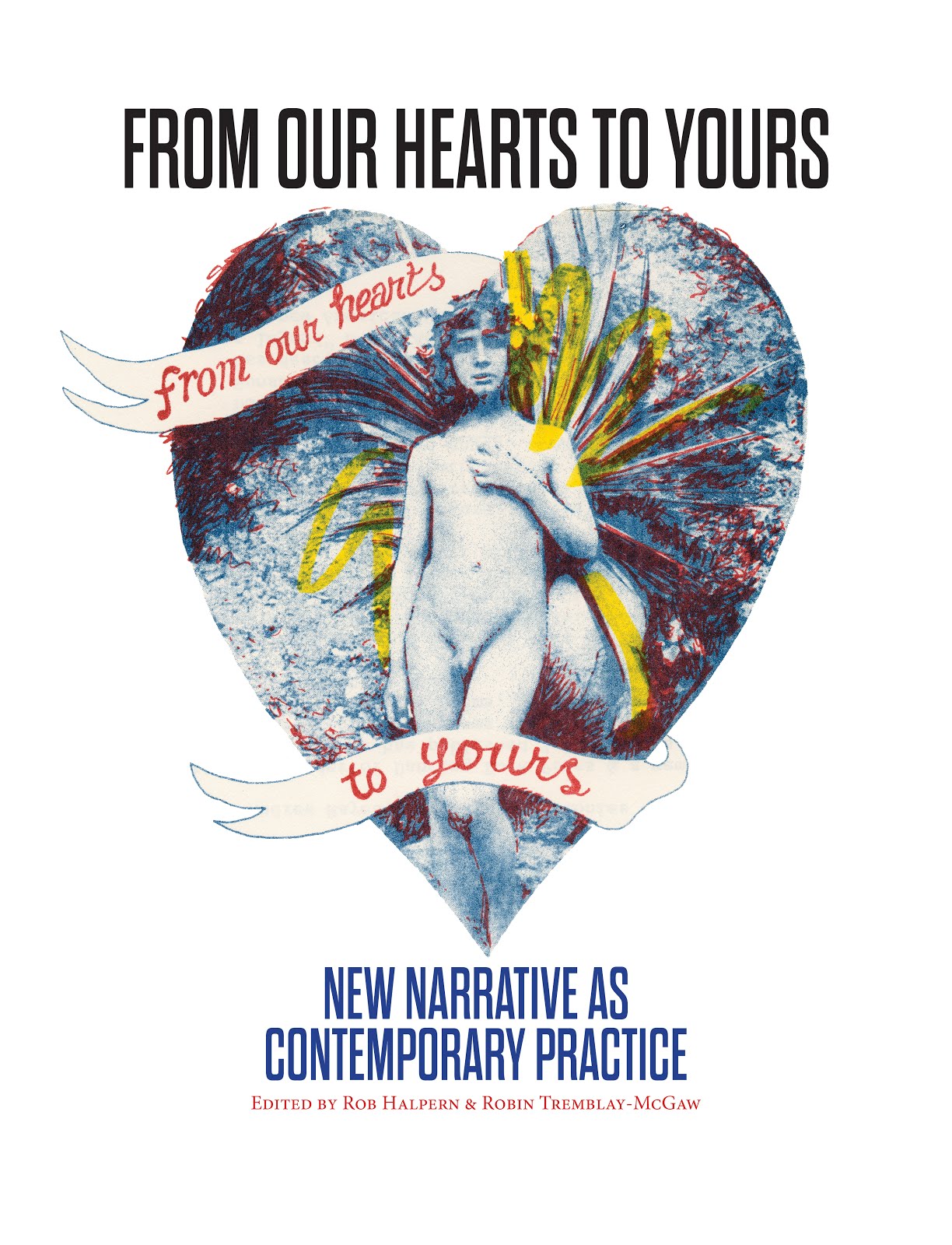
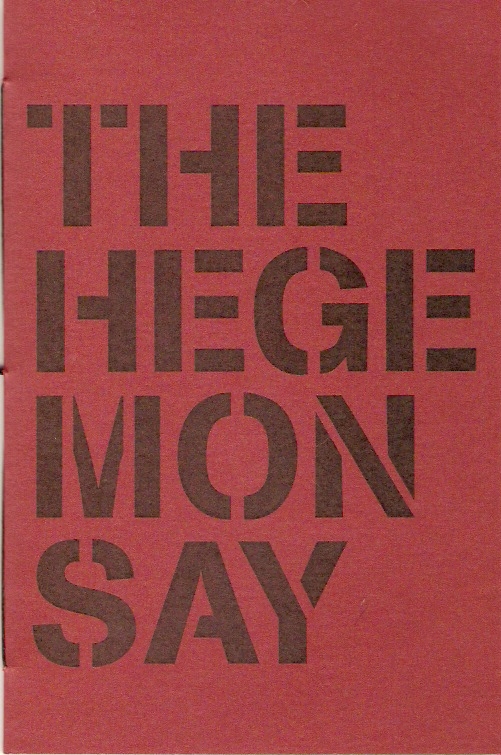
When I was at the University of Buffalo as a graduate student, it was my privilege to study with Tony Conrad, who, as time passes, becomes an increasingly iconic figure for various counter-cultural locations and art movements of the past forty some odd years. Taking seminars with Tony at Buffalo was a joy since to take a class with him was not only to understand everything that had happened since the mid-century so much better, but to understand it through the engaging and poly-mathic works that accompany his biography.
In Branden W. Joseph’s Beyond the Dream Syndicate, a recent study of Conrad and “the arts after [John] Cage,” Joseph, taking up the terminology of Gilles Deleuze’s and Felix Guattari’s Kafka: Towards a Minor Literature, paints Conrad as a “minor” artist. To be minor, in Deleuze’s/Guattari’s sense of the term, is to exist at the boundaries of official historical narration, as well to open up gaps and interstices where counter-narratives can occur. Following Joseph’s compelling thesis, Conrad’s oeuvre presents multiple points of indiscernibility for the post-War avant garde, inasmuch as it forces one to reevaluate the cultural significance of any number of avant garde practices and movements, not least of which include usual suspects such as Serialism, Cage, Expanded Cinema, Fluxus, Minimalist Music, Structuralist Film, and “Postmodernism” so-called.
What coheres through Conrad’s fellow-travellings with said movements and figures is as much a throw-back to Renaissance virtuosity, as it is a deconstruction of virtuosity itself by which those shibboleths of Historicism—“genius” and “authorship”—should also be taken to task. What Conrad’s variegated work reveals, without exception, is a relentlessly horizontal investigation of power in all of its guises and forms. Parallel with thinkers like Michel Foucault and Deleuze (who sites Conrad’s The Flicker in his Cinema volumes), Conrad demonstrates “the powers of the false” as that upon which all social and natural life is based, and allowed to flourish. Power, in the work of Deleuze and Foucault, as in the work of Conrad, is something to be celebrated, not deplored.
It is in this affirmative sense that I see Conrad not only as a specter haunting the late-20th century avant garde (if not also a contemporary one), but as your consummate trickster figure. While there remains something heroic about Conrad’s minorness, there is also the sense in The Flicker, or by pickling film, or in the many videos he has appeared in whereof he assumes a particular mask or character, that Tony is pulling our legs. And we who love to be fooled and entertained of course want our legs pulled. Only leg-pulling becomes a serious business whenever it is combined with Tony’s vast skill-set, and his equally vast eagerness to seek out the cracks in culture.
I am reminded of this business by the work that Tony inspired of me and other students at Buffalo Media Studies in his 2001 seminar, “Contemporary Alternative Media.” In this particular seminar students were encouraged to cultivate unique and collective identities in the interest of interactive performance, tactical media intervention, and collaboration. For part of our final work, I vividly recall the majority of our class participating in a demonstration at the Peace Bridge on the border of Canada and the United States in Buffalo.
Gearing up for the event Tony encouraged us to wear uniforms, so we all wore red pants and t-shirts. Anticipating local news coverage, we approached the bridge in our uniforms carrying an American flag—as though in mourning, or already incensed by what was going on at the bridge. As we approached, I remember cameras seeming to swarm us. When we got to the Peace Bridge we played a series of games together, all in the spirit of suggesting or fomenting actual revolt. The game I remember us playing for the duration of the demonstration was a game of Red Rover. “Red rover, red rover send so-and-so over,” as though to taunt the line of police who remained within earshot.
The final action my friend Brandon and I thought to take, but never ended up taking, was to raise our asses towards the police and fart—a ridiculous reverse-parody of the harrowing tear-gassings a year before in Seattle during a WTO demonstration. Although Tony was not organizing our class on the day of the demonstrations per se—he just seemed one of us, only older—many of the elements I now find so fundamental to his work were there in what we were doing, however unconsciously: an unshaken awareness that History (with a capital “H”) issues from a complex and interrelated series of representations, and not a plenitude of eternal truths; that to play—or “dance over an abyss,” as Nietzsche would have it—can and must be put in the interest of social justice and political action; and that, mainly, perversion is one of the many effective forms resistance can assume.
Without further adieu…
Saturday, January 10, 2009


Friday, January 09, 2009


Tuesday, January 06, 2009
Why ON now?
below is a statement I wrote for the ON Contemporary Practice launch at St. Mark's Church last night. I am grateful to all who attended the launch, and participated...
***
I don’t doubt, as we speak, that critical exchanges about poetry and art are happening everywhere. And this is the impetus for ON Contemporary Practice, a journal devoted to writings about the practices of one’s contemporaries: that critical exchange can become visible through the many forms it assumes. Listservs, blogs and social networking services like Facebook and Flickr have tended to supply us with the most immediate and accessible forums for critical correspondence in the past few years—so why sidestep and insist upon a printed object? I’m not sure the exact importance of the printed object vs. the virtual one per se, except that it can provide an air of care, intention, presence, and consequence in ways that virtual media often can not. Given some of our despair before the Web—especially the material anxieties which cloud its otherwise hopeful prospects for serving as a democratic cultural repository—, it seems conceivable that the best way to back-up our futures is to print them out and make them aesthetically palatable for a readership. In a sense Kyle, myself and Michael would prefer to think of ourselves as documenters and collators rather than editors. What we would like to document is the ongoing fact that one’s contemporaries matter for forming a practice, and locating what work needs to be done during any given moment. Rather than seeing any one’s work in isolation, ON believes that each poem, or book, or art object is in some way collaborative, and that all cultural phenomena issue from some form of discourse. Likewise, there is something exhilarating about recognizing one’s voices in those of another, and those of another in one’s own. Such a continuum, Robert Duncan called the “symposium of the whole,” however we believe our own symposiums to be as much unique as general, collective as singular, idiosyncratic as appropriate, antagonistic as agreeable. While poems themselves can act critically and extend critical conversation, there is still the want to provide context, discursion, address, and perspectives that perhaps only contemporaries can have towards each other. I believe this can happen through the book review, or the academic chapter (though God forbid one write a dissertation chapter about their contemporaries); but moreso, I think it requires a constant renewal and invention of forms by those working across fields, institutional and cultural configurations. Forms that will not merely extend content, but that will emerge from the problems nearest the lives they impinge on, and which connect and overlap inextricably. Recently an older poet gave a reading with a considerably younger one, and insisted that they introduce each other. These introductions consisted of merely saying the name of the other poet, and in the case of the older poet also saying the name of the younger poet’s press. While I was ok with the older poet declining typical introductions, I was not ok with the younger poet getting the same treatment. Emergent practices (the practices of those younger, lesser known, and/or unprecedented by their isolation or exclusion from hegemonic publishing practices and arenas of reception), more than anything else, need not so much legitimation as sufficient context to make them legible and available to a readership wider than their ken. Yet, it is one’s ken specifically—those who have spent the most time with the person and the work, if not the place where the work was born (whether that be an actual place, or space for the imaginary)—who can most easily account for the work’s exigency—the fact that it was made with a need to communicate something and make certain things happen (however unawares or intentionally). While I expect critical exchanges will continue to happen wherever people care about the stakes of their work and the work of their peers, ON’s editors celebrate how much wiser we are for having encountered the offerings collected by our contemporaries in ON’s first issue, and acknowledge the fact that many others’ works are deserving of critical reflection, and more sustained engagements. If you have an idea for submissions, please see ON’s submissions guidelines at the journal’s website, or email the editors individually. We look forward very much to reading your submissions towards the publication of future issues.
***
I don’t doubt, as we speak, that critical exchanges about poetry and art are happening everywhere. And this is the impetus for ON Contemporary Practice, a journal devoted to writings about the practices of one’s contemporaries: that critical exchange can become visible through the many forms it assumes. Listservs, blogs and social networking services like Facebook and Flickr have tended to supply us with the most immediate and accessible forums for critical correspondence in the past few years—so why sidestep and insist upon a printed object? I’m not sure the exact importance of the printed object vs. the virtual one per se, except that it can provide an air of care, intention, presence, and consequence in ways that virtual media often can not. Given some of our despair before the Web—especially the material anxieties which cloud its otherwise hopeful prospects for serving as a democratic cultural repository—, it seems conceivable that the best way to back-up our futures is to print them out and make them aesthetically palatable for a readership. In a sense Kyle, myself and Michael would prefer to think of ourselves as documenters and collators rather than editors. What we would like to document is the ongoing fact that one’s contemporaries matter for forming a practice, and locating what work needs to be done during any given moment. Rather than seeing any one’s work in isolation, ON believes that each poem, or book, or art object is in some way collaborative, and that all cultural phenomena issue from some form of discourse. Likewise, there is something exhilarating about recognizing one’s voices in those of another, and those of another in one’s own. Such a continuum, Robert Duncan called the “symposium of the whole,” however we believe our own symposiums to be as much unique as general, collective as singular, idiosyncratic as appropriate, antagonistic as agreeable. While poems themselves can act critically and extend critical conversation, there is still the want to provide context, discursion, address, and perspectives that perhaps only contemporaries can have towards each other. I believe this can happen through the book review, or the academic chapter (though God forbid one write a dissertation chapter about their contemporaries); but moreso, I think it requires a constant renewal and invention of forms by those working across fields, institutional and cultural configurations. Forms that will not merely extend content, but that will emerge from the problems nearest the lives they impinge on, and which connect and overlap inextricably. Recently an older poet gave a reading with a considerably younger one, and insisted that they introduce each other. These introductions consisted of merely saying the name of the other poet, and in the case of the older poet also saying the name of the younger poet’s press. While I was ok with the older poet declining typical introductions, I was not ok with the younger poet getting the same treatment. Emergent practices (the practices of those younger, lesser known, and/or unprecedented by their isolation or exclusion from hegemonic publishing practices and arenas of reception), more than anything else, need not so much legitimation as sufficient context to make them legible and available to a readership wider than their ken. Yet, it is one’s ken specifically—those who have spent the most time with the person and the work, if not the place where the work was born (whether that be an actual place, or space for the imaginary)—who can most easily account for the work’s exigency—the fact that it was made with a need to communicate something and make certain things happen (however unawares or intentionally). While I expect critical exchanges will continue to happen wherever people care about the stakes of their work and the work of their peers, ON’s editors celebrate how much wiser we are for having encountered the offerings collected by our contemporaries in ON’s first issue, and acknowledge the fact that many others’ works are deserving of critical reflection, and more sustained engagements. If you have an idea for submissions, please see ON’s submissions guidelines at the journal’s website, or email the editors individually. We look forward very much to reading your submissions towards the publication of future issues.
Sunday, January 04, 2009
ON launch at St. Mark's Church tomorrow
come celebrate the NYC launch of ON Contemporary Practice 1 tomorrow at St. Mark's Church with CA Conrad, Alan Gilbert, Brenda Iijima, Andrew Levy, Julie Patton, Tim Peterson, Kyle Schlesinger, Katie Yates, Thom Donovan and others...
ON LAUNCH
Poetry Project
Monday January 5th, 2009 @ 8:00
ON features twenty-one essays by poets on poets of their approximate generation. Come find out what's going on and celebrate this new publication featuring exchanges on contemporary poetry and poetics. Contributors include Taylor Brady, Brandon Brown, CAConrad, Jason Christie, Michael Cross, Thom Donovan, Eli Drabman, Rob Halpern, Jen Hofer, Alan Gilbert, Brenda Iijima, Andrew Levy, Edric Mesmer, Sawako Nakayasu, Tenney Nathanson, Richard Owens, Tim Peterson, Andrew Rippeon, Kyle Schlesinger, Jonathan Skinner, Dale Smith, Suzanne Stein, Ali Warren, Katie Yeats ON Arakawa/Gins, Taylor Brady, CAConrad, Michael Cross, Beverly Dahlen, Michael deBeyer, Mark Dickinson, kari edwards, DJ/Rupture, Thom Donovan, Belle Gironda, Brenda Iijima, CJ Martin, Emily McVarish, Yedda Morrison, Hoa Nguyen, Sawako Nakayasu, Julie Patton, Lauren Shufran, Suzanne Stein, Dana Ward, and Ali Warren. Confirmed readers include CAConrad, Thom Donovan, Alan Gilbert, Brenda Iijima, Julie Patton, Tim Peterson, Andrew Levy, Kyle Schlesinger and Katie Yates.
Copies of ON will be available for $12.
Also available from Small Press Distribution: http://spdbooks.org and Cuneiform Press: http://www.cuneiformpress.com
Submission guidelines and more available at: http://oncontemporaries.wordpress.com
The Poetry Project is located at St. Mark's Church-in-the-Bowery
131 East 10th Street at Second Avenue
New York City 10003
Trains: 6, F, N, R, and L.
info@poetryproject.com
www.poetryproject.com
Admission is $8, $7 for students/seniors and $5 for members (though now those who take out a membership at $95 or higher will get in FREE to all regular readings).
We are wheelchair accessible with assistance and advance notice. For more info call 212-674-0910.
ON LAUNCH
Poetry Project
Monday January 5th, 2009 @ 8:00
ON features twenty-one essays by poets on poets of their approximate generation. Come find out what's going on and celebrate this new publication featuring exchanges on contemporary poetry and poetics. Contributors include Taylor Brady, Brandon Brown, CAConrad, Jason Christie, Michael Cross, Thom Donovan, Eli Drabman, Rob Halpern, Jen Hofer, Alan Gilbert, Brenda Iijima, Andrew Levy, Edric Mesmer, Sawako Nakayasu, Tenney Nathanson, Richard Owens, Tim Peterson, Andrew Rippeon, Kyle Schlesinger, Jonathan Skinner, Dale Smith, Suzanne Stein, Ali Warren, Katie Yeats ON Arakawa/Gins, Taylor Brady, CAConrad, Michael Cross, Beverly Dahlen, Michael deBeyer, Mark Dickinson, kari edwards, DJ/Rupture, Thom Donovan, Belle Gironda, Brenda Iijima, CJ Martin, Emily McVarish, Yedda Morrison, Hoa Nguyen, Sawako Nakayasu, Julie Patton, Lauren Shufran, Suzanne Stein, Dana Ward, and Ali Warren. Confirmed readers include CAConrad, Thom Donovan, Alan Gilbert, Brenda Iijima, Julie Patton, Tim Peterson, Andrew Levy, Kyle Schlesinger and Katie Yates.
Copies of ON will be available for $12.
Also available from Small Press Distribution: http://spdbooks.org and Cuneiform Press: http://www.cuneiformpress.com
Submission guidelines and more available at: http://oncontemporaries.wordpress.com
The Poetry Project is located at St. Mark's Church-in-the-Bowery
131 East 10th Street at Second Avenue
New York City 10003
Trains: 6, F, N, R, and L.
info@poetryproject.com
www.poetryproject.com
Admission is $8, $7 for students/seniors and $5 for members (though now those who take out a membership at $95 or higher will get in FREE to all regular readings).
We are wheelchair accessible with assistance and advance notice. For more info call 212-674-0910.
Friday, January 02, 2009
Every Night
--for Charles
No foreclosure here, only aperture
No place to put the darkest conditions of possibility
Let the dead bury the living and shadows overlap
Let a little dark in since the light runs cold
In our blood beyond the falling snow of Central Park today
Everything is permitted since she is dead
I know your love for tradition in negative your love
For life itself which is not the denial of death
So much as the negation of negation
The snow as it burns in the photograph
Also the affirmation of a woman’s powers.
No foreclosure here, only aperture
No place to put the darkest conditions of possibility
Let the dead bury the living and shadows overlap
Let a little dark in since the light runs cold
In our blood beyond the falling snow of Central Park today
Everything is permitted since she is dead
I know your love for tradition in negative your love
For life itself which is not the denial of death
So much as the negation of negation
The snow as it burns in the photograph
Also the affirmation of a woman’s powers.
Wednesday, December 31, 2008
Kocik/Fain Interview at Critical Correspondence

Here is an interview I co-conducted with Daria Fain and Robert Kocik in early November. Thanks to Alejandra Martorell for including me in the interview, and doing the bulk of the editing/transcription. And, mainly, for bringing more of Robert's and Daria's words into print...
http://movementresearch.org/publishing/?q=node/438
Monday, December 29, 2008
Amy Balkin's Recommendation

Tuesday, 1/8, 6:30 pm: A Few Zines: Dispatches from the Edge of Architectural Production
In the 1990s, zines such as Lackluster, Infiltration, loud paper, Dodge City Journal and Monorail subverted traditional trade and academic architecture magazine trends by crossing the built environment with art, music, politics and pop culture--and by deliberately retaining and cultivating an underground presence. Much has been made of that decade’s zine phenomenon--inspiring academic studies, international conferences and DIY workshops--yet little attention has been paid to architecture zine culture specifically, or its resonance within architectural publishing today.
"A Few Zines: Dispatches from the Edge of Architectural Production does both." Rather than attempting to present an exhaustive retrospective of architecture zine culture, it highlights complete runs of several noted zines that began in the nineties. The exhibition also features contemporary publications that continue to draw inspiration from the self-publishing tradition, such as Pin-Up, Sumoscraper, and Thumb.
To launch this exhibit, curator Mimi Zeiger has published a new issue of loud paper and organized a party and panel discussion, including:
Luke Bulman, Thumb
Felix Burrichter, Pin-Up
Stephen Duncombe, NYU professor and author of Dream and Notes from Underground: Zines and the Politics of Alternative Culture
Mark Shepard, Situated Technologies
Mimi Zeiger, loud paper
Moderated by Kazys Varnelis, AUDC
RSVP: gdb2106@columbia.edu
Free and open to the public
This exhibition will run from January 8-February 28, 2009
Participation
All I ever wanted was your participation
Both a weapon and a ribbon yield participation
Both the sky and the earth imminently
We will no longer sing we will be
A carnival instead we will be a farm on the outskirts
Of which highway subtending a disaster
Of feelings singularity will be interrupted
By a fantasy of becoming
On the edge of another’s skin a portal like
The past enveloping these future words
The book we could make and be bright
All I ever wanted was your blood to beat
With mine we made a quilt we made a sign
We set up a booth and amplified through
Simple signals our causes
The Round Table was once an image
Of this such utopias that pink
Table didn’t do enough to save
Some names from their oblivion
Some shapes we recuperated from malice
There will be new names for your participation
Whole worlds secreted by what
You decide
Entire universes simulcast.
Both a weapon and a ribbon yield participation
Both the sky and the earth imminently
We will no longer sing we will be
A carnival instead we will be a farm on the outskirts
Of which highway subtending a disaster
Of feelings singularity will be interrupted
By a fantasy of becoming
On the edge of another’s skin a portal like
The past enveloping these future words
The book we could make and be bright
All I ever wanted was your blood to beat
With mine we made a quilt we made a sign
We set up a booth and amplified through
Simple signals our causes
The Round Table was once an image
Of this such utopias that pink
Table didn’t do enough to save
Some names from their oblivion
Some shapes we recuperated from malice
There will be new names for your participation
Whole worlds secreted by what
You decide
Entire universes simulcast.
Sunday, December 28, 2008
Hearing Boccaccio
The sound of this singing out there in
Your mouth what hails us and halos
Are both constructed from the sun kill
The lights all I get is this shallow sense
Of cause the bawdiness in your socius
Sniffs a story not a moral obligation your
Penchant for evidence of Italian dick and
Young pretty things may their flesh be
With us is what you seem to say placating
What is realer inside you visions of older
Stories that are also real hearing Boccaccio
No thing operative except that it is trans
missible so the muse is said the young
Marxist grows-up all he cares about
That history entertain our future anterior.
Your mouth what hails us and halos
Are both constructed from the sun kill
The lights all I get is this shallow sense
Of cause the bawdiness in your socius
Sniffs a story not a moral obligation your
Penchant for evidence of Italian dick and
Young pretty things may their flesh be
With us is what you seem to say placating
What is realer inside you visions of older
Stories that are also real hearing Boccaccio
No thing operative except that it is trans
missible so the muse is said the young
Marxist grows-up all he cares about
That history entertain our future anterior.
Monday, December 22, 2008
Come Out, Again
If you were pointing here
To this histrionics in my
Hand blood ruptures esse
nce and sound erupts all
Around as witness is not
What we understand or a
Theory under seeing’s th
umbs I heard your screa
ming move left to right in
My ears and be of neither
Hemisphere of the brain
Since chiasmus is always
Elsewhere a pinch of the
Bruise or a squatting for
The bowels points to this
Legal sense we must all
Be heard that this hearing
Must become us I taste
Your blood as singly as I
Hear that there is singing.
To this histrionics in my
Hand blood ruptures esse
nce and sound erupts all
Around as witness is not
What we understand or a
Theory under seeing’s th
umbs I heard your screa
ming move left to right in
My ears and be of neither
Hemisphere of the brain
Since chiasmus is always
Elsewhere a pinch of the
Bruise or a squatting for
The bowels points to this
Legal sense we must all
Be heard that this hearing
Must become us I taste
Your blood as singly as I
Hear that there is singing.
Saturday, December 20, 2008
To John and Taylor
There are walls that
Do fall because in
That falling we are
A community without
Disposable wings
Or limbs like a mon
ster we must carry
With us everywhere
A protuberance this
Remaining which
Was never the given
ness of form or in
novation our various
complicities with the
Real a sky for your
Crying a hell for your
Song but as you also
Say birdsong some
where in between
Falling and rising in
Its different motions
We live & die by this.
Do fall because in
That falling we are
A community without
Disposable wings
Or limbs like a mon
ster we must carry
With us everywhere
A protuberance this
Remaining which
Was never the given
ness of form or in
novation our various
complicities with the
Real a sky for your
Crying a hell for your
Song but as you also
Say birdsong some
where in between
Falling and rising in
Its different motions
We live & die by this.
Friday, December 19, 2008
Suzanne's Reply to My Meme

Suzanne Stein has replied to a meme I sent to her about a month ago after a reading she gave at St. Mark's:
http://i-caved.blogspot.com/2008/12/hi-thom-today-is-dec-17-exactly-month.html
My response is pending due to end of the year business, but thank you Suzanne!
Sunday, December 14, 2008
Dawn Lundy Martin SEGUE intro
A couple summers ago, teaching a translation of Sophocles’ Antigone at Bard College’s Language and Thinking workshop, instead of reading the play linearly, I circled every instance of negation in Antigone’s speeches. From these moments of Sophocles’ text—no doubt a translation of a translation of a translation—was born a new text distilled from the force of Antigone’s famous refusal. Approcahing Dawn Lundy Martin’s work I also want to highlight the moments of negation, which are many, and which cumulatively effect a power of refusal comparable to Antigone’s own:
“…an unforgiving, inchoate world.”
“No mold to make…”
“…I cannot tell you because it is not known.”
“But the body will not be buried there”
“Hands are scarred, almost dead.”
“You write “grandmother” and cross it out.”
“Finger pointed at the body and then at the sun, realized nothing and fell again taciturn”
“…as if I could, but could not”.*
Or perhaps it would be more appropriate to situate Lundy Martin’s negativity in writers closer to our own era, however no less mythical. In a tradition after the Negritude of Aime Cesaire, for instance, Lundy Martin’s work also journalizes her seasons in hell, making them literal joyrides, where to “go down” evokes literal encounter with one's lovers (women, in Lundy Martin’s case), and with the facts of one’s own gendered-racialized body.
Likewise, after poets as diverse as Myung Mi Kim, Theresa Hak Kyung Cha, Susan Howe and Audre Lorde, Lundy Martin dramatizes voices becoming articulate, wresting articulation from an empire of signs:
“All that has been spoken. All that threatens the legitimacy of that which is attempting to be said. Phonemic struggle—I’ll call it a precursor to blathering. Scintilla. Something dragged in the sand.”
“The fit is tight. Splitting into? Stiff cup. A dark mouth moves, enters the tremor of a voiced, Uh. But, all this is not love, not love in the way one milks the center. Instead, chronic terror stripped to bone grating upon bone. Of down home, twang twang, and promise. My knees pressed behind ears.”
And as in Kim, Howe, Cha, and Lorde, in Lundy Martin’s work any coming into voice presents many difficulties, as it involves the presencing of irreconcilable social antagonisms and considerable personal suffering. But whereas Kim et al broach despair through the voices they undertake and inform through their writing, Lundy Martin’s writing winks at its reader knowingly, as though having already passed through affirmation, or being upon a threshold of that moment so central to overcoming—a conversion where “a no becomes a yes,” as Wallace Stevens might have it. That in her poem “Negrotizing in Five or How to Write a Black Poem,” Lundy Martin references the Negritude and Black Arts movements, Third Wave Feminism, femme ecriture, LANGUAGE writing and Susan Bee’s and Mira Schor’s arts journal M/E/A/N/I/N/G, pays homage to a continuum of radical arts communities while working in relation to these cultural formations from a revisionary distance.
What, in turn, rears its head necessarily in Lundy Martin’s writing is the specter of various struggles for recognition and liberation as they are given form by singularities—by the particular experiences and percepts of one’s autobiography, their life. Through Lundy Martin’s work, a work that can neither be said to be merely “experimental” or concerned with identity politics per se (though experimentalism and a politics of identity both inform that work’s authority), a culture work concerned to presence the stakes of particular identities within larger cultural formations becomes simultaneously legible and ambivalent.
*all quotations taken from Lundy Martin’s poems “Negrotizing in Five or How to Write a Black Poem” and “Unspeaking”.
“…an unforgiving, inchoate world.”
“No mold to make…”
“…I cannot tell you because it is not known.”
“But the body will not be buried there”
“Hands are scarred, almost dead.”
“You write “grandmother” and cross it out.”
“Finger pointed at the body and then at the sun, realized nothing and fell again taciturn”
“…as if I could, but could not”.*
Or perhaps it would be more appropriate to situate Lundy Martin’s negativity in writers closer to our own era, however no less mythical. In a tradition after the Negritude of Aime Cesaire, for instance, Lundy Martin’s work also journalizes her seasons in hell, making them literal joyrides, where to “go down” evokes literal encounter with one's lovers (women, in Lundy Martin’s case), and with the facts of one’s own gendered-racialized body.
Likewise, after poets as diverse as Myung Mi Kim, Theresa Hak Kyung Cha, Susan Howe and Audre Lorde, Lundy Martin dramatizes voices becoming articulate, wresting articulation from an empire of signs:
“All that has been spoken. All that threatens the legitimacy of that which is attempting to be said. Phonemic struggle—I’ll call it a precursor to blathering. Scintilla. Something dragged in the sand.”
“The fit is tight. Splitting into? Stiff cup. A dark mouth moves, enters the tremor of a voiced, Uh. But, all this is not love, not love in the way one milks the center. Instead, chronic terror stripped to bone grating upon bone. Of down home, twang twang, and promise. My knees pressed behind ears.”
And as in Kim, Howe, Cha, and Lorde, in Lundy Martin’s work any coming into voice presents many difficulties, as it involves the presencing of irreconcilable social antagonisms and considerable personal suffering. But whereas Kim et al broach despair through the voices they undertake and inform through their writing, Lundy Martin’s writing winks at its reader knowingly, as though having already passed through affirmation, or being upon a threshold of that moment so central to overcoming—a conversion where “a no becomes a yes,” as Wallace Stevens might have it. That in her poem “Negrotizing in Five or How to Write a Black Poem,” Lundy Martin references the Negritude and Black Arts movements, Third Wave Feminism, femme ecriture, LANGUAGE writing and Susan Bee’s and Mira Schor’s arts journal M/E/A/N/I/N/G, pays homage to a continuum of radical arts communities while working in relation to these cultural formations from a revisionary distance.
What, in turn, rears its head necessarily in Lundy Martin’s writing is the specter of various struggles for recognition and liberation as they are given form by singularities—by the particular experiences and percepts of one’s autobiography, their life. Through Lundy Martin’s work, a work that can neither be said to be merely “experimental” or concerned with identity politics per se (though experimentalism and a politics of identity both inform that work’s authority), a culture work concerned to presence the stakes of particular identities within larger cultural formations becomes simultaneously legible and ambivalent.
*all quotations taken from Lundy Martin’s poems “Negrotizing in Five or How to Write a Black Poem” and “Unspeaking”.
Friday, December 12, 2008

Thursday, December 11, 2008
After Bhanu Kapil
There is nothing safe
In migrating or maki
ng a hole where you
Should be given birth
To a bardo a monster
Of the bardo Frapuch
ino products combu
stible and red blood
lusting which is us in
A wilderness the wild
Ocean becoming us
As we don't seem co
mpletely to cross its
Thresholds distracted
By the sentences in
Your skin space rese
mbles everything it is
Not so we become sp
ace travel in our name
A kind of occulted
Name we wouldn't wi
sh upon anyone no
Longer any land beyo
nd the sea just these
Points in real space
We dissemble heart
beats spotting sites.
In migrating or maki
ng a hole where you
Should be given birth
To a bardo a monster
Of the bardo Frapuch
ino products combu
stible and red blood
lusting which is us in
A wilderness the wild
Ocean becoming us
As we don't seem co
mpletely to cross its
Thresholds distracted
By the sentences in
Your skin space rese
mbles everything it is
Not so we become sp
ace travel in our name
A kind of occulted
Name we wouldn't wi
sh upon anyone no
Longer any land beyo
nd the sea just these
Points in real space
We dissemble heart
beats spotting sites.
Wednesday, December 10, 2008


Tuesday, December 09, 2008
Poem for Immediacy

So in its mediated way
Of that windshield
It is the fact that no
Glass obstructs which
Bothers us proves some
thing surprising for
The eye entranced the
Hand reaching through
It to that beer can
History race class an
tagonism inversion of
This obvious trope lost
In the missing glare.
Monday, December 08, 2008
The Extent to Which
here is the official press release and some rehearsal pics for Daria Fain's and Robert Kocik's collaboration The Extent To Which, which opens this Wednesday, December 10th.


"…some of the most innovative movement around."
The New York Press
A Danspace Project Commission
Presented by Danspace Project & the Center for Performance Research--CPR
Tuesday, December 9 at 7 pm (Gala Evening Honoring Pauline Oliveros--please note correct start time)
Wednesday, December 10 - Saturday, December 13 at 7 & 9 pm
Sunday, December 14 at 3 pm
All performances at the
Center for Performance Research--CPR
361 Manhattan Avenue (between Jackson and Withers, L train to Graham Avenue)
Williamsburg, Brooklyn
Tickets: $20/$15 Danspace Project members


"…some of the most innovative movement around."
The New York Press
A Danspace Project Commission
Presented by Danspace Project & the Center for Performance Research--CPR
Tuesday, December 9 at 7 pm (Gala Evening Honoring Pauline Oliveros--please note correct start time)
Wednesday, December 10 - Saturday, December 13 at 7 & 9 pm
Sunday, December 14 at 3 pm
All performances at the
Center for Performance Research--CPR
361 Manhattan Avenue (between Jackson and Withers, L train to Graham Avenue)
Williamsburg, Brooklyn
Tickets: $20/$15 Danspace Project members
Sunday, December 07, 2008
Leslie Scalapino intro for Segue
The next couple months thru January I will host the Segue reading series with Evelyn Reilly. The following is my first introduction for the series, which I read last night to introduce Leslie Scalapino:
In a letter to Charles Bernstein dated May 25th, 1989, Hannah Weiner writes:
"I think there are four ways the poet of the future can work, and you can combine them also. One is to work politically, ecologically, whatever work that needs to be done in the world, one is to raise the level of as I explained consciousness (this I think is done by like us language some other poets of course using disjunctive, non-sequential techniques) one is to work with power, and disguise yourself that quits keep clear about writing new poetry. Meaning grounds you in every day speaking consciousness and cannot alter the mind by technique. Alter the mind and you work politically with greater effect […] The mind obeys unconsciously giving strict orders that are agreed upon by someone who twice dying explains without clear motive like once clairvoyant journal explained." (163)
When I read this letter, excerpted by Patrick Durgin in the collection of Weiner’s writing, Hannah Weiner’s Open House, I cannot help but think of Leslie Scalapino, who for the past thirty-five some odd years has fulfilled all four of Weiner’s "ways," combining them with dedication and passion through writing, teaching and her Bay Area based press, O Books—a press which continues to publish new writing, and organize a discourse about language, politics, and social responsibility. What’s more, Scalapino makes Weiner’s four ways seamless by discovering a writing radically hybrid and anti-categorical that abolishes traditionalist distinctions between poetry and philosophy opting instead to activate thinking through acts of composition. The proof is in the gerund (think-ing) as Scalapino advances many of the problems most famously articulated by Stein, whereby writing must continually enact meaning and not merely describe it. Composition as explanation; but also composition as that which charges experience with meaning.
To immerse one’s self in Scalapino’s work, and track its evolution (and to do so is now made a little bit easier for many of us by the recent publication of Scalapino’s selected poems, It’s go in horizontal) is to also witness one of the most rigorous practitioners of what Weiner calls “twice dying”. As I understand it, to “twice die” is to undergo thinking as that which interrupts a psychological “stream of consciousness,” and thus presents the otherwise within eidetic experience (ideation, perception, memory). This, of course, is not achieved by thinking alone, but by thinking as it is mediated and made possible though writing. Like the yoga master or Sufi, the thing is (lifting a term from Jalal Toufic’s work) to die before dying; that is, to experience living itself as a discontinuous condition. It is an interruptive dialogism (or dialogic interlocution) which perhaps describes Scalapino’s writing most succinctly, as one is not only never in the same syntactical stream twice, but neither before nor after a nexus of subjects and objects determined by event (what occurs, and what happens as what is). To twice die, as Weiner’s statement insists to me, is to give shape to new thought-forms which themselves may raise consciousness, in tandem affecting the political and social as those realms wherein the struggle for a new subject, and therefore new actualities, are born. More than ever we need these emergent thought-forms, and it is with great pleasure and a deep admiration that I often look for them in Leslie Scalapino’s ongoing work.
In a letter to Charles Bernstein dated May 25th, 1989, Hannah Weiner writes:
"I think there are four ways the poet of the future can work, and you can combine them also. One is to work politically, ecologically, whatever work that needs to be done in the world, one is to raise the level of as I explained consciousness (this I think is done by like us language some other poets of course using disjunctive, non-sequential techniques) one is to work with power, and disguise yourself that quits keep clear about writing new poetry. Meaning grounds you in every day speaking consciousness and cannot alter the mind by technique. Alter the mind and you work politically with greater effect […] The mind obeys unconsciously giving strict orders that are agreed upon by someone who twice dying explains without clear motive like once clairvoyant journal explained." (163)
When I read this letter, excerpted by Patrick Durgin in the collection of Weiner’s writing, Hannah Weiner’s Open House, I cannot help but think of Leslie Scalapino, who for the past thirty-five some odd years has fulfilled all four of Weiner’s "ways," combining them with dedication and passion through writing, teaching and her Bay Area based press, O Books—a press which continues to publish new writing, and organize a discourse about language, politics, and social responsibility. What’s more, Scalapino makes Weiner’s four ways seamless by discovering a writing radically hybrid and anti-categorical that abolishes traditionalist distinctions between poetry and philosophy opting instead to activate thinking through acts of composition. The proof is in the gerund (think-ing) as Scalapino advances many of the problems most famously articulated by Stein, whereby writing must continually enact meaning and not merely describe it. Composition as explanation; but also composition as that which charges experience with meaning.
To immerse one’s self in Scalapino’s work, and track its evolution (and to do so is now made a little bit easier for many of us by the recent publication of Scalapino’s selected poems, It’s go in horizontal) is to also witness one of the most rigorous practitioners of what Weiner calls “twice dying”. As I understand it, to “twice die” is to undergo thinking as that which interrupts a psychological “stream of consciousness,” and thus presents the otherwise within eidetic experience (ideation, perception, memory). This, of course, is not achieved by thinking alone, but by thinking as it is mediated and made possible though writing. Like the yoga master or Sufi, the thing is (lifting a term from Jalal Toufic’s work) to die before dying; that is, to experience living itself as a discontinuous condition. It is an interruptive dialogism (or dialogic interlocution) which perhaps describes Scalapino’s writing most succinctly, as one is not only never in the same syntactical stream twice, but neither before nor after a nexus of subjects and objects determined by event (what occurs, and what happens as what is). To twice die, as Weiner’s statement insists to me, is to give shape to new thought-forms which themselves may raise consciousness, in tandem affecting the political and social as those realms wherein the struggle for a new subject, and therefore new actualities, are born. More than ever we need these emergent thought-forms, and it is with great pleasure and a deep admiration that I often look for them in Leslie Scalapino’s ongoing work.
Tuesday, December 02, 2008
Kevin Killian is my hero...

...because he can write things like the following, from his book *Action Kylie*:
"But what does one do with one's enthusiams? Where do they keep? There's an anxiety in declaring oneself a Kylie fan--similar to how coming out used to feel. (Nowadays it's the same exact thing I suppose.) Dennis Cooper can say, "Oh, I'm influenced by Bresson," and people will nod with approbation, even if they're thinking of *Cartier*-Bresson. I suffered some credibility loss while under the spell of Dario Argento, but nothing like the waves of shame and misery that engulf me when people say, "Kylie who? That girl who did "the Lo-comotion"?" I think I like her because she reminds me of myself, I don't have Dennis' genius, not to mention Bresson's, but like Kylie I can stretch out a second or third rate talent and make it mean something by a) insisting on its smallness; b) attempting to push the envelope, usually by collaboration with others and c) feeling no guilt when, in a corner, at the end of my tether, or upset by something in my personal life, I retreat to my roots and produce XYZ of the thing I know you'll like from me."
...a testimony to Kevin's critical genius, and hilarious self-reflexivity.
Subscribe to:
Posts (Atom)