Lifting the Corpse
A very large man would lie down on his back on the floor. The legs must be kept straight and rigid. Four men then tried to lift him off the floor with their thumbs placed under the shoulders right and left and on the calf of the legs right and left. Each lifter used only one of his thumbs. If the man was lifted places were exchanged. If they failed they would have their heads bashed against the floor (especially if they dropped the man!)
Pulling the Stick- Sweet Draughts
Two man sat facing each other on the floor. Legs were extended so that the soles of their shoes touched. A strong stick : a handle of a spade or pitchfork,was laid across the tops of their shoes. Both gripped the stick, one hand inside and one outside and each tried while holdi ng his legs rigid to lift his opponent off the floor even as much as an inch. After three pulls places were exchanged and the test continued similarly. Sometimes a man who was to be lifted off the floor would make his foot slip from the opponents shoe. Friends would stand on the coat tails of the person they did not wish lifted.
Lifting a Chair
A chair was gripped at the base of one of the legs by each contestant in turn in an attempt to raise it above his head. It was by no means an easy thing to do, as the old chairs were quite heavy.
Breaking an Egg
An egg was held between the contestants two hands with the pointed ends against the palms. He then tried to cr ush the egg, and generally failed.
The Stronger Hand
Two men stood facing each other, with their right hands raised against each other. Pressure was then exerted by each in an attempt to force down his opponents hand.
Wrestling-
A man would enter the house dressed in a suit of straw and challenge all present to wrestle the Connachtman.
A. A man gripped a stick with his hands at either end and tried to jump over it. Without br eaking his hold. An open razor edge upwards was used instead of a stick.
B. 12 men faced each other in two lines, six in each row. The men in each line stood about two feet apart from their neighb ours. Each player extended his two arms and gripped the hands of the man facing him. Other active men at the wake then tried in turn to jump over each pair of hands in turn, down between the lines without stopping. This was a very difficult feat to perform.
C. Two men stood with a spade handle or other stick resting on their shoulders. Two others then tried to excel each other in performing acrobatic tricks on the stick, like circus performers.
D. Two men competed to do somersault on the floor returning to a standing position.
Driving the Pigs across the Bridge. Those who arrived late at the wake house were the pigs . They are scolded for not having arrived earlier and then someone would shout “We must drive the pigs across the bridge” The bridge consisted of a number of men, who stood in line behind one another, with their shoulders bent forward. The “pigs” were then forced with blows to mount like riders, on the backs of the others; when all had mounted, they were suddenly thrown on the floor in a heap on the floor.
Riding the Wild Ass. - A rope with a noose at one end was thrown over one of the rafters of the house. The man who wished to show h is agility then grasped the other end of the rope and put one of his feet into the n oose. He then pulled on the free end of the rope and tried to raise himself high enough to enable him to kick against another rafter or couple with his free foot. The difficulty and danger of the trick came from the fact that one part of his body (the hands) was pulling against another (the foot) and he might easily fall on to the floor and injure his head or back.
Stealing the Goats- The player grabbed two sods of turf, one in either hand, and faced the floor with his hands and legs extended; only the turf sods and the toes of his shoes were allowed to touch the floor. The player's objective was a potato which lay on the floor below his face. He had to pick this up with his mouth without allowing his stomach to touch the floor or bending his arms or legs. This was difficult enough to do while uninterrupted, but it became more so when he had to reply to questions during the attempt:
Questioner: Where are you going now?
Reply: Stealing the goats from Hell.
Questioner: Swear that you are.
Reply: I swear that I am.
Lifting a horseshoe: The shoe was placed three or four inches out from the foot of the kitchen wall. The person who tried to pick it up took his stand about three feet from the wall, and h ad to pick up the shoe without bending his knees. Whenever he bent forward in making the attempt, his head would touch the wall, and he was not allowed to use his hands to help straighten himself again.
Going around Under a Table: The player would lie face downwards on a table, catching the edges with both hands. He then was required to bring his body around under the table, between its legs, and return to his starting point without touching the floor. His main difficulty was to keep the table from overturning in the process.
Walking on the legs of a Stool: A fairly long stool would be laid on the floor, legs upwards. The contestant had to mount the stool, placing his two hands on the front legs and his two feet on the back ones. To do the trick he had to walk around on the stool legs with his hands and feet until he returned to his original position.
The Donkeys and Baskets: A man lay face down on the wake house floor. Two others sat facing each other at either side of him and extended their legs across his back toward each other. Each took hold of the other's legs. The Prone man was now the donkey and the other two the baskets. His task was to rise up as a real donkey would raising the baskets on his back. Two groups of three often took part in this test each striving to be the first in comple teing it.
Spinning the Tin Box- Each of the male players was given an even number while each female got an odd number. The players sat here and there in the kitchen while a tin box was spun in the center of the floor by the man in charge of the game. As the box spun around he would call out the number of some player whose duty it then was to rush forward and catch the box before it ceased to spin. A player who failed to do so was given some penalty.
The Mock Court or The Police Game
Eight or so of the players remained in the kitchen,while everybody else went outside the door. Those who were inside then divided themselves up according to their duties in the game; one would act as judge, two as lawyers; one as court-clerk, and three or four as policemen. The police would then go outside and drag in somebody as prisoner, while the others pressed in also to hear the case being tried. The judge too k his seat, and the clerk read out the name and address of the prisoner, as well as the offense with which he was being charged. The trial then proceeded as it would in a legal court, one lawyer prosecuting, the other defending. The main source of the fun, apart from the charge itself, was to be found in the sly references made by both counsel to the private affairs of some of those present, who were dragged into the case. These mischievous,though irrelevant, hints caused great laughter, as they were understood by all. Having heard the evidence, the judge announced his verdict, which was witty and light or severe, according to how he regarded the defendant. The police had then the task of seeing that the verdict was carried out; if guilty, the defendant might be handled roughly as punishment, or even doused nine or ten times in a tub of water. If the first trial produced a good deal of amusement, as second or third would follow, until all were tired of the game.
A somewhat similar game, which involved a court-case, was the following. A man lay down on the floor, feigning illness, and a doctor would be sent for. The doctor arrived into the kitchen on horseback, the horse being two fellows clad in straw to resemble an animal. The horse would be a very wild one and, in the course of prancing around the kitchen, the doctor would be thrown down on top of the sick man on the floor. When examined, it would be found that both the patient and the doctor were dead, and the two who played the part of the horse would be tried for causing their deaths.
Building the Ship
John L. Prim has provided a garbled account of the way in which this game was played at wakes in Kilkenny over a hundred years ago. He mentions how the keel was first laid, followed by the prow and stern of the ship; then a woman, who was taking part in the game, would raise the mast with some gesture and speech that convinced Prim that the game had its origin in pagan times. His account is so unclear that it would be difficult, for want of additional details, to imagine how the game was really played.
Henry Morris has noted that his uncle had seen a similar game played about one hundred years ago in Co. Monaghan. It was a lively game, with lots of activities going on, he said; the only part he could remember was the tarring of the ship (soot being smeared on somebody). Morris said that the game died out in Farney, Co. Monaghan, before the year 1880.
A Co. Galway man has described the game , as he saw it played there. Three men sat down astride a stool, one behind the other, all facing in the same direction. The man in front was the prow of the ship; the man in the middle, the body of the ship; and the third man the stern. A fourth player stood on the floor beside them; he was the builder of the ship. He would ask the company for a hammer or sledge, which he needed for the work, and he got it-a hard sod of turf, a piece of turnip, or something like that. Having got the implement, he would walk around the stool, talking loudly to himself about his accomplishments as a ship-builder. He would then insert the right hand of the center man under the right arm-pit of the man in front, and continue to walk around the ship, striking hard blows with his hammer on the three, as he went. He would next put the left hand of the center man under the left arm-pit of the first man, striking blows all the time to make things firm. He then placed the legs of the hind pair around the body of the person in front of each, hammering away to keep the timbers from splitting. The trio would then have to lie back, as far as they could, and the builder would start to raise the mast. This part of the game was often obscene.
Another game is mentioned by Prim called Drawing the Ship Out of the Mud, but it is not described.
Building the Bridge
Twelve men or so stood out on the floor and formed into two lines of six each, facing one another. Each man took hold of the two hands of the man opposite, thus forming the bridge from which the game took its name. The bridge had now to be tested for strength. Another player mounted on the crossed hands and walked to and fro along them. Finding no apparent fault with its construction, he dismounted. Somebody would then suggest that the bridge be tested to see if it would take a flood of water through its eye. This would be done by some rogue who sluiced the legs and feet of the players with a bucketful of dirty water.
Making the Poteen
This game is both imitative and a booby-trap. Somebody who had not seen it played previously would be asked to sit on a chair or stool in the center of the floor. He would be, as it were the still. The man who was working the still would walk fussily around him, getting ready for the work, while some others remained outside the house to keep an eye out for the police or "Revenue men". As the busy preparations were at their height within, the watchers would rush in to say that the police were coming. Speedy action was now necessary; the first thing to be done was to hide the still outside in the dark. The stiller gave this order to his helpers, and they set to work with a will. Pity the poor still! The innocent fellow who simulated that was dragged out into the darkness and flung headlong into the cess-pool of the dung -hill or some equally unpleasant hiding-place from which he had to extricate himself without light or help.
Coining the Money
Another booby-trap! Counterfeit money was to be coined, as it were, and some innocent fellow was got to sit in the middle of the floor to represent the mint. The players circled around him chanting "Coin the money! Coin the money!" until somebody rushed in from outside to say that the police were approaching. The mint had now to be hidden as quickly and as disagreeably as the still in the preceding game.
Sledging
Booby-trap again! The master smith and his helpers announced that they had to make some plough-"socks", or horseshoes or something like that. A man who had no experience of the game was asked to sit in the centre of the floor to represent the anvil. As soon ass the victim was seated ,the master, and his apprentices began to thump him with their fists, as hammers, chanting in time with the blows:
"Strike him strike, strike together!
Strike, strike, all together!
Having pummeled the anvil well for a time, one of the apprentices would suddenly shout that the anvil was on fire! It had to be taken out quickly lest the forge be burned. The poor anvil was taken hold of by three or four strong fellows and dumped into the cess-pool outside, or else was douched with buckets of water.
The Kiln on Fire
In this game, players simulated a miller and his men drying corn. The floor represented the kiln. The miller would order his men to bring in sacks of corn to put into the kiln. Each man went outside and came back with a man on his back; this process went on until some twenty men, as sacks, were lying in a heap on the floor. The were left there for a while to dry, as it were, and were then turned, those underneath being placed on top. When this had been done, and the process of drying the corn was progressing well, one of the workmen would suddenly should that the kiln was on fire. The miller and his helpers would rush to pour buckets of water on the sacks, drenching all who were heaped on the floor, especially those on top. In some areas, only two players took part, the miller and his daughter.
The Deaf Miller
A player (the miller) sat on the floor, mixing soot and water in a dish with a stick. As he worked, he carried on a conversation with himself, his remarks causing great laughter among the audience. One of his mill-hands would enter carrying another player, as a sack of corn, on his back, and would tell the miller that the sack was to be ground. The miller would pretend not to be able to hear him, owing to the noise of the mill, and would finally order the helper to lay the sack down behind him. When five or six sacks had thus been deposited behind the miller, who all the while continued to mix the soot and water (to simulate grinding) and keep up his remarks in a loud voice, the helper would shout that the mill was on fire. The miller would have no trouble in hearing this and would throw the sooty water over his shoulder on top of the sacks behind his back to quench the blaze.
Lifting the Old Nag
A heavily-built man would hobble into the kitchen, pretending to be an old foundered horse, and throw himself down on the floor, grunting and complaining. Some players would gather about him , and he would ask them to raise him to his feet. Two or three would attempt this and would fail; others would come to their assistance, but even nine or ten would not be able to lift the nag. The leader of the game would then order them to remove their coats. They did so, throwing aside the coats here and there, and started to lift again, straining every muscle, but to no avail. The nag was too heavy. The leader would then order them to remove other garments, and when they had finally got rid of their socks, they would succeed in their task. At this point, some mischievous fellow would quench all the lights in the wake-house; the others would let the nag collapse on the floor and, in the darkness, set about finding their clothes, which would have been hidden away by members of the audience. Rough-and-tumble searching went on until the lights were restored, and the game was over.
Cutting the Timber
A man lay down across the threshold of the kitchen feet outside, head within. He was to represent the saw. Two players now took hold of his feet outside, while two others caught his head and should ers in the kitchen. They pulled against one another, forward and backwards, as if they were sawing wood, until one pair proved too strong for the other.
The Dry Barber; The Shaving Game
In The Shaving Game, the leader and his assistants went through the crowded kitchen of the wake-house to find out who needed a shave. They would pick on somebody whom they might dislike for some reason, and drag him out to sit on a chair in the middle fo the floor. The barbers then gathered about him and started to rub water, in which many kinds of dirt had been mixed, onto his face and head. He was powerless to resist or escape. Two would then begin to shave him with bits of stick or something, as razors. The shaving was, needless to say, an ordeal in itself, and it was finished by drenching the victim with water to get rid of the soap!
*all above desciptions of Irish Wake Games lifted directly from: http://www.bcpl.net/~hutmanpr/wakegame.html.
Tuesday, June 27, 2006


A Catastrophe (Falling)
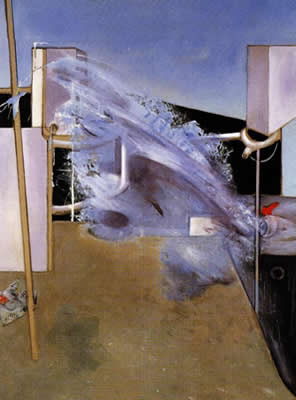
The fall is what is most alive in the sensation, that through which the sensation is experienced as living. The intensive fall can thus coincide with a spatial descent, but also with a rise.
--Gilles Deleuze
Fact would
parse the fading light in all
eye beams pyramids
by which we see it
seeing us the soldiers anon
commanded in sense fed eye-to-hand
hand-to-eye
color cropped around the mouth
bent to some specification
of war what would parse
the world in fading actuals
the bodily coagulation to which an arrow
grows
a cropping an absolute
fact the orange of appearance small of distortion back
that smile
without a face or how
words do words contoured to
words smell
how unpainterly yet eventful the spirit seeks
what it says
what it speaks to eat
it swallows what is heard paint
subsisting in accidents
resonance the world feels this again
the little smile break
the wrist in a small catastrophe rising by
degree they are evasions
of nowhere the flower
coupled with other forces
the witnesses to this the
colors begin by falling in place
reversed by chance wherever
the hand was was a chance
for escape
a wrestler a monkey a silvery basin
where the hand once put the eye
none will follow gravity
your freefalls glow
so green

Sunday, June 25, 2006

Wednesday, June 21, 2006

Sunday, June 18, 2006
Falling
Falling
No one told you
to fall for the hand
to fall
into the face
for the face to fall
no one tells you to
it's just you do like a pulse
taking
or suddenly reviving
from eyes
your lived eyes that we all have thusly
seen
like that ground hovering instead of you
actually hovering
being there instead of you
here there is actually no where anymore
to fall
but this body your body
your pulse
teeth and all.
*
What it may have felt like to go down and come back
"We" a wind, maybe that "divine wind," maybe
"somewhere in the trees," the leaves
of "these trees" rustling, as particular as "this,"
"something" of an instrument blowing, a "literal instrument"
somewhere in "that wind," or the wind a "particular
degree," perhaps of "revelation" or "instead"
of "human contact" being "that conventicle," that "literal
refrain" the refrain, of "other lips" which "blow"
and "must" speak, the "rustling" they would make instead of "us".
*
The last Gulf War
There is a certain rising in place
to barely be human and sing
a boundary of crude the boundless
radiation an heir to become them.
Falling being distinguished
from armies damnably near
the world's end our convalescence
this vast screen of tears.
*
Body Snatched
This seeming a syndrome of all the people,
the half-formed people, the places
of people we can't be, their cries of fading
substitutions, eruptions if place could
only be place
we still wouldn't be here, I would always
be double to me, a fading actuality
of choppers rising, descending to make
the least thing suffused
with a tentacled concern,
some least man of slumbering armies
a syndrome, of factories dissembled by war--
one falls in line but one also survives.
*
Bacon
To show the scream
of the living nurse,
The animal
inside the mortal meat,
these accidents of living out
our days with a face,
the ear hearing
the sound grown-in
as ancient their hair
if we would be here,
readied by will,
awitness in pity.
No one told you
to fall for the hand
to fall
into the face
for the face to fall
no one tells you to
it's just you do like a pulse
taking
or suddenly reviving
from eyes
your lived eyes that we all have thusly
seen
like that ground hovering instead of you
actually hovering
being there instead of you
here there is actually no where anymore
to fall
but this body your body
your pulse
teeth and all.
*
What it may have felt like to go down and come back
"We" a wind, maybe that "divine wind," maybe
"somewhere in the trees," the leaves
of "these trees" rustling, as particular as "this,"
"something" of an instrument blowing, a "literal instrument"
somewhere in "that wind," or the wind a "particular
degree," perhaps of "revelation" or "instead"
of "human contact" being "that conventicle," that "literal
refrain" the refrain, of "other lips" which "blow"
and "must" speak, the "rustling" they would make instead of "us".
*
The last Gulf War
There is a certain rising in place
to barely be human and sing
a boundary of crude the boundless
radiation an heir to become them.
Falling being distinguished
from armies damnably near
the world's end our convalescence
this vast screen of tears.
*
Body Snatched
This seeming a syndrome of all the people,
the half-formed people, the places
of people we can't be, their cries of fading
substitutions, eruptions if place could
only be place
we still wouldn't be here, I would always
be double to me, a fading actuality
of choppers rising, descending to make
the least thing suffused
with a tentacled concern,
some least man of slumbering armies
a syndrome, of factories dissembled by war--
one falls in line but one also survives.
*
Bacon
To show the scream
of the living nurse,
The animal
inside the mortal meat,
these accidents of living out
our days with a face,
the ear hearing
the sound grown-in
as ancient their hair
if we would be here,
readied by will,
awitness in pity.
Eruv I.
"Make peace not love."
--Amos Oz
The spirit of this converted private
Is not an inside abstract
It is the key of keys for dwelling mutual
A mobility of ritual to discern
Us in potentia hence to discover again
And again ourselves merely lifting
What must be transportable as string
A version of commons understandably
Shifting the signs grew out of this
Heart and grafitti became bright beams
Making a bubble bridgeable an effect
Of needing an inside outside outside
To be a call to floating contracts
Towards a mobile peace.
--Amos Oz
The spirit of this converted private
Is not an inside abstract
It is the key of keys for dwelling mutual
A mobility of ritual to discern
Us in potentia hence to discover again
And again ourselves merely lifting
What must be transportable as string
A version of commons understandably
Shifting the signs grew out of this
Heart and grafitti became bright beams
Making a bubble bridgeable an effect
Of needing an inside outside outside
To be a call to floating contracts
Towards a mobile peace.
Wednesday, June 14, 2006
The Intensive Fall
The fall is what is most alive in the sensation, that through which the sensation is experienced as living. The intensive fall can thus coincide with a spatial descent, but also with a rise.
--Gilles Deleuze
--Gilles Deleuze
Tuesday, June 06, 2006
Man Thinking
With gum for eyes
With brains
For hands
We do not fly
We sink like
A syrup
In the head
The mind
Is this syrup.
*
Coupling. Gross wing. A pong rhythm. Of the mind. The eyes diegesis. Extra voice.
The slow rap. Seething. Like a balloon to gas. The mind is that balloon. Of attention your
intention. Never mind. Mine. To break the frame. We make conclusion. An image
of the voice. Emergent from wind. A superimposition. An eye for propositions. Coupling.
Gross wing. A pong rhythm. Of the mind. The eyes diegesis. Extra voice. In a slow rap.
Seething. Like a balloon to gas. The mind is that balloon. Of attention your intention.
Never mind. Mine. To break the frame. We make conclusion. An image of the voice.
Emergent from wind. A superimposition. An eye for propositions. Coupling.
*
It is as a wind
tunnel
to these voices
it is
a syrup through which
no thought
passes
it is our talk
in being animal
a singing
flame it is
of our bodies
bodies in
the impassioned
absences
of sound commensurable
with consummations
and deployments
of mutual
power
it is the blood
moved elsewhere
invisibly
labored the rhythms
of spirit
passing through spirit
matter through matter
it is
only felt in this sense
singing flames radiation
not actually singing
aloud the slow
motion effects
your body our body
blind matter upon which
an idea of us
touches down again
withdrawals from
our poverty
*
The eyes the wrap
Around eyes of all
Children inconsolably weeping
To be alive like the dead
Their eyes covered in a gum
Convertible to no other
Color except for this.
With brains
For hands
We do not fly
We sink like
A syrup
In the head
The mind
Is this syrup.
*
Coupling. Gross wing. A pong rhythm. Of the mind. The eyes diegesis. Extra voice.
The slow rap. Seething. Like a balloon to gas. The mind is that balloon. Of attention your
intention. Never mind. Mine. To break the frame. We make conclusion. An image
of the voice. Emergent from wind. A superimposition. An eye for propositions. Coupling.
Gross wing. A pong rhythm. Of the mind. The eyes diegesis. Extra voice. In a slow rap.
Seething. Like a balloon to gas. The mind is that balloon. Of attention your intention.
Never mind. Mine. To break the frame. We make conclusion. An image of the voice.
Emergent from wind. A superimposition. An eye for propositions. Coupling.
*
It is as a wind
tunnel
to these voices
it is
a syrup through which
no thought
passes
it is our talk
in being animal
a singing
flame it is
of our bodies
bodies in
the impassioned
absences
of sound commensurable
with consummations
and deployments
of mutual
power
it is the blood
moved elsewhere
invisibly
labored the rhythms
of spirit
passing through spirit
matter through matter
it is
only felt in this sense
singing flames radiation
not actually singing
aloud the slow
motion effects
your body our body
blind matter upon which
an idea of us
touches down again
withdrawals from
our poverty
*
The eyes the wrap
Around eyes of all
Children inconsolably weeping
To be alive like the dead
Their eyes covered in a gum
Convertible to no other
Color except for this.
Saturday, June 03, 2006
Permission*
Permission
for Robert Creeley
This poetic mood approaches the state in which
what is present appears as present. Do you find it so abstract
and colorless? What an extraordinary idea to say
that immediate consciousness is colorless and abstract!
-- Charles Sanders Peirce
Often I am permitted to return to a meadow
as if it were a given property of mind
that certain bounds hold against chaos,
that is a place of first permission,
everlasting omen of what is.
-- Robert Duncan
The first idea was not our own
-- Wallace Stevens
Return to that field
Bridge going under
A clutter of
Leaves in some fall
Distant falls
Those leaves braid
Whose leaves braid
Time going under
An image of thread
In an open sky
The eye sees contrast
Of branches some
Spaces are not
Meant to be seen
It is this thinking which
Feels instead
Here where
I have no frame yet
There is therefore
No eye yet
No eyelet for
Our imagining
Man with his dog
The bridge that
Small building
Are too much
Story
For the imagination
Not enough leaves
Their
Thickness to braid
Pure image of time
Pure pattern depth
And thickness
Flatness of
Reference deny
Story its place
Historicity neither
Here or before
A now heard
And near
All permitted of
Return
A field draws near
A hooded bird
Near the sky
Eye’s flatness
That close
Here where we
Have no
Frame yet to
Compose
Looking for depth
Ground to grasp
Purchase point to line
Finding the roses
Still there in the
Fall
Where we
Left them finding
Men with dogs
Cars thru
Branches to
Highway
A now-estranged bucolic
No longer pastorals where
They remained
To decay
Eyes are then
This condition of finding
Circling Delaware park
A proper name
For this flatness
Don’t dismay finding
These roses where
We left them
In our flat circling
Of eyes iconoclast
Love braiding
No point of reference
No above or below
This sky
We cry for
This place we
Cry for
Place without
Place
Tearful commons
The view thru
The trees to
This highway
Cutting the park
In half
Perhaps we cry
For this division too
Substitutions permitting
A turn of leaves
Permitted to
Return
Of course thinking of
Duncan’s children
Revenants seeking
Thickness
Of difference
Sameness striking
An imagination without place
How will one ever
Understand this if they haven’t
Sensed it already
A photograph seems
To ask
*composed Fall 2004.
for Robert Creeley
This poetic mood approaches the state in which
what is present appears as present. Do you find it so abstract
and colorless? What an extraordinary idea to say
that immediate consciousness is colorless and abstract!
-- Charles Sanders Peirce
Often I am permitted to return to a meadow
as if it were a given property of mind
that certain bounds hold against chaos,
that is a place of first permission,
everlasting omen of what is.
-- Robert Duncan
The first idea was not our own
-- Wallace Stevens
Return to that field
Bridge going under
A clutter of
Leaves in some fall
Distant falls
Those leaves braid
Whose leaves braid
Time going under
An image of thread
In an open sky
The eye sees contrast
Of branches some
Spaces are not
Meant to be seen
It is this thinking which
Feels instead
Here where
I have no frame yet
There is therefore
No eye yet
No eyelet for
Our imagining
Man with his dog
The bridge that
Small building
Are too much
Story
For the imagination
Not enough leaves
Their
Thickness to braid
Pure image of time
Pure pattern depth
And thickness
Flatness of
Reference deny
Story its place
Historicity neither
Here or before
A now heard
And near
All permitted of
Return
A field draws near
A hooded bird
Near the sky
Eye’s flatness
That close
Here where we
Have no
Frame yet to
Compose
Looking for depth
Ground to grasp
Purchase point to line
Finding the roses
Still there in the
Fall
Where we
Left them finding
Men with dogs
Cars thru
Branches to
Highway
A now-estranged bucolic
No longer pastorals where
They remained
To decay
Eyes are then
This condition of finding
Circling Delaware park
A proper name
For this flatness
Don’t dismay finding
These roses where
We left them
In our flat circling
Of eyes iconoclast
Love braiding
No point of reference
No above or below
This sky
We cry for
This place we
Cry for
Place without
Place
Tearful commons
The view thru
The trees to
This highway
Cutting the park
In half
Perhaps we cry
For this division too
Substitutions permitting
A turn of leaves
Permitted to
Return
Of course thinking of
Duncan’s children
Revenants seeking
Thickness
Of difference
Sameness striking
An imagination without place
How will one ever
Understand this if they haven’t
Sensed it already
A photograph seems
To ask
*composed Fall 2004.
Saturday, May 27, 2006
Eternity then / Inseperable (Tears Are These Veils)
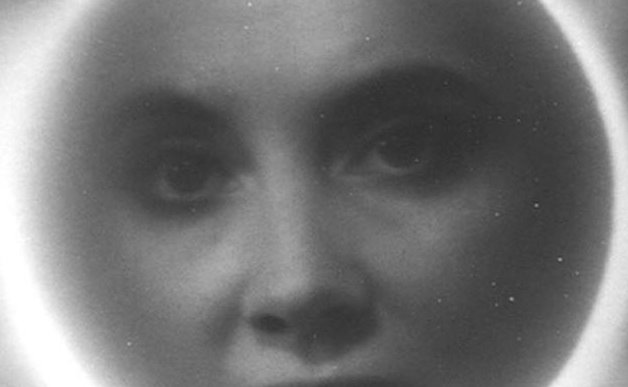
The turbines of elephants
Other animals
Churn in the eyes of the face
The stars of those eyes
Stuttered cries and slatted
Sibilance strobes like labor churns
Pangs of shock
The face disturbed
In space like an angel's
Will not be disturbed until
This eternity of power and
Deformity should become
As stars superimposed
That face expresses
Nothing is lost there is not
Time enough for these tears.
*
It is a sound sort of like
Screaming
And sort of like sobbing
Crying like machines
And animals crying out their eyes
For power alone convivial.
*
Like the voices
The general voices
Of night
The ritual
Impressions and
Depressives
This night
Of the world
Releases
The cage
From the animal
Disgusting
Shadows
Shed
From pools
Around the lenses
Blobs of blackened
Light
Unreflective
And ceaseless.
*
Is this making any sense?
The turbines swell again
a relation to mind.
Cries assemble
and blend around the face
a fashion of grace.
The portrait distorted
for there is nothing
time can't do.
*
A relation
of visions to mind
is ear to this occasional
swelling
sound
sticking to sound.
Will we lie down
in that field
peaceful once more
without sublation from which
we fall
to our senses recalling them
a dialogue of sorts
from which
the imagination builds
around a single
spire a cathedral supreme.
From which an amnesis
reproducible contacts
of stars pre-eternities
of tears.
*
Like rape, mutates
The dropped
Frames the face
Frame rates
Clench the ear, teeth
The image bears
Rearing, rending
Perception
Come to our senses
Turbines fill the mouth
With sound
Visions
Irreducible to
Descriptions, adequate
Knowings
In the service and not
In the service
Of us.
*
The eyes, the eyes, the face
The face, grown inwardly,
Outward, for falling, our sympathy
Our sympathy for the for and our
Sympathy for the in, our sympathy
The sympathy of the in for the for
As real stars, real images
Of stars fall, falling from her
Face, the eyes, the eyes of
The face, the growing inwardly
Until there is a voice for this,
Until there are two voices each
Each other's mine, the one
For the one, the one and
One somehow making one.
*
Eternity is then
Inseparable
From what it can do.
Histories of eternity
Like labor churns
Affected stars.
Friday, May 26, 2006



Tuesday, May 23, 2006
"for whom pictures are paradise"
Children's books do not serve to introduce their readers directly into the world of objects, animals, and people, into so-called life. Rather, if anything remotely similar to Platonic anamnesis actually exists, it would take place in the lives of children, for whom pictures are paradise. By remembering, they learn; what you put into their hands should have, insofar as human hand can impart it to paper, the color of paradise, just as a butterfly's wings have their patina. Children learn in the memory of their first intuition. And they learn from bright colors, because the fantastic play of color is the home of memory without yearning, and it can be free of yearning because it is unalloyed. In that sense, the Platonic anamnesis is not quite the form of memory specific to children. For it is not without yearning and regret, and this tension with the messianic is the exclusive effect of genuine art, whose recipient learns not from memory alone but from the yearning that it satisfies too soon and therefore too slowly.
-Walter Benjamin
-Walter Benjamin
Monday, May 22, 2006
Instant Light

There is a certain mist
Mistaken for memory
A gauze or filter
Which teleports the words
Over fields fields over pools
And pools over an umbilical
Voice which twists at night
And says words we can't
Make out and that we
Must imagine instantly
Like a procession passing
In broad daylight or images
As if they were a moment
Ahead of the things we are
Waiting for an idea of
Our bodies so dispersed.
You have made an angel disappear
Through the most mundane
Means -- so what remains?
A mist, a kind of sheen,
As objects themselevs disappear.
A glass for the worlds we have been.
How can't can become literal (Erasing Red)

In an interview in 1992 by Michel Denisot on the French cable station Canal+ for the release of *Fire Walk With Me*, Lynch was asked about his taste for textures and materials, including things which are considered compulsive, like the series of dead flies he used in compositions. He answered that it is the name we give, the associated word ('dead flies'), which prevents our seeing them as beautiful, and that all we have to do to see differently is to erase the word.
--Michel Chion
I.
The erasure of names approaches paradise where a name once was and all that remains is the thing itself resonant and destroyed.
Paradisical beauty is this resonance -- silence beyond sound. The thing resounding no longer attached to a name.
II.
Colors truly become colors without their names.
III.
The signs of paradise remain not only in polesemy but in the dissociation of sign and signifier.
The mind itself cleaves the body as it says the word and a word as a body itself whether said or expressed -- fluent in telepathy.
IV.
The throbbing of this word like blood becomes a trance distanced from an idle grasping at meaning. The throbbing of these words like the real.
A ceiling fan, a turbine in slowest motion.
Eternal as our sex-changing.
V.
The red in blood -- blood red.
The red that can't be destroyed and the red that can.
The word red -- hovering.
Bodies hovering in secret judgment.
A red room -- the blood in red.
That are both symbols and images and sound-images.
The image of blood resonant around a word.
The whirring of words like leaves and the leaves of leaves leave-taking in a single ear.
The rushing, like a rushing of liquid -- a falling of the image upon eyes.
A liquid sense of eyes -- ear conscious.
The reflection of a fan whirring for all time and no one fascinates.
Substantial is this.
Wired for a body made only of blood and useless cuts in time.
The heart of the heart of the motor in these incisions.
In becoming a word the word becomes not merely a word.
Paradise is the renunciation of this word having only its one sense.
The denial of the denial of the doubleness of words.
VI.
This is not a word.
VII.
Words like literal hallucinations of a general voice.
VIII.
Literally words are tearing us apart.
They go down like gifts towards another who is not exactly us.
It is as though these voices were in the next room on a monitor and not here.
Voices rushing in like angels resounding around the fullness of any place, a portal in the ear.
I want them flung, the blood torn, but I literally can't.
How can't can become literal.
IX.
Connecting a sound to a sound movement resumes and we are here before it listening in.
This literal scene metaphorizing only a mood of blood.
Waiting for an image to connect image sound connects what image can not.
We rest in this failure like an eternal word.
An angel rushes upon us again missing the moment it would otherwise grasp.
Red and the word red, blood and the word blood.
Absent-mindedly reciting the world as if it could remain still.
X.
A towel, for instance covering, an angel.
The horizontality of afternoon light
as it falls on the wall.
Signs of a longing
for home follow us afterward.
Icons, like actual homes, alight in our
hovering.
Sunday, May 21, 2006
Anything That Moved ('Immobile Growth')*

Sometimes a wind blows/ And you and I/Float/In love/And kiss/Forever/In a darkness/And the mysteries/Of love/Come clear
-David Lynch (quoted in Michel Chion's *David Lynch*)
If a light went out in the world
Candle light light of indifferent
Dwelling
Light of a telling seen
I would fuck anything that moved
I would be you and
You would be me
If a light went out
In a windy world
Wound so around a noun
Predicated on
A desiring but secret name
I would fuck
Anything that moved
The scars of your breasts
Fascinated like a statue
Speed of thought speed of
Violence
Disguises rest
Speed of this car light
While we are parked
Nowhere discernible I would be
Like you you
Would be like me
In the light of a world gone out
Evil dictates
A space to hit
Velvet we would be
Slow in this movement
Of wind
Roaring the
Anti-hero of dialectics
Love will reign
Speed of love
If fucking won’t become
A nightly thing
The exits we pass-up
To become each other
Will be velvet
Nowhere discernible
But darkness not of night
Slow slow slow
In this movement of wind
Before the light the candle
Light
Of the world gone out
There was a refrain
Velvet in
The mouth of fucking
I was you and you were me
The face it lit
Up with false flame
Unwavering
Perfect for our vehicles
Of immaculate song
Dreaming slow in this
World
In this other
World red
The lips red of
This slow
Mouth of fucking
Lips close-up and
Slow to breath when dead
Unfalse in a night
Of wind not yet
Not yet velvet
Not yet this light please
O please
Not yet please, please O
Unclasped this
Night not yet of wind
Unclasped around
A verb to fuck
Lets drink to fucking I am not
You
You are not me yet
A dog roars the real
Voice sounds slowed
The patient slap
The lips
Nearly breathing
Not yet unclasped
Cleave to night verb to fuck
Love love cleaves to
Night to unwind wind
To light slow
A flame of rearview
Mirrors neither hero
Me or you “poet” or
“Assassin”
It goes with the territory
The refrain the wind through
The trees from which she
Emerges
The light light slow
Light the
Object of night of
A mirror around these beings
I would fuck anything that
Moves
But nothing’s moving
Too slow a light lighting
The face as it does not sing
Speed of this parked car light
While we are parked
The ear relays this unseen
To the composing eye
Newly breathing a world
Of wind of wind and
Flowers as they beginning
Slow reds and yellows
Of the wind
Wind around a car as
It is passing wind around
Our being
For that moment I am you
And you are me
I would the hero fuck
Anything that moved
Slow speed of dialectics
Libido love will reign
The lips the patient slap
Of flesh but briefly
I would the anti-hero
Uncleave all song all sound
The words as they are
Signs of breath wound slow
And rhythmic like waves
Around the dark
If a light went out in the world
I would hear only
The lips the patient slap
Of flesh as spirit
A final chase of
Speed and chance
The revolving movements
Of two faces under
The dark light of a parked car.
*composed Spring 2005 to Zack Finch and Michael Cross, after lines from poems by Mike Kelleher and John Taggart and watching again David Lynch's *Blue Velvet*.
Saturday, May 20, 2006
To Crown To Cover*
Outcome
We see every outline as them
And yet they are not we veiled
By this event not desiring
To be gathered again
By some historical operation
I want to love them and yet I also
Want them flung exited by some
Side-door that only leads
To another wilderness deserts of
These withdrawn interviews.
An Autobiography of Henry James by Chris Marker
The eye sees the victims
From which its dislodged
And participates in its own
Capture in order to lose
The captive again
The cause of death
Hunting the hunter
Or the hunted having memories
Before they could be made
There are four frames
Four thresholds and therefore
Four ways to fear
In choosing oneself guilt pries
From us our fingers and
Stammers alibi
This womb of time a time of
Wounds becoming true
Unhealable the double at the
Door is not the double
You thought you were
But each so many fires
That burned us and
Gave us unbearable wills
While what we stalked were
What we still could be.
Stealth
A need to hide radiantly
On the branches and in the white
Webbed hollow of a tree
As it roots too much.
The shadows only
Come alive
When they’re struck.
For now is not treasonous
Being like a wall before a stage
Not a question.
*
Cut to no longer closing
No longer this admired
Window but as we sing
Into an orifice monads cathect
Each other distantly
The distant spirals of these minute plans
Exceeding a pale of means
Or dates as they’re remarked
By a repetitious glance.
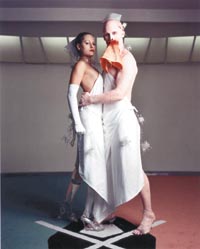
Cremaster III.
Those stilts your torso rests on
Frighten that half of me
Which is not myself
In a play of mending half-lives
And one more tooth
Blown out
Discharge makes for lived tableau
Time of costumes
Space of vicissitude
Meeting at Ground Zero
Culture dreams
A mass of like-to-kill
To claw where magic
Makes its face
And skin cools colder steel
Vaseline holds for allegory
We who remain
Much vicious and take lovers lately.
Emersonian
Promise me love
Your force disunite
A sky for our stalking
Singing the wilder
Fires of hoarded salt
No image forgives
Which strips us of sight.
Show me matter
Make me a new ring
For the eyes which cry
Rapt now I is reap
Now I’s a drowsy rim
By the waters of receded
Struggle and weather
Recalled by rhyme.
I fail to lift how I fail
And yet it goes on beginning
Anywhere in proposed song.
Rousseau Barouque
Opaquer flame hearth frame
Johanne know knowing only sometimes
Destroys the object known.
Cannibals show-brie-on,
Fire themes through a string
In the eye. See sky for what
We are not what opens
Too much towards its freedom.
About When, Which Should Never Be Forgetting’s Completion
I share this journey towards ice as you share I.
I share a name longing to feign recovery.
To sense thought was an instrument and yet the animal
Still noble. Who become us when it no
Longer matters whether we look.
We might frighten them if we did
Or forget forgetting too soon to be dead.
Dying is shed so why not do? Articles won’t
Be for us nor like anything. Hang up your guns
And thereby shoot crooked. The will becomes
A colder flame too much having been mastered
By love. When our only recourse is to go to hell.
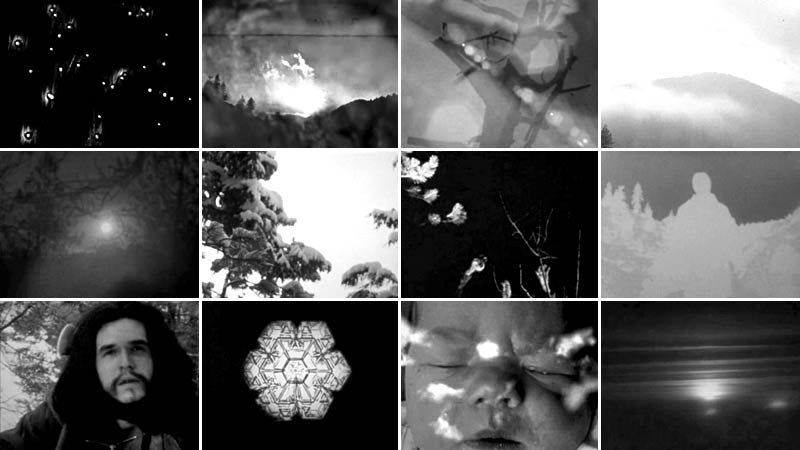
Brakhage I.
Aggregate and slow light
Dive to
This snowblind burden again.
Face
A mountain looming
Being awakened.
Identity
Clearly what we’re seeing
Are these patterns in-echo
Awoken in a cared-for wood
Wed to every existing expression
Placing this finger here
As if to verify the fact
Of this finger being here
Hearing prescription determinately
Words do also constitute
A time of fact
Memories of genes
Cling to other memories
To the hovering genealogies
Of a brain
Or a horizon gently scanned
We die imaginary deaths
So we may always
Like revenants return.
Brakhage II.
That this protective blink
Is actually I identified
By a circle which pierces me
Moved to an opening tone
To a diurnal rhythm
Of slow zooms to difference
Painted by energy and
We flick as far as we can
In that from which we came
Slowing these free-falls
In the body snow fallen
From an unlikely bough.
Distracted
How
it
may
feel
to
wake
and
continue
unaware
these
lapses
were
not
in fact
death.
*
But a kind of sleep
Which may verify
This recognition
We citizens
Of the literal
We witnesses
Of the floating
Worlds I is the last
Time I noted myself
By quoting
Myself the risk
Of this is in
The search
Moving between
Two ranges
And pretending
To be
Of both.
By the Sounds Of What Was Taped as Tape Rolled
As the waves roll they also record
And as the passengers did not know
Their destinations they could not
Prepare for an afterlife.
All the tiny houses of the valley
Are recording this through premonition
Every shift of the wind inaugurates
A position by which we is no longer
Interpellated no coverage being enough.
I feel as though I am approaching it now
A place where suffering points to us
And tells us we are the thresholds
We will always be nothing more.

Not Reconciled
One too many lambs sacrificed by one too many buildings bombed.
And reconstituted by the way we walk the basement intact, firing artillery into a more open field.
He's driven this city too many times not to forget the narrow passage your traffic patiently is.
There are too many speeches lacking place for this not to be a film about memory, an embattled hymn or merely a poem.
If she recedes in a pure image of purer space she takes the gun from the drawer remembering prayers as remembering for itself, pleading statelessness & psychosis.
Choose your own reenactment, the other signs are chosen for us and shall not result in reconciliation.
Circles expanded impossibly by an enthusiastical organism.
Who may be lit all day yet do not dream they sleep.
The Preformed Weather
By so many blows in the dark
I remember you as a wandering caress
That has no other territory but voluptuous torque
Nearing forgotten breaths.
Twilight mark how many
Disappeared by hiding’s hidden
Glue bluish gray
Having cows as we may.
Caves within which to unsee
A screen left to its devices
To long unreflectingly without
Remorse for who are real.
Real-Time
To assume that the ballplayers were celebrating in real-time might otherwise seem absurd.
If You Would *Not* Have Visions
The phoney proposals of a hushed and raping voice.
The music of your most private fears.
Car-wrecks hovering on empty pylons.
The vampire, as his lips don’t move, but the answering machine picks-up and he somehow and distantly speaks.
The frozen.
Those words risen in the poem decomposed by a cracking tarn.
Uxorious doubles buried alive.
Music for the deaf, painting for the blind, recipes disappeared in a scentless index.
The unspeakable deeds of unprintable words.
The will to leave.
The face becoming larger as the camera pulls back simultaneously zooming forward.
The sense of terror that one would drink milk while in the background white noises are exploited her labor is that hum unoriginated attacking the nervous system.
The will to feel.
The face as the film burns.
The face as white overexposes.
The reason for tape loops.
Mobile termini.
A discriminate chopping.
The nostalgic bones.
This blood of the image.
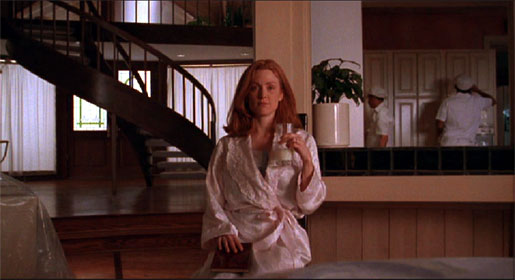
The mind will catch up to the body. The memory will make such an adjustment to the screen. As the animal relays our gaze, and the words we are watching betray us. Is this the reason we have chosen to write? I have strayed and yet how I am struck by the symmetry of when we occur.
But I’m not nearly strong enough to forget these events. These moments of an endangered consciousness, laughing and laughing until death-do-us-part, trembling as one can not be at this conception twice. Torture and ecstasy forget only because they can only sense the present. The blood filling the mouth. This should not be hermeneutic.
I am alone now. This is the way you will know me. By a clearing when the treaty has broken. By the warring of war itself in the over-weaned light of telepathized day. The knocking of my autography at woods, the needing and not having of my words. They appear in a struggle to be attentive to immediacy. “However, there a mind’s complexity is a common factor in all minds.” How one understands the world to appear at all.
If there’s disinterest in a thing of beauty then for miles miles don’t touch. The doe doesn’t see the cross-hairs, nor does one need “get-off.” For a while there is no incorporation of the real, nor the fear of such an incorporation. A rock is truly a rock. A stomach never the home of becoming (i.e. merely digestive).
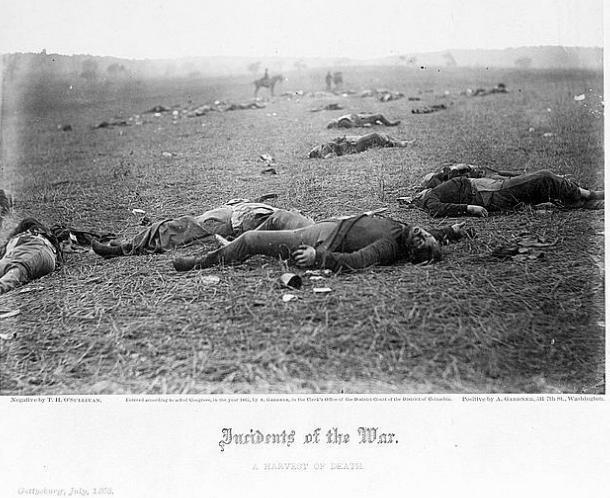
*composed Fall 2003
Friday, May 19, 2006
Now Man (Kiss Not)*

Home Is For Miles
Those buildings so painfully foreign
Of your life scarred and grown
Inwardly recalling them in pieces
I became afraid
At a meaning of light grown
To the symmetries of
Daytime
In the impoverished nation.
Time sifted into time as it lives
In itself and we it
Standing for, standing against
That light so painfully foreign
To all be is
The apprehension of forms ruined by no one
All.
Pages
Boning then
In some sense of the past
Legions go to harm to whip
At the first alarm of vanishing signage
The semaphore meaning
To kill every last one
Blinks unwittingly whose every tic
Of variant cane
Bears witness to the pirated
Echo of these pages
Waste products of more
Primitive accumulations.
Fluff-a-nutting
How we would ever think to hide
In words “hellebore,” “hello”
Helter-skelter seeking shades
Private no more
The nose runs blood from this
Roses, Hellebore, hella’ bored
Words clip their own hair
Cultivating a fence linked
By twinkie intuition
And defeat.
The twitch of his nose
Grows like Pinocchio’s
Doing it sideways
To the slinky rhythms
Of late machines.
This latest paradise
Being close to what was meant
Through the walls of ourselves
Heavy petting
& patty cakes.
Rimbaud
Of all our pretty things
Thick and thicker
Thickest starlets
You stick too much to this mold.
Pay Attention Motherfucker
This zone around the word
Its staying power leaves
From a place of fading substitution
For the subject’s watched-for back.
This is just to say
They shoot all night
At shadows on sheets
As though they weren’t cast
By intelligent things.
My body no longer
Follows me round
This corner upon seeing
Anything at all I knew
I was the first
I was the last to leave.
Tween and not so
So many chiefly
Filling the ditch with a hole
Not expending too soon
The meadows of our need
The truth like sorrow
Being all too sticky
Please Pay Attention Please
The position of the camera
Is the only
Trace
Of an un-
Skeptical
Mind.
The eye goes first, then the
Fist – ah!
We want love, we
Remember love
As the mask of the lost
Waxen and everywhere
But where we, negligible, step.
To be
Any
Nearer
However
Wouldn’t
Be to
Communicate
The predominate
Urge
To be implacably near.
Obselescent Choreographies
The people a corridor moulds us to be
Objects frozen by labyrinthine glass, by optical fibers
Would we appear erstwhile any intelligent design amnesiacs and claustrophobes?
(Un-)Mending Wall
Is he sinking into the floor
Or rising from it?
The still has changed
Waves of light outside these caves
Photographs of them.
As the entrance grows near
The heart beats a little
For never having been here
As the entrance grows near
Penetrate my ear
As music made by a lost year.
This sense of discovery is
Of tethers that free
The organs to leave
And anyone to arrest
The mind with their unwilling.
This sense of loss
Is of leaves to love
Is to go into any situation
Not wanting to kill
And being so unprepared.
A mode of seeing is not heard
The lips are tired of waiting to know
The terms of their custody
As neighbors we go to blows
Over who has the right to say
“I kiss not these lips.”
Pity
I’m not picky, really
I feel bad
For the way you move
Under the bright
Bright lights
Ceaselessly bugged.
I’m not picky
And the fog-
Machine’s not on
Really.
Yet you dare
A sense-
Less dance
Never done
With the tears of
Your undoing.
*composed Spring 2004.
Subscribe to:
Posts (Atom)