Wednesday, February 15, 2012
Joyland Poetry and Revolutionesque
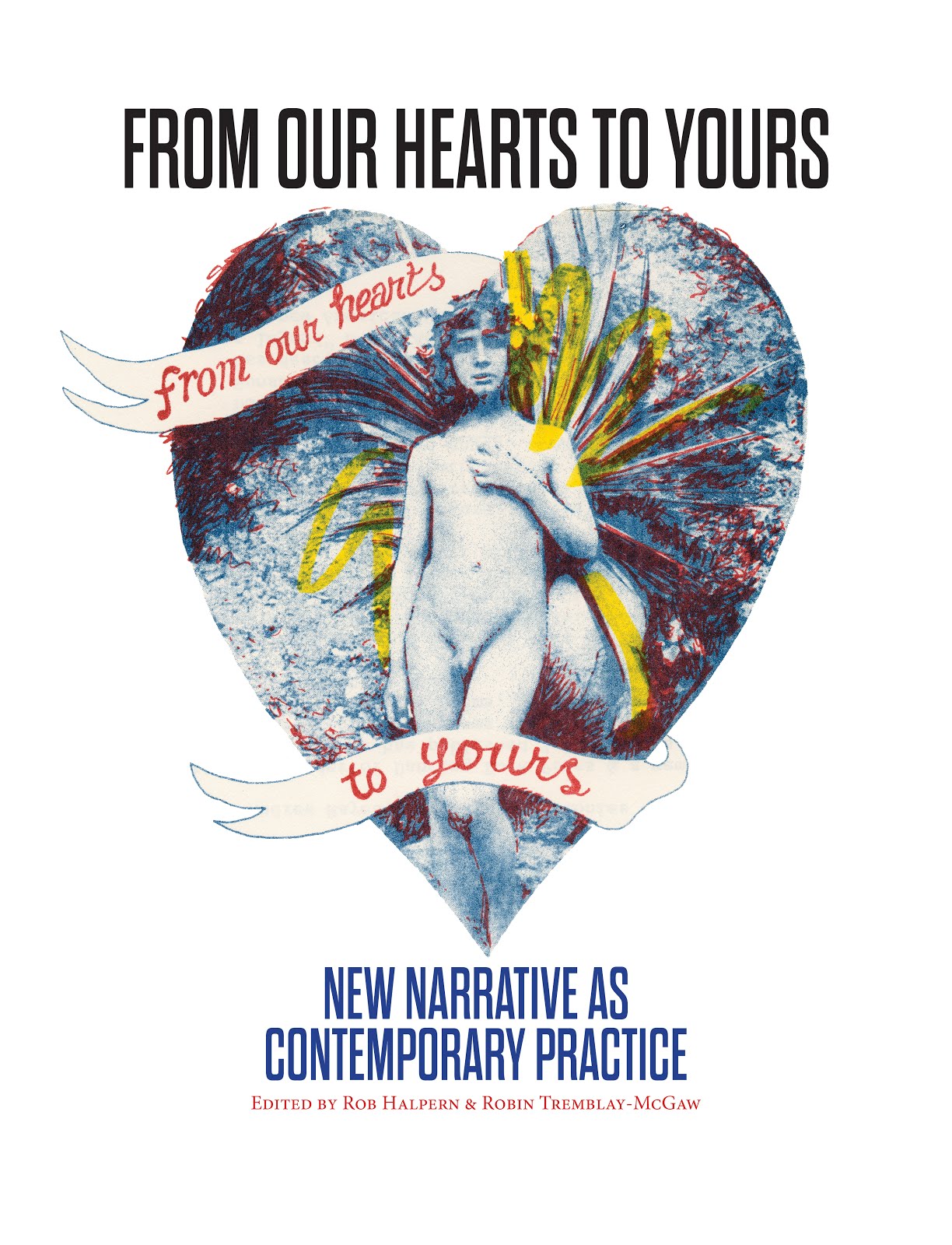
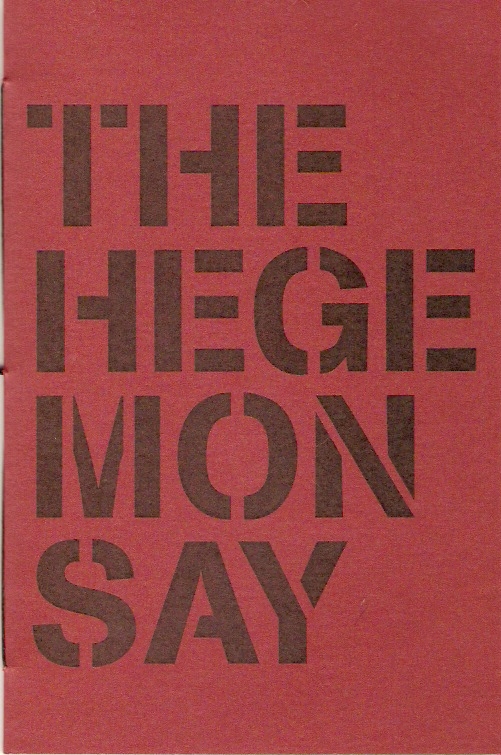
Thanks to the editors of Joyland Poetry and Revolutionesque for inviting me to contribute work. Nathan Austin, Ana Božičević, and Amy King.


Books Talking with Tyrone Williams (on UStream)
Video streaming by Ustream
Here's UStream footage of Tyrone Williams and I talking with one another for Nathaniel Otting's Books Talking series at Flying Object gallery.
Tuesday, February 14, 2012
Valentine
--for Dottie
There are ideas I have but don’t consider mine
Like there are images of your tiny hands I have
There are images of your eyes when I have kissed them
There is the notion of kissing that is culturally specific
And really I didn't kiss your eyes because that would be gross
Your eyeballs, I mean, I kissed your eyelashes while you slept
And didn't dream of men with eyes also kissing you
Of other women with hands made of flame
The role of substitution in poetry and life being of interest to us both
If I bite your style or if younger poets bite your style
Does that mean we are in love with you or that we want to be you?
What's the Shakespeare line, "number there was slain"?
If you be phoenix, I'll be turtle trudging through identity's paradox
Mistaken for Platonic yet wholly on fire our avatars and animus obtain
Some principle of the divine only a semblance of speech can recall,
That kissing on our devices we recall actually, the phanopoeia of our eyelashes meet
Like grief we might say they flutter, that they kiss vulgar notions of eternity,
Does this mean we are living or that we affirm our despair at death?
Recall the love of things we first bat with flame.
There are ideas I have but don’t consider mine
Like there are images of your tiny hands I have
There are images of your eyes when I have kissed them
There is the notion of kissing that is culturally specific
And really I didn't kiss your eyes because that would be gross
Your eyeballs, I mean, I kissed your eyelashes while you slept
And didn't dream of men with eyes also kissing you
Of other women with hands made of flame
The role of substitution in poetry and life being of interest to us both
If I bite your style or if younger poets bite your style
Does that mean we are in love with you or that we want to be you?
What's the Shakespeare line, "number there was slain"?
If you be phoenix, I'll be turtle trudging through identity's paradox
Mistaken for Platonic yet wholly on fire our avatars and animus obtain
Some principle of the divine only a semblance of speech can recall,
That kissing on our devices we recall actually, the phanopoeia of our eyelashes meet
Like grief we might say they flutter, that they kiss vulgar notions of eternity,
Does this mean we are living or that we affirm our despair at death?
Recall the love of things we first bat with flame.
Friday, February 10, 2012
Frank Sherlock Presents (at Moonstone Arts Center, Philly)
Frank Sherlock Presents
Anne Waldman & Thom Donovan
Tuesday February 28, 7pm
Moonstone Arts Center
110A S. 13th Street,
Phila., PA 19107
Anne Waldman & Thom Donovan
Tuesday February 28, 7pm
Moonstone Arts Center
110A S. 13th Street,
Phila., PA 19107
Hannah Weiner and Intense Autobiography (@ J2)

Here is the full version of the talk I gave at Rex Regina gallery last fall.
"Basically, I want to use intense autobiography to describe self-life-writing practices (the literal translation of auto-bio-graphy) that stray from the genre of autobiography, in which one provides the facts of their life, from birth until present, usually late in life. While intense autobiography exists in relation to these forms of self- or person- writing, it is different. And where it differs largely are in two respects: 1. That writing is not a transparent, narrative means of making self or person appear retroactively, but the very means through which the person/self comes into being in relation to a social milieu; 2. Through intense autobiography the “body”— that container demarcating human personhood and rights — becomes a site of experience and experimentation where the limits of the self are related, if not often contested, in relation to a public, community, and/or social discourse."
Wednesday, February 01, 2012
5 Questions for Contemporary Practice with Claire Pentecost

Five questions with the heroic Claire Pentecost...
"In many ways my need to know and explore how the world works is my art. I think this is partly why I have developed the idea of the public amateur: the artist as someone who learns in public, putting the production of knowledge itself up for scrutiny. Why is the production of knowledge so important? It’s not only because knowledge is partly what determines one’s position in relation to risk, but... also because the expertise of authorities has for the most part failed to manage the risks of a technological society (part of the Occupy movement derives from this recognition). It becomes increasingly clear that no one is going to save us and we have to work together to experiment with new ways of being in the world. For this we have to return knowledge to the realm of the social by producing knowledge collectively. We have to start with 'I don’t know,' and proceed to think across disciplines to propose alternatives to a system founded on violence against life."
Talking with Tyrone Williams (at Flying Object)

Thanks to Nathaniel Otting I will be talking with Tyrone Williams at Flying Object in a couple weeks (Sunday, February 12th).
Really excited to discuss Tyrone's Howell, which is a dense and demanding book, and to my mind his opus.
Tuesday, January 24, 2012
Creative Speaking (Syllabus)
Course description
The following course is intended to present a variety of ways of thinking about the relationship between writing and orality, with special attention to composition methods generated through (constrained) embodiment, conversation, performance, and extemporization (improvised speech and utterance). As will be discussed at length throughout the class, the relationship of speech to writing is by no means simple, mediated as it is by technologies of technical reproduction (typewriter and tape recorder in particular, but more recently text messaging, Skype, and other technologies that extend from Web 2.0). My hope is that by the end of the semester you may be able to see the problem through a variety of aspects. It is also my hope that you may find your own entry point into the problem as artists, writers, critics, scholars, and citizens. This means exploring and extending the techniques of composition presented by the texts we encounter in class. It also means trying to form a critical vocabulary through which we may approach a common set of texts.
Required texts
-- Course packet
-- Books*
Theresa Hak Kyung Cha’s Dictee
Dana Ward’s This Can’t Be Life
*I recommend you purchase books online via Bookfinder (www.bookfinder.com) or Small Press Distribution (www.spdbooks.org).
--Some recommendations for further reading:
Of Grammatology, Jacques Derrida
Orality and Literacy, Walter Ong
Gramaphone, Film, Typewriter, Friedrich Kittler
The Muse Learns to Write, Eric A. Havelock
Close Listening, ed. Charles Bernstein
The Visible Word, Johanna Drucker
Black Riders, Jerome McGann
Sound States, ed. Adelaide Morris
My Way, Charles Bernstein
Uncreative Writing, Kenneth Goldsmith
Before Meaning, Steve McCaffrey
Imagining Language, ed. McCaffery and Rasula
Discrepant Engagement, Nathaniel Mackey
In the Break, Fred Moten
The Birthmark, Susan Howe
A Voice and Nothing More, Mladen Dolar
Audio-vision: Sound on Screen, Michel Chion
The Queen's Throat, Wayne Koestenbaum
Concerto for the Left Hand, Michael Davidson
Bottom: on Shakespeare, Louis Zukofsky
Writing the Illegible, Craig Dworkin
On the Camera Arts and Consecutive Matters, Hollis Frampton
HEATH (Plagiarism/Outsource), Tan Lin
Frank O’Hara: the Poetics of Coterie, Lytle Shaw
UbuWeb: www.ubuweb.com
PennSound: writing.upenn.edu/pennsound/
Schedule
January 12 Introductions; creative speaking gallery
--Assignment: Charles Olson’s “Projective Verse,” Frank O’Hara’s "Personism," a page from Louis Zukofsky’s “A”, selected poems
--Links:
"Personism"
http://www.poets.org/viewmedia.php/prmMID/20421
"Projective Verse"
http://www.poetryfoundation.org/learning/essay/237880
Emily Dickinson’s “We don’t cry – Tim and I”
http://www.poemhunter.com/poem/we-don-t-cry-tim-and-i/
William Carlos Williams’ “This is Just to Say”
http://www.poets.org/viewmedia.php/prmMID/15535
http://media.sas.upenn.edu/pennsound/authors/Williams-WC/07_Van-Nuys_11-16-50/Williams-WC_07_This-is-Just_Van-Nuys_11-16-50.mp3
“Tract”
http://media.sas.upenn.edu/pennsound/authors/Williams-WC/01_Columbia-Univ_01-09-42/Williams-WC_02_Tract_Columbia-Univ_01-09-42.mp3
Robert Creeley’s “I Know a Man”
http://www.poetryfoundation.org/poem/171564
http://media.sas.upenn.edu/pennsound/authors/Creeley/Vancouver_8-12-63/Creeley-Robert_09_I-Know-a-Man_Vancouver_8-12-63.mp3
Charles Olson’s “I, Maximus of Gloucester, to You”
http://www.poetryfoundation.org/poem/176950
http://writing.upenn.edu/pennsound/x/Olson.php
Frank O’Hara’s “Metaphysical Poem”
http://www.frankohara.org/fohaudio01/metaphysicalpoem.html
“Having a Coke With You”
http://www.youtube.com/watch?v=YDLwivcpFe8
Amiri Baraka’s “Low Coups”
http://writing.upenn.edu/pennsound/x/Baraka.php
“Dope”
http://media.sas.upenn.edu/pennsound/authors/Baraka/Buffalo-78/Baraka-Amiri_05_Dope_Buffalo_12-8-78.mp3
Bernadette Mayer’s “Sonnet” [“You jerk you didn’t call me”]
http://www.poetryfoundation.org/poem/179918
Fred Moten'a “Here It Is”
http://media.sas.upenn.edu/pennsound/authors/Moten/KWH_02-28-08/Moten-Fred_15_Here-It-Is_KWH-UPenn_02-28-08.mp3
Tracie Morris’ “Slave Sho to Video aka Black but Beautiful”
http://mediamogul.seas.upenn.edu/pennsound/authors/Morris/Morris-Tracie_From-Slave-Sho-to-Video-aka-Black-but-Beautiful_2002.mp3
19 “A Voice Blown from Print”: Projective Poetics & Personism
--Assignment: Charles Reznikoff’s Testimony selection and Langston Hughes' "Montage of a Dream Deferred," selection from Lorenzo Thomas’ Don't Deny My Name
26 Witnessing Speech
--Assignment: Allen Ginsberg’s “Wichita Vortex Sutra” and Hannah Weiner’s Clairvoyant Journals selection (http://libraries.ucsd.edu/speccoll/m504/5/index.html), with Michael Davidson’s “Technologies of Presence” (from Sound States, ed. A. Morris)
February 2 Radical Journalism
--Assignment: Gertrude Stein’s “Portraits and Repetition,” David Antin’s “how long is the present” (from Tunings), and John Cage’s “Lecture on Nothing” (from Silence)
--1-2 page midterm abstracts to be submitted
9 The Lecture as Compositional Practice & Performance
--Assignment: Gallery of New York poets TBA
16 Composition as Conversation part 1
--Assignment: Kamau Brathwaite’s “History of the Voice” (from Roots), Brathwaite’s “Letter Sycorax” (from Middle Passages), The Anthology of Rap selection (ed. Bradley & Dubois), Dub Reggae gallery TBA
23 midterms due; Auritures
--Assignment: Theresa Hak Kyung Cha’s Dictee, Susan Howe’s “The Articulation of Sound Forms in Time” selection, Myung Mi Kim’s Dura selection, Robert Kocik’s Re-English selection
March 1 Re-Speaking
--Assignment: Steve Benson’s “Views of Communist China” (from The Kenning Anthology of Poets Theatre) with Suzanne Stein’s “A Hole in Space”
8 Spring Break
15 Composition as Conversation part II
--Assignment: Jordan Scott’s Blert selection, Larry Eigner selection TBA, Michael Davidson on Larry Eigner from Concerto for the Left Hand
22 Embodiment, Speech Disfluency, Disability, Built Environment
--Assignment: Fiona Templeton’s ME DEAD and “Speaking For Performance / Writing With the Voice”
29 Creative Speaking: A Visit with Fiona Templeton
--Assignment: Dana Ward’s This Can’t Be Life
April 5 This Can’t Be Life: A Visit with Dana Ward
--Assignment: TBA
12 last class; final work due; The Acoustic Uncanny, Transcriptions (from Analogue to Digital)
The following course is intended to present a variety of ways of thinking about the relationship between writing and orality, with special attention to composition methods generated through (constrained) embodiment, conversation, performance, and extemporization (improvised speech and utterance). As will be discussed at length throughout the class, the relationship of speech to writing is by no means simple, mediated as it is by technologies of technical reproduction (typewriter and tape recorder in particular, but more recently text messaging, Skype, and other technologies that extend from Web 2.0). My hope is that by the end of the semester you may be able to see the problem through a variety of aspects. It is also my hope that you may find your own entry point into the problem as artists, writers, critics, scholars, and citizens. This means exploring and extending the techniques of composition presented by the texts we encounter in class. It also means trying to form a critical vocabulary through which we may approach a common set of texts.
Required texts
-- Course packet
-- Books*
Theresa Hak Kyung Cha’s Dictee
Dana Ward’s This Can’t Be Life
*I recommend you purchase books online via Bookfinder (www.bookfinder.com) or Small Press Distribution (www.spdbooks.org).
--Some recommendations for further reading:
Of Grammatology, Jacques Derrida
Orality and Literacy, Walter Ong
Gramaphone, Film, Typewriter, Friedrich Kittler
The Muse Learns to Write, Eric A. Havelock
Close Listening, ed. Charles Bernstein
The Visible Word, Johanna Drucker
Black Riders, Jerome McGann
Sound States, ed. Adelaide Morris
My Way, Charles Bernstein
Uncreative Writing, Kenneth Goldsmith
Before Meaning, Steve McCaffrey
Imagining Language, ed. McCaffery and Rasula
Discrepant Engagement, Nathaniel Mackey
In the Break, Fred Moten
The Birthmark, Susan Howe
A Voice and Nothing More, Mladen Dolar
Audio-vision: Sound on Screen, Michel Chion
The Queen's Throat, Wayne Koestenbaum
Concerto for the Left Hand, Michael Davidson
Bottom: on Shakespeare, Louis Zukofsky
Writing the Illegible, Craig Dworkin
On the Camera Arts and Consecutive Matters, Hollis Frampton
HEATH (Plagiarism/Outsource), Tan Lin
Frank O’Hara: the Poetics of Coterie, Lytle Shaw
UbuWeb: www.ubuweb.com
PennSound: writing.upenn.edu/pennsound/
Schedule
January 12 Introductions; creative speaking gallery
--Assignment: Charles Olson’s “Projective Verse,” Frank O’Hara’s "Personism," a page from Louis Zukofsky’s “A”, selected poems
--Links:
"Personism"
http://www.poets.org/viewmedia.php/prmMID/20421
"Projective Verse"
http://www.poetryfoundation.org/learning/essay/237880
Emily Dickinson’s “We don’t cry – Tim and I”
http://www.poemhunter.com/poem/we-don-t-cry-tim-and-i/
William Carlos Williams’ “This is Just to Say”
http://www.poets.org/viewmedia.php/prmMID/15535
http://media.sas.upenn.edu/pennsound/authors/Williams-WC/07_Van-Nuys_11-16-50/Williams-WC_07_This-is-Just_Van-Nuys_11-16-50.mp3
“Tract”
http://media.sas.upenn.edu/pennsound/authors/Williams-WC/01_Columbia-Univ_01-09-42/Williams-WC_02_Tract_Columbia-Univ_01-09-42.mp3
Robert Creeley’s “I Know a Man”
http://www.poetryfoundation.org/poem/171564
http://media.sas.upenn.edu/pennsound/authors/Creeley/Vancouver_8-12-63/Creeley-Robert_09_I-Know-a-Man_Vancouver_8-12-63.mp3
Charles Olson’s “I, Maximus of Gloucester, to You”
http://www.poetryfoundation.org/poem/176950
http://writing.upenn.edu/pennsound/x/Olson.php
Frank O’Hara’s “Metaphysical Poem”
http://www.frankohara.org/fohaudio01/metaphysicalpoem.html
“Having a Coke With You”
http://www.youtube.com/watch?v=YDLwivcpFe8
Amiri Baraka’s “Low Coups”
http://writing.upenn.edu/pennsound/x/Baraka.php
“Dope”
http://media.sas.upenn.edu/pennsound/authors/Baraka/Buffalo-78/Baraka-Amiri_05_Dope_Buffalo_12-8-78.mp3
Bernadette Mayer’s “Sonnet” [“You jerk you didn’t call me”]
http://www.poetryfoundation.org/poem/179918
Fred Moten'a “Here It Is”
http://media.sas.upenn.edu/pennsound/authors/Moten/KWH_02-28-08/Moten-Fred_15_Here-It-Is_KWH-UPenn_02-28-08.mp3
Tracie Morris’ “Slave Sho to Video aka Black but Beautiful”
http://mediamogul.seas.upenn.edu/pennsound/authors/Morris/Morris-Tracie_From-Slave-Sho-to-Video-aka-Black-but-Beautiful_2002.mp3
19 “A Voice Blown from Print”: Projective Poetics & Personism
--Assignment: Charles Reznikoff’s Testimony selection and Langston Hughes' "Montage of a Dream Deferred," selection from Lorenzo Thomas’ Don't Deny My Name
26 Witnessing Speech
--Assignment: Allen Ginsberg’s “Wichita Vortex Sutra” and Hannah Weiner’s Clairvoyant Journals selection (http://libraries.ucsd.edu/speccoll/m504/5/index.html), with Michael Davidson’s “Technologies of Presence” (from Sound States, ed. A. Morris)
February 2 Radical Journalism
--Assignment: Gertrude Stein’s “Portraits and Repetition,” David Antin’s “how long is the present” (from Tunings), and John Cage’s “Lecture on Nothing” (from Silence)
--1-2 page midterm abstracts to be submitted
9 The Lecture as Compositional Practice & Performance
--Assignment: Gallery of New York poets TBA
16 Composition as Conversation part 1
--Assignment: Kamau Brathwaite’s “History of the Voice” (from Roots), Brathwaite’s “Letter Sycorax” (from Middle Passages), The Anthology of Rap selection (ed. Bradley & Dubois), Dub Reggae gallery TBA
23 midterms due; Auritures
--Assignment: Theresa Hak Kyung Cha’s Dictee, Susan Howe’s “The Articulation of Sound Forms in Time” selection, Myung Mi Kim’s Dura selection, Robert Kocik’s Re-English selection
March 1 Re-Speaking
--Assignment: Steve Benson’s “Views of Communist China” (from The Kenning Anthology of Poets Theatre) with Suzanne Stein’s “A Hole in Space”
8 Spring Break
15 Composition as Conversation part II
--Assignment: Jordan Scott’s Blert selection, Larry Eigner selection TBA, Michael Davidson on Larry Eigner from Concerto for the Left Hand
22 Embodiment, Speech Disfluency, Disability, Built Environment
--Assignment: Fiona Templeton’s ME DEAD and “Speaking For Performance / Writing With the Voice”
29 Creative Speaking: A Visit with Fiona Templeton
--Assignment: Dana Ward’s This Can’t Be Life
April 5 This Can’t Be Life: A Visit with Dana Ward
--Assignment: TBA
12 last class; final work due; The Acoustic Uncanny, Transcriptions (from Analogue to Digital)
Wednesday, January 18, 2012
Marathon reading of The Making of Americans (at Triple Canopy)
In celebration of the opening of 155 Freeman, Triple Canopy is pleased to present a marathon reading of Gertrude Stein’s enormously long and allegedly unreadable novel The Making of Americans: Being a History of a Family’s Progress. This weekend, starting on Friday at 7 p.m., an invited list of New York–based artists, writers, publishers, scholars, and other collaborators will gather in Greenpoint to perform the entirety of Stein’s text in a continuous read-in, expected to last 48 hours, more or less.
Multifarious Array Winter/Spring Schedule
Winter/Spring 2012 line-up
@Pete's Candy Store
709 Lorimer Street
Williamsburg, Brooklyn
http://multifariousarray.blogspot.com/
_______________________
1/6-Noah Eli Gordon, Sommer Browning, Harmony Holiday, and Steven Zultanski
1/20-Josef Kaplan, Brian Ang, Laura Elrick
2/3-Kendra Grant Malone, Matthew Savoca, Brett Price
2/17-Timothy Donnelly, Anselm Berrigan, Camille Roy
3/16-Michael Robins, Adam Clay, Ada Limon
3/23-Anelise Chen, Andrew Levy, Ken Walker
4/6-Michael Robbins, Angelo Nikolopoulos, Carley Moore
4/20-Todd Colby, Kate Schapira, Leigh Stein
5/4-Sam Truitt, Carter Edwards, Frank Sherlock
5/11-Eric Baus, Cynthia Sailers, Stacy Szymaszek
5/18-Shonni Enelow, Sasha Fletcher, Joseph Bradshaw
5/25-No, Dear Magazine Reading
6/1-David Brazil, Sara Larsen, Robert Kocik
@Pete's Candy Store
709 Lorimer Street
Williamsburg, Brooklyn
http://multifariousarray.blogspot.com/
_______________________
1/6-Noah Eli Gordon, Sommer Browning, Harmony Holiday, and Steven Zultanski
1/20-Josef Kaplan, Brian Ang, Laura Elrick
2/3-Kendra Grant Malone, Matthew Savoca, Brett Price
2/17-Timothy Donnelly, Anselm Berrigan, Camille Roy
3/16-Michael Robins, Adam Clay, Ada Limon
3/23-Anelise Chen, Andrew Levy, Ken Walker
4/6-Michael Robbins, Angelo Nikolopoulos, Carley Moore
4/20-Todd Colby, Kate Schapira, Leigh Stein
5/4-Sam Truitt, Carter Edwards, Frank Sherlock
5/11-Eric Baus, Cynthia Sailers, Stacy Szymaszek
5/18-Shonni Enelow, Sasha Fletcher, Joseph Bradshaw
5/25-No, Dear Magazine Reading
6/1-David Brazil, Sara Larsen, Robert Kocik
Friday, January 13, 2012
THE HOLE, a Gathering (at St. Mark's Poetry Project)
Friday, February 10, 2012
10:00 pm
Reframing the “book launch,” Thom Donovan and Brett Price offer a night of consumption, conversation, reflection, and performance around Donovan’s book, The Hole (Displaced Press, 2012). As Donovan has written to participants about the event: “I would not like to read from the book, so much as I would use the book’s appearance as an occasion for conversation around its contents, as well as an opportunity for friends, colleagues, and loved ones to gather.” Participants include Melissa Buzzeo, CAConrad, Rob Halpern, Brenda Iijima, Madhu Kaza, Robert Kocik, Dorothea Lasky, Andrew Levy, C.J. Martin, Eléna Rivera, Eleni Stecopoulos, Brian Whitener, Tyrone Williams, and others.
10:00 pm
Reframing the “book launch,” Thom Donovan and Brett Price offer a night of consumption, conversation, reflection, and performance around Donovan’s book, The Hole (Displaced Press, 2012). As Donovan has written to participants about the event: “I would not like to read from the book, so much as I would use the book’s appearance as an occasion for conversation around its contents, as well as an opportunity for friends, colleagues, and loved ones to gather.” Participants include Melissa Buzzeo, CAConrad, Rob Halpern, Brenda Iijima, Madhu Kaza, Robert Kocik, Dorothea Lasky, Andrew Levy, C.J. Martin, Eléna Rivera, Eleni Stecopoulos, Brian Whitener, Tyrone Williams, and others.
Saturday, December 31, 2011
In Actu
--for Daria Fain, composed 11/2011
1.
So expressed was a lung inside your throat
The way it microphoned the world
Like blood cleansed, leavened into dirt
The holocausts inside us, the heat on the air
No metaphors here but things seen
See us for what we are, we sing, we sing
Into the microphone called throat
Called air, another blue song
You put into a horizon note,
Splits where your dress was a difference
Where your hands splay the air
There is an animal poise
Called verse notwithstanding
Actual amplification,
Notwithstanding the world
Illuminated until it disappears.
2.
Who will the living be
In robes of white terrycloth
And ribs like wings
Billow when breath
Is obscenely material?
Captioned like our angel names
Don’t become truly like
Our names until we’ve been
Will you be
In this robe with me
Incubating?
Will you be in this skin with me
Flawed, not a metaphor for things seen?
What will we be in talking, in walking?
What will we be in pointing?
The extent to which a world is formed.
1.
So expressed was a lung inside your throat
The way it microphoned the world
Like blood cleansed, leavened into dirt
The holocausts inside us, the heat on the air
No metaphors here but things seen
See us for what we are, we sing, we sing
Into the microphone called throat
Called air, another blue song
You put into a horizon note,
Splits where your dress was a difference
Where your hands splay the air
There is an animal poise
Called verse notwithstanding
Actual amplification,
Notwithstanding the world
Illuminated until it disappears.
2.
Who will the living be
In robes of white terrycloth
And ribs like wings
Billow when breath
Is obscenely material?
Captioned like our angel names
Don’t become truly like
Our names until we’ve been
Will you be
In this robe with me
Incubating?
Will you be in this skin with me
Flawed, not a metaphor for things seen?
What will we be in talking, in walking?
What will we be in pointing?
The extent to which a world is formed.
Revenants, Remains
--for Rob Halpern, composed 8/2011
The history of this movement
Like soldiers on spec
Don’t know they are dead
Fucked by a global content
No one wants, abjected in-
sight of things, eyes that would
Make a difference if not for
Disaster’s sense, I feel it in
My veins this blood being spilt
Far away, while violent mourning
Transfigures our present
Coverts thanatos to eros
Almost becomes a public
I could kiss because it can’t
Come back this broken
Revenant moment
Only silence comes back
What it touches we call
A demilitarized music
Who sings a blocked world?
The history of this movement
Like soldiers on spec
Don’t know they are dead
Fucked by a global content
No one wants, abjected in-
sight of things, eyes that would
Make a difference if not for
Disaster’s sense, I feel it in
My veins this blood being spilt
Far away, while violent mourning
Transfigures our present
Coverts thanatos to eros
Almost becomes a public
I could kiss because it can’t
Come back this broken
Revenant moment
Only silence comes back
What it touches we call
A demilitarized music
Who sings a blocked world?
A Thousand Levels
Like sites write
‘Me’ little micro
-cosm this body renders
A thousand levels, boundaries
Where toxins structure us
Is ‘holy’?, of milk
Winds steady in this
Breast remembrance
Through daylight the rap
Song of our lives and life
Escapes, no allegory,
No metaphor, just allergy
Just conviviality in lyric
Rhythm samples my heart
Thresholds where earth dreams
Mind into cognizance
Awake to this scented
Word called “cell,” called
“Pathogen,” a book
We will be buried in.
--composed 8/2011
‘Me’ little micro
-cosm this body renders
A thousand levels, boundaries
Where toxins structure us
Is ‘holy’?, of milk
Winds steady in this
Breast remembrance
Through daylight the rap
Song of our lives and life
Escapes, no allegory,
No metaphor, just allergy
Just conviviality in lyric
Rhythm samples my heart
Thresholds where earth dreams
Mind into cognizance
Awake to this scented
Word called “cell,” called
“Pathogen,” a book
We will be buried in.
--composed 8/2011
Thursday, December 29, 2011
CA Conrad's 2011 Sexiest Poem Award

I couldn't be any more pleased than to share this year's "Sexiest Poem of the Year" prize with Samantha Giles, awarded annually by CA Conrad. Thank you, Conrad! "2011 was an impossible year for keeping up with the amazing poetry being published. To those studying the dead 'masters,' oh how will you ever catch up to the present?" You took the words right out of my mouth!
Live interview with Catherine Sullivan (Project for an Archive of the Future Anterior)

A few weeks ago I interviewed the artist Catherine Sullivan for the video archive I curate with Sreshta Rit Premnath, Project for an Archive of the Future Anterior. Here is the video of Sullivan presenting clips from her work, followed by the interview and Q&A with audience.
5 Questions for Contemporary Practice with Sreshta Rit Premnath

The latest 5 Questions for Contemporary Practice is with Sreshta Rit Premnath.
"2. Do you feel there is a need for the work that you are doing given the larger field of visual art and the ways that aesthetic practices may be able to shape public space, civic responsibility, and political action? Why or why not?
No, I do not feel that there is a need for the work I do. Rather, to restate myself, I feel the need to do my work. If I respond to an external need, then it is the result of internalizing it, and once it is internalized it is felt as an impulse rather than a need. Although my sense of civic responsibility and my political motivations are reflected in my artwork, I do not see my artwork as a means of political action. Politics as a means of social change is fully grounded in the ontic register. It requires an ethical clarity and a contingent certainty. However, to apply Wittgenstein’s words on philosophy to art, “Lack of clarity in [art] is tormenting. It is felt as shameful. We feel: we do not know our way about where we should know our way about. And nevertheless it isn’t so. We can get along very well without… knowing our way about here.”
However, every human being is a political being and how we act in the world is the embodiment of our politics. Although in this sense all our actions in the world are political, they are in most cases not particularly good politics or effective politics. While we could expand the word art to include politics or conversely expand the notion of politics to talk about its aesthetics, I find the two categories to function in different modalities within my practice. When the political enters my artwork it becomes the ontic ground for various formal procedures as well as the concrete ground for philosophical speculation.
There are crucial political imperatives grounded in the ethical urgency of what ought to be done that cannot be effectively dealt with in my art practice. However, I don’t think this makes my artwork less important, rather it reveals that there are multiple modes of discourse and some are more effective in “shaping public space, civic responsibility, and political action” than others."
Wednesday, December 28, 2011
Where it proceeds to the rupture
--after some phrases from Brian Holmes
1.
Is ‘experimental’ where it proceeds to the rupture
of the cultural model, lights were struck
and bitter coffee served, interrupted
every half hour for feedback how to share
an experience that produced
such profound changes in one’s self?
Art making, an ambiguous expression
of personal and collective desires
A glance or tear, a media intervention,
the modulation of affect in the face of that threat
Seattle happened here then was foreclosed
What’s the use of aesthetics if you don’t have eyes to see?
They drank the bitter coffee, interrupted the projections to bear witness
The affective modulations that won’t be represented
without eyes to see them with
Who drank out of empathy the affective modulation
Of our ambiguous desires, neither personal nor collective,
Yet political all of them before any of this was subjective
Or in a white cube
Because these tears turn to ______ no one will see
Things you heard, you are trying to remember them hard
No one will know the things you heard
When what we remain are powers
2.
Post-expectant, the heart at work,
what should we name its book, lovingly?
Messianic aspect of a place from which to begin,
actual birds drenched, withdrawn from post-expectant
springtimes somewhere else there are worlds,
somewhere other than ______
Which like William James’ polyhedral turns
thousands of miles above our infancy, blue and rarefied
Subtle like a conversation, the world does not
actually begin, it begins and ends suspended
by friendship, by enmity announcing the proximity
of end times, where it proceeds to the rupture of the cultural model
1.
Is ‘experimental’ where it proceeds to the rupture
of the cultural model, lights were struck
and bitter coffee served, interrupted
every half hour for feedback how to share
an experience that produced
such profound changes in one’s self?
Art making, an ambiguous expression
of personal and collective desires
A glance or tear, a media intervention,
the modulation of affect in the face of that threat
Seattle happened here then was foreclosed
What’s the use of aesthetics if you don’t have eyes to see?
They drank the bitter coffee, interrupted the projections to bear witness
The affective modulations that won’t be represented
without eyes to see them with
Who drank out of empathy the affective modulation
Of our ambiguous desires, neither personal nor collective,
Yet political all of them before any of this was subjective
Or in a white cube
Because these tears turn to ______ no one will see
Things you heard, you are trying to remember them hard
No one will know the things you heard
When what we remain are powers
2.
Post-expectant, the heart at work,
what should we name its book, lovingly?
Messianic aspect of a place from which to begin,
actual birds drenched, withdrawn from post-expectant
springtimes somewhere else there are worlds,
somewhere other than ______
Which like William James’ polyhedral turns
thousands of miles above our infancy, blue and rarefied
Subtle like a conversation, the world does not
actually begin, it begins and ends suspended
by friendship, by enmity announcing the proximity
of end times, where it proceeds to the rupture of the cultural model
Friday, December 23, 2011
Debt
The cray ‘s'mas lights
All come greet me
Cape Cod all come what
Beacons X-mas taps
Thee out when
Light is about returning
Not just birthing
“It is a cold world”
The cab driver says
While I tip him, “have
A good life if
I don’t see you again”
His repartee is
Good natured
But rehearsed, nights
On Cape Cod in the winter
Some places are pitch-
Black the highway
Like the sea undulates
They are foreclosing,
He tells me, on all the
Houses the greedy
Got greedier
The wicked wickeder
This year you can’t
Convince me after 40 years
Of this shit that it can’t
Get worse but I swear
I love the Cape
Without people
David Graeber’s Debt
Is on the kitchen table
Of my parents’ house
I haven’t read it
Yet it has the seduction
Already of something
One should read to feel
They are part of their
Generation, this poem
Is for all my friends
December 22nd,
2011 I don’t want
Any of you to die,
I want us to live
The best we can,
Let the (living) dead
Consume themselves
I believe
In interruptions,
Not endings.
All come greet me
Cape Cod all come what
Beacons X-mas taps
Thee out when
Light is about returning
Not just birthing
“It is a cold world”
The cab driver says
While I tip him, “have
A good life if
I don’t see you again”
His repartee is
Good natured
But rehearsed, nights
On Cape Cod in the winter
Some places are pitch-
Black the highway
Like the sea undulates
They are foreclosing,
He tells me, on all the
Houses the greedy
Got greedier
The wicked wickeder
This year you can’t
Convince me after 40 years
Of this shit that it can’t
Get worse but I swear
I love the Cape
Without people
David Graeber’s Debt
Is on the kitchen table
Of my parents’ house
I haven’t read it
Yet it has the seduction
Already of something
One should read to feel
They are part of their
Generation, this poem
Is for all my friends
December 22nd,
2011 I don’t want
Any of you to die,
I want us to live
The best we can,
Let the (living) dead
Consume themselves
I believe
In interruptions,
Not endings.
Subscribe to:
Posts (Atom)