Wednesday 06.16.10 -- Art, Criticism, and Its Markets
CONTENTS:
1. About this Wednesday
2. More on Isabelle Graw
3. Readings
4. Upcoming Readings
___________________________________________________
1. About this Wednesday
What: Reading Discussion
Where: 16Beaver Street, 4th Floor
When: Wednesday 06.16.10 at 7:15 pm
Who: Free and open to all
Over the last 20 or 30 years, there has been an increasing amount of criticism written which is directed at the economy or market of art. This growing interest on the part of critics has mirrored the burgeoning market around art. And even today, in the midst of a financial depression in many parts of the world, art is increasingly seen as an integral part of 'investment portfolios' and considered a 'safe haven' for nervous investors. Even 'well intentioned' efforts which attempt to protect the interests of artists, through funds or pension trusts, only seem to reinforce the ever increasing pace of the financialization or
securitization of art.
This Wednesday, we would like to invite those who might be interested in exploring the interrelations between art, money, and criticism to attend what will be the first meeting of a focused reading group on the subject.
The reading group is being organized by Anastasiya Osipova and Zac Dempster and they will use Isabelle Graw's book "High Price: Art Between the Market and Celebrity Culture" as a point of reference and departure.
The book investigates what an art market does in relation to the artists who strategize within it. Graw begins by narrating through Gustave Courbert's exploits in prison and his heroic exclusion from Salon de Paris into collectors homes. Could this serve as precedent for contemporary artist in their criticisms of the institution while fortifying their cultural value? Some contemporary cases are those of the New York American Fine Arts, Co gallery, Andrea Fraser and Merlin Carpenter, Andy Warhol, Damien Hirst, Julien Schnabel, Jeff Koons, Richard Prince, Yves Klein…
Among key questions that will be addressed through these discussions is a position of criticism vis-à-vis art, which is already seen as both an epistemological object and an indexical expression of market value (not unlike money). Does this status of art reify critical texts as well?
If the so-called art-market is not to be described as a reservoir of phantasms, if the story we could tell of it is not to be a ghost mystery story, what genre would be appropriate?
It is our hope to meet the limitations of this self-reflexive text by an exegesis that will include artist press releases, gallery websites, Facebook pages, photographs, blog posts, art magazine and journal reviews, art auction details, etc. As though following on Twitter the question "to what degree can contemporary writers profit off the vocabulary this text offers? In what fields and by the use of what empty signifiers?"
Anastasiya and Zac will begin the evening by introducing how they arrived at the idea for this reading group, and then we will begin what will be the first of several sessions of readings and discussions.
___________________________________________________
2. More on Isabelle Graw
Isabelle Graw is Professor for Art Theory and Art History at Staatliche Hochschule für Bildende Künste (Städelschule) in Frankfurt am Main, Germany, where she co-founded the Institute of Art Criticism.
She is an art critic and co-founder of Texte zur Kunst in Berlin -- Sternberg Press's website. Graw now lives in Berlin, but was associated with a Cologne group of artists that circled around Martin Kippenberger.
___________________________________________________
3. Readings
For the introductory meeting we will look at the following texts:
Isabelle Graw, foreword to High Price
http://sduk.us/beaver/PDF/graw_innen_pt1.pdf
Michel Foucault “What is Critique?”
http://sduk.us/beaver/PDF/foucault_what_is_critique.pdf
Dietrich Dietrichson “On (Surplus) Value in Art”
http://sduk.us/beaver/PDF/dietrichson.pdf
Barbara Rose "The Auction is the Action"
http://sduk.us/beaver/PDF/rose_auction.pdf
and view a promotional video from Artprice, a French company that
serves as the largest database of the art sales records.
http://www.youtube.com/watch?v=kCyKRTX5bdg
___________________________________________________
4. Upcoming Readings
2nd meeting reading list:
Isabelle Graw, Chapter One of High Price
Jean-Joseph Goux “Figurative Standards: Gold and the Phallus” from
Symbolic Economies
Georges Bataille & numismatics (abstracts from Denis Hollier Against
Architecture: Writings of Georges Bataille)
“Art and its markets: a roundtable discussion” , Artforum, April 2008
http://findarticles.com/p/articles/mi_m0268/is_8_46/ai_n31487375/
Seth Price “Dispersion”
http://www.distributedhistory.com/Dispersion2008.pdf
Pierre Bourdieu, abstracts from The Rules of Art.
“The History of Money” videos:
http://www.youtube.com/watch?v=D0IJCGuNtqk
(possibly: Georg Simmel The Philosophy of Money)
Monday, June 14, 2010


Sunday, June 13, 2010
Cornered (Black Light)
What it would take
To name ourselves
Into unblind threat
To maintain this threat
And through it call
‘Self’ into being
Black light, black light
Of the light-skinned
Face cornered
In the room any
Place by your camera
Any name by the name
We would assume
How it would
Accuse an angle
And without alibi
Unworld.
To name ourselves
Into unblind threat
To maintain this threat
And through it call
‘Self’ into being
Black light, black light
Of the light-skinned
Face cornered
In the room any
Place by your camera
Any name by the name
We would assume
How it would
Accuse an angle
And without alibi
Unworld.

Friday, June 11, 2010
Nonsite Collective summer events calendar

Elliot Anderson will present his project, The Monuments of Silicon Valley, David Wolach about Commoning and the Body, and I will present about Commoning and Aesthetic Practice.
http://www.nonsitecollective.org/
Thanks to Michael Cross and Taylor Brady for calendar design.
Thursday, June 10, 2010
Who are called upon to leak
All barriers of the same
And what we are and when
We are not reconciled
The way the ground rose up
Spills our guts makes us, um,
Come clean—spreads the
Shittiness around at least
Endless streams of stars
Crossed by song unweaved
Recall what won’t be sung
Because no one is dreaming
It seems I can almost touch
The plume they cannot plug
Me up with currency and currents
Touch everything we’ll never be
Copulas of cant
Evacuate what’s left of place
Signify while real eyes watch
A wreck of belief.
All barriers of the same
And what we are and when
We are not reconciled
The way the ground rose up
Spills our guts makes us, um,
Come clean—spreads the
Shittiness around at least
Endless streams of stars
Crossed by song unweaved
Recall what won’t be sung
Because no one is dreaming
It seems I can almost touch
The plume they cannot plug
Me up with currency and currents
Touch everything we’ll never be
Copulas of cant
Evacuate what’s left of place
Signify while real eyes watch
A wreck of belief.
Wednesday, June 09, 2010
Project for an Archive of the Future Anterior video now at Apexart
 For those who missed the Project for an Archive of the Future Anterior at Apexart here is a link to a video download of interviews between myself and Matthew Buckingham, Sreshta Rit Premnath and Svetlana Boym:
http://apexart.org/events/bas_museo.htm
Tuesday, June 08, 2010
For Leslie Scalapino
Not even time to mourn it seems
The loss of me as you
The event and the time this event
Takes place within without name
Because you were moving with it
Interrupted by the social
Interrupted by how language
Mediates the social
There is still a horizon here
A rose rim for the real.
The loss of me as you
The event and the time this event
Takes place within without name
Because you were moving with it
Interrupted by the social
Interrupted by how language
Mediates the social
There is still a horizon here
A rose rim for the real.
After Matushin
Some tankers and stars lapse
Some shade of resource
Always out-sourcing our lips leak
Silence laying sense to waste
Intuiting what other organs were here
Accomplice to apocalypse both art and its consequences
Are shapes you make in the dark
Non-images are for thinking
Feeling won't break the back or the bank
Sound waves lap like the mind is heard
A total proprioception as it turned.
composed 3/2007, revised 5/2010
Some shade of resource
Always out-sourcing our lips leak
Silence laying sense to waste
Intuiting what other organs were here
Accomplice to apocalypse both art and its consequences
Are shapes you make in the dark
Non-images are for thinking
Feeling won't break the back or the bank
Sound waves lap like the mind is heard
A total proprioception as it turned.
composed 3/2007, revised 5/2010
We Are Leaves
I read this poem at the wedding of my friends Brandon and Jane nearly three years ago and have finally gotten around to transcribing it. I still think it is a perfect poem for a wedding...
We Are Leaves
By James Schuyler
There are leaves
there are trees
there is a tuba vine
“she”—a voice
she sings in other
words than what
disc grooves carry:
your name your face
our privacy in
hotel rooms with
cheap vodka cheap
quinine water our
nights are days
the morning comes
and goes and we
are pleased or
“who cares?” We
saw that view
of shimmering tall
offices. Today.
Today is muggy
gray—I don’t
mind: why care?
Today you see
another view
desk and win-
dow ledge, while
mine—my view
that is—is
window ledge
and desk. Do
I miss you?
You know, yes
and I know,
no, you are
so with me
when apart, I
think I under-
stand you and
you me: I’m
happy as a rained
on leaf or
lettuce in a
crisper. You
love me and I
reciprocate.
The leaves—
it’s almost
fall—look
to last for
ever—they will
come tumbling
down. I’m glad
we are not
leaves, or even
trees whose twigs
mesh. We are—
you are you,
I am I, and
we mesh. And
to ourselves
we speak our
thoughts and
touch and that
is love, isn’t
it? What Doc
called, Gen-
ital contact.
And lighter
than a zeppelin
the sense of
touched brushed
lightly one
against the other
we two, together
here among the leaves
We Are Leaves
By James Schuyler
There are leaves
there are trees
there is a tuba vine
“she”—a voice
she sings in other
words than what
disc grooves carry:
your name your face
our privacy in
hotel rooms with
cheap vodka cheap
quinine water our
nights are days
the morning comes
and goes and we
are pleased or
“who cares?” We
saw that view
of shimmering tall
offices. Today.
Today is muggy
gray—I don’t
mind: why care?
Today you see
another view
desk and win-
dow ledge, while
mine—my view
that is—is
window ledge
and desk. Do
I miss you?
You know, yes
and I know,
no, you are
so with me
when apart, I
think I under-
stand you and
you me: I’m
happy as a rained
on leaf or
lettuce in a
crisper. You
love me and I
reciprocate.
The leaves—
it’s almost
fall—look
to last for
ever—they will
come tumbling
down. I’m glad
we are not
leaves, or even
trees whose twigs
mesh. We are—
you are you,
I am I, and
we mesh. And
to ourselves
we speak our
thoughts and
touch and that
is love, isn’t
it? What Doc
called, Gen-
ital contact.
And lighter
than a zeppelin
the sense of
touched brushed
lightly one
against the other
we two, together
here among the leaves
Tuesday, June 01, 2010
ON Contemporary Practice 2 East Coast Launch
Please join us to celebrate the East Coast release of
ON Contemporary Practice 2
At Book Thug Nation bookstore in Williamsburg, Bklyn
Friday, June 4th at 8PM sharp
With readings by
CA Conrad
Robert Dewhurst
Brenda Iijima
Robert Kocik
Evelyn Reilly
Michelle Taransky and other special guests
hosted by Thom Donovan, coeditor of ON
Book Thug Nation is located at
100 N3rd St
Between Berry St and Wythe Ave
Williamsbug, Brooklyn.
For more information about ON check out:
http://www.oncontemporaries.org/
ON
Contemporary Practice 2
edited by Michael Cross, Thom Donovan & Kyle Schlesinger
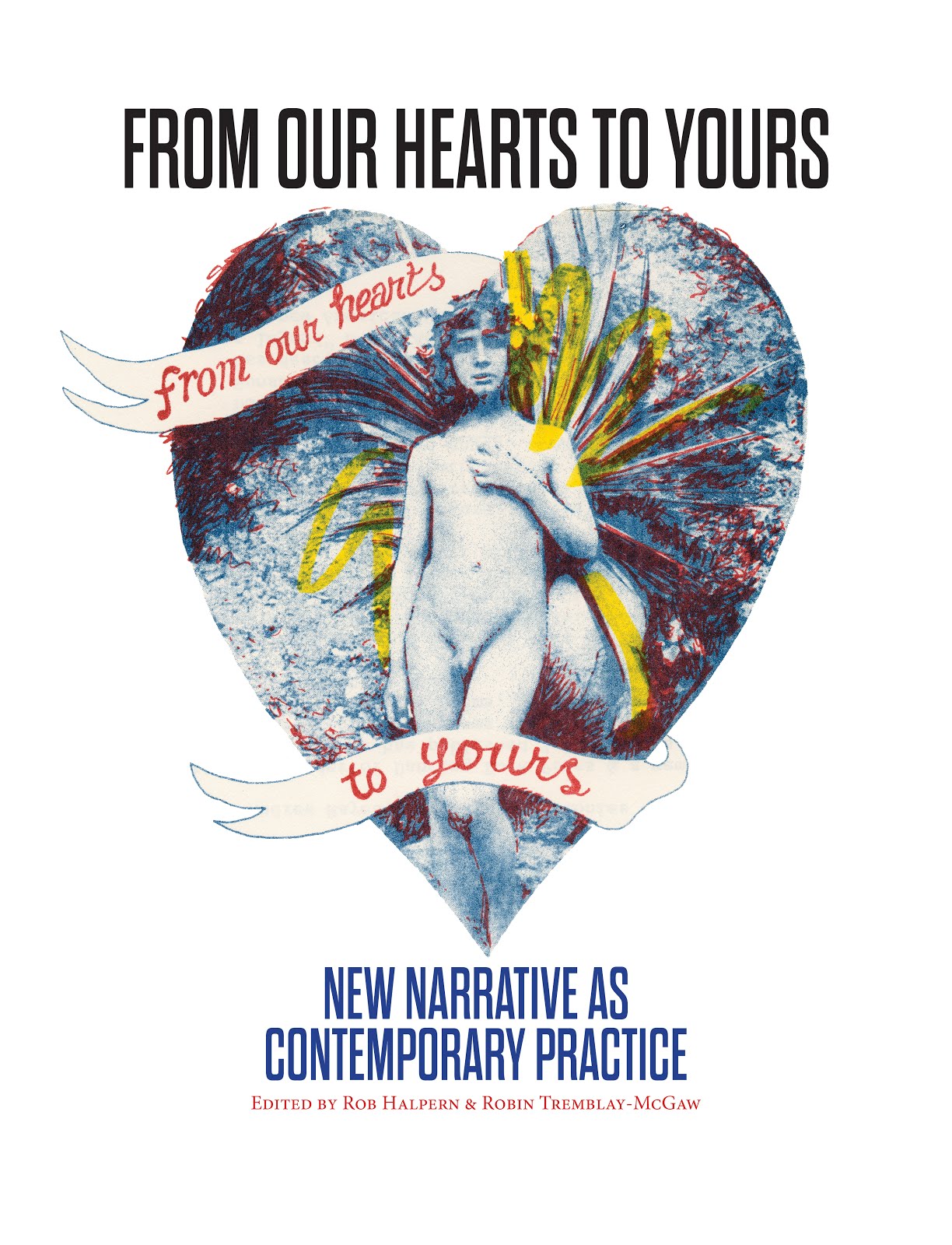
Rosa Alcala, Stan Apps, Cara Benson, David Brazil, Laynie Brown, CA Conrad & Brenda Iijima, Corina Copp, Michael Cross, Robert Dewhurst, Thom Donovan, Patrick James Dunagan, Joel Felix, Robert Kocik, Chris Martin, C.J. Martin, Laura Moriarty, Rich Owens, Evelyn Reilly, Michelle Taransky, Dan Thomas-Glass, Robin Tremblay-McGaw, Brian Whitener, and Tyrone Williams
on Mónica de la Torre, Stephanie Young, Susana Gardner, Brandon Brown, Lee Ann Brown, CA Conrad & Brenda Iijima, Rodrigo Toscano & Poets Theater, Judith Goldman & Jennifer Scappettone, Dorothea Lasky, Bhanu Kapil, Edmund Berrigan/Jeff Karl Butler/John Coletti, William Fuller, Stacy Szymaszek, John Coletti, Rob Halpern, Conceptualisms, Flarf/Conceptual Writing, Rosmarie Waldrop & Contemporary Womens' Writing, Stacy Szymaszek, Jasper Bernes & Bay Area Publishing, Jocelyn Saidenberg, Dolores Dorantes, Erica Hunt.
ON Contemporary Practice 2
At Book Thug Nation bookstore in Williamsburg, Bklyn
Friday, June 4th at 8PM sharp
With readings by
CA Conrad
Robert Dewhurst
Brenda Iijima
Robert Kocik
Evelyn Reilly
Michelle Taransky and other special guests
hosted by Thom Donovan, coeditor of ON
Book Thug Nation is located at
100 N3rd St
Between Berry St and Wythe Ave
Williamsbug, Brooklyn.
For more information about ON check out:
http://www.oncontemporaries.org/
ON
Contemporary Practice 2
edited by Michael Cross, Thom Donovan & Kyle Schlesinger
Rosa Alcala, Stan Apps, Cara Benson, David Brazil, Laynie Brown, CA Conrad & Brenda Iijima, Corina Copp, Michael Cross, Robert Dewhurst, Thom Donovan, Patrick James Dunagan, Joel Felix, Robert Kocik, Chris Martin, C.J. Martin, Laura Moriarty, Rich Owens, Evelyn Reilly, Michelle Taransky, Dan Thomas-Glass, Robin Tremblay-McGaw, Brian Whitener, and Tyrone Williams
on Mónica de la Torre, Stephanie Young, Susana Gardner, Brandon Brown, Lee Ann Brown, CA Conrad & Brenda Iijima, Rodrigo Toscano & Poets Theater, Judith Goldman & Jennifer Scappettone, Dorothea Lasky, Bhanu Kapil, Edmund Berrigan/Jeff Karl Butler/John Coletti, William Fuller, Stacy Szymaszek, John Coletti, Rob Halpern, Conceptualisms, Flarf/Conceptual Writing, Rosmarie Waldrop & Contemporary Womens' Writing, Stacy Szymaszek, Jasper Bernes & Bay Area Publishing, Jocelyn Saidenberg, Dolores Dorantes, Erica Hunt.
COMMONING ON GOVERNORS ISLAND

June 5th and 6th 2010 - 11 AM to 6 PM
COMMONING ON GOVERNORS ISLAND
(a Prosodic Body* Event)
co-presented by Movement Research Festival 2010 HARDCORPS
and the Lower Manhattan Cultural Council
Following their residencies with Movement Research and the LMCC Swing Space Grant Program Daria Fain and Robert Kocik will present works based on Commoning**. The presentation will include a performance by the Phoneme Choir, an exhibition, talks, and a screening by Iki Nakagawa.
June 5th -- 11AM to 6PM
11AM: door opens
Exhibition (on display all day): drawings and documentation concerning commoning and the Prosodic Body
1PM-3PM: Talks and Discussion with feminist activist, teacher, communalist historian Silvia Federici and the visionary socialist, writer, composer, bandleader, baritone saxophonist Fred Ho, moderated by Robert Kocik.
Silvia Federici: IN PRAISE OF THE DANCING BODY: while recapitulating the techniques capitalism has deployed to reduce the body to a machine, Federici will speak of practices by which we have resisted its mechanization, and the power of dance to articulate this resistance. More on Sylvia Federici
Fred Ho: FUTURE’S END: COMMUNISM AND ECOLOGY, REVOLUTION IS THE ONLY SOLUTION AND IT MUST BE LUDDITE! In this talk Fred Ho will ask: what is revolutionary socialist ludditism? Why is it the only solution? Why is it matriarchal (matri-centric) and indigenous-centric and why must these features be the foundation for a truly effectively revolutionary movement?
3PM-4PM: Performance of the Commons Choir (conceived and directed by Daria Fain and Robert Kocik). This piece is called Re-English—a re-tuning, an atoning for the fact that our current economic, climate and security crises are consequents of the sonic and connotative qualities of the English language—by means of phonemes as cosmogony; sound sequences as specific biochemical signaling, a reparation narrative, poetry as protection, and full recovery of the lost optative mood.
With Aretha Aoki, Margot Basset, Chung-chen Chang , Stephen Cooper, Levi Gonzalez, Hazuki Homma, Masumi Kishimota, Dora Koimtzi, Athena Kokoronis, Martin Lanz, Mina Nishimura, Peter Sciscioli, Kensaku Shinohara and Samita Sinha.
4PM-5PM: Screening of Collecting Collective Phase I: Filmic interpretations of commoning directed by Iki Nakagawa with contributions from Caterina Verde and Douglas Manson.
5PM: Q&A
June 6th -- 11 AM to 6 PM
11AM: Door opens——Commons Exhibition and continuous screening of Collecting Collective Phase I: Filmic interpretations of commoning directed by Iki Nakagawa with contributions from Caterina Verde and Douglas Manson.
2PM: Talk and discussion with poet Eric Gelsinger.
PERFECT MONEY: Eric Gelsinger will discuss the origins, history, and ontology of money, and explain its present determination by the U.S. Federal Reserve System. He will illuminate similarities between money and language, propose alternatives to the Fed's monopoly on our currency, and speculate on a "perfect money."
3PM-4PM: Performance of the Commons Choir (conceived and directed by Daria Fain and Robert Kocik) This piece is called Re-English—a re-tuning, an atoning for the fact that our current economic, climate and security crises are consequents of the sonic and connotative qualities of the English Language—by means of phonemes as cosmogony; sound sequences as specific biochemical signaling, a reparation narrative, poetry as protection, and full recovery of the lost optative mood.
With Aretha Aoki, Margot Basset, Chung-chen Chang , Stephen Cooper, Levi Gonzalez, Hazuki Homma, Masumi Kishimota, Dora Koimtzi, Athena Kokoronis, Martin Lanz, Mina Nishimura, Peter Sciscioli, Kensaku Shinohara and Samita Sinha.
5PM: Q&A
*Commoning is a group of poets, performers and persons working together toward the common good. Their foci: history of the enclosure of the commons leading directly to today's privateering, wage stagnation and material inequity; inner and somatic practices as the basis of fairness; the ways in which laws become the means for maintaining imbalance; hypertrophy of the financial sector; language as hegemonic force of globalization; and private determination of public space by 'business' that has always approached 'public' as inimical to its interests.
**The Prosodic Body is an aesthetic science that works with the sonic qualities of language as biochemical signaling; choreography; individual and social transformation; and cosmogony. This experiential field of research was begun by Daria Fain and Robert Kocik in 2006.
More information on HARDCOPRS
The ferry to Governors Island departs regularly from the Battery Maritime Building, Manhattan and Fulton Ferry, Brooklyn. LMCC space will be well-indicated at the ferry dock.
Eleni Stecopoulos' Armies of Compassion

Palm Press is pleased to announce the publication of Eleni Stecopoulos' first full-length collection of poems, Armies of Compassion
2010 | 108 pages | $15.00
ISBN: 978-0-9843099-0-0
This startling work brings something necessary to American poetry: a visceral poetics that transforms diagnosis into a performative linguistic probe in the service of the disturbed body. The body politic’s symptoms and signs are the foundation for Eleni Stecopoulos’s aversive lyrics, whose beauty lies not in the unbearing of a device but in the bearing of our discomfiture in the world and the potency of our imaginary realignments. Armies of Compassion is a talisman, antidote to what ails, spells woven against an engulfing night. — Charles Bernstein
The poems of Armies of Compassion are riveting, threnodic, deeply investigative of our "hieroglyphs of breath" and body. They cut to the marrow of kinetics and philology, our psyche’s doubt, our cellular breakdowns and theatricalities, our ironies and euphemisms, our endless war, pinning evocative Latin and Greek terms to greater mythic dimension and healing ritual. Eleni Stecopoulos is one of our deepest and most rigorous poets whose ethos and intelligence challenge and light up the mind. I am thrilled by out of what ruins and darkness and inspired lexical examination come these rare beauties. — Anne Waldman
"Philosophy never confesses / its delicate condition" writes Eleni Stecopoulos, as she takes on the inherently vulnerable role of investigative poet, asking whether the body, personal and politic, is irrevocably split off in its systemic afflictions. In this book Stecopoulos deploys the paradoxical force/fragility of poetry at all too familiar sites of our abjection. She does this with historically aware wisdom and humor. Can words help, not as palliative or consolation, but as source of transfiguring energy? "Levitating girls" hover over "lines gathering / all the intelligence" of an intellectually astute imagination steeped in, among many aesthetic legacies, that of ancient Greece, where the fact "that the god descends on creaking pulleys in no way undermines the apparition." This poet has the guts and strategy (persistent courage) of what she calls "choric goals…waiting in the echo / for a tone," subtending towards love. — Joan Retallack
Eleni Stecopoulos is among a constellation of contemporary U.S. poets effectively correlating somatics (the everyday practices and conditions of bodies) with geopolitics, through a radical and emergent lyricism. In Armies of Compassion, the poet's body becomes a site allegorizing disasters of "immunity": the principle disaster being the Hegelian-trap which over-identifies 'self' as 'other' and the other as potential outbreak. As the epigraph to “Autoimmunity,” from Antonin Artaud's Theater and Its Double, reads: "The Grand-Saint-Antoine did not bring the plague to Marseille. It was already there." Which is to say: what plagues us is not alterity, but the dangerous fiction that 'self' and 'other' are not in fact coconstitutive, and that identities rather than relationships persist. Discoursing with both ancient and contemporary healing practices, and calling into question the hegemony of modern Western medicine, Stecopoulos opens the field for what bodies can do liberated from the disciplinary triage of military, capital, and clinic. Like Artaud, Robert Duncan, and Hannah Weiner before her, language experiment follows from bodily necessity and contingency. Conditioned by despair, there is somehow hope in "guts." Having guts (courage), but also attending their literal fact (the innards determining how we act, thus will be). —Thom Donovan
Eleni Stecopoulos was born in New York, NY, and now lives in Berkeley, CA. She is the author of Autoimmunity (Taxt, 2006), and her poems and essays have appeared in journals including CHAIN, ECOPOETICS, Harvard Review, XCP:CROSS CULTURAL POETICS, The Capilano Review, and THE ENCYCLOPEDIA PROJECT. She received a Creative Work Fund grant to curate a program series around art and medicine for the SFSU Poetry Center and write a related book. Stecopoulos is a graduate of the University of Virginia MFA program and the Poetics Program at Buffalo. She teaches in the Language and Thinking program at Bard College and sometimes co-directs the Paros Translation Symposium in Greece.
This and other Palm Press titles are available from Small Press Distribution:
www.spdbooks.org
Please visit Palm Press' new website at www.palmpress.org for information about past titles and forthcoming projects including the long-awaited multi-author collection, Imaginary Syllabi and Tina Darragh's intermedia, interactive text, NO RIGHTS OBSERVED
Thank you for supporting the work of small presses and the work of their authors!
Palm
Sunday, May 23, 2010
The interview format. What would it mean to interview a bird? The monitor positioned like a bird in the grass. And looking back at our camera looking. A delay in grass.
The frame of scientific objectivity contains a play on the possibility of an animal being an appropriate subject. Of losing the subject before we’ve begun. In the quotidian.
But there is an attempt. There is an attempt to praise the quotidian. From which history, albeit with a lower-case "h," follows.
Public space (and what occupies it, being co-constitutive) should not be taken for granted. It should be critically reflected/thought about and thus made.
The frame of scientific objectivity contains a play on the possibility of an animal being an appropriate subject. Of losing the subject before we’ve begun. In the quotidian.
But there is an attempt. There is an attempt to praise the quotidian. From which history, albeit with a lower-case "h," follows.
Public space (and what occupies it, being co-constitutive) should not be taken for granted. It should be critically reflected/thought about and thus made.
On Time-capsules (Future Anterior)
Playing with assumptions about time/what waits for us in the future. The time-capsule as it appears in your work is the false expression of the future anterior because it is not what we will have wanted to have been but simply something--an extract or abstract, a random selection--of something that will have been. What would it mean for the time-capsule to be a living form or vessel for reflection and not only a curiosity anticipating the shock of historical distance?
What is brought to mind by the absence
Of music is a discovery unto itself
Of foreign powers and powers that
Are all too much at home
With our memories of coming home
And the ear which receives us, returning
Powers loop a thousand ways
Transport us looping in instrument's increase
Harks back to things that will never be
The catastrophe of being the catastrophe
Of being here and not there
A music withholds sometimes.
Of music is a discovery unto itself
Of foreign powers and powers that
Are all too much at home
With our memories of coming home
And the ear which receives us, returning
Powers loop a thousand ways
Transport us looping in instrument's increase
Harks back to things that will never be
The catastrophe of being the catastrophe
Of being here and not there
A music withholds sometimes.
Thursday, May 20, 2010
Live Interviews with Boym and Buckingham at apexart (Archive of the Future Anterior)

This Saturday I will be interviewing Matthew Buckingham and Sreshta Rit Premnath will be interviewing Svetlana Boym live at apexart in TriBeCa. More info below!
Saturday, May 22: 4-6 pm
Thom Donovan and Sreshta Rit Premnath, at the invitation of Museo magazine, will interview Svetlana Boym and Matthew Buckingham about the potential of unrealized futures.
Svetlana Boym's theorizing of "Nostalgia" and the "Off Modern" and Matthew Buckingham's re-engagement of forgotten histories are apt points of departure for what they are calling an Archive of the Future Anterior.
With these interviews Donovan and Premnath introduce their video project in which artists, writers, scientists, and colleagues from various disciplines discuss unrealized social and/or personal projects. By producing an archive of futures which have yet to come to pass perhaps it is possible to alter the course of the future, as well as change the way we narrate and remember the past.
"The tense of the future anterior (French: Future auxiliary verb + past participle) is one of potentiality. Within any given present, it images what will have been before an event actually comes to pass. To return to the moments of bifurcation is an objective of our Archive of the Future Anterior. An archive which wishes to serve less as a time-capsule than a provisional index of loss or misplaced futures; where future has not yet become past and multiple futures remain compossible within a single present."
--from Proposal for An Archive of the Future Anterior
--------------------------------------------------------------------------------
Sreshta Rit Premnath lives and works in New York City. He is an artist, curator and founder and editor of the magazine Shifter. He received his MFA from The Milton Avery Graduate School of Fine Art at Bard College and was a 2008 studio fellow at The Whitney Independent Study Program.
Svetlana Boym is a writer, theorist, and media artist who leads parallel lives. She has participated in numerous media exhibits and is the author of several books, also contributing to journals such as Artforum, ArtMargins, Cabinet, Punto de Vista, Critical Inquiry, Representations, Poetics Today, and Harpers’s Magazine. Boym teaches in Comparative Literature at Harvard University and is an Associate of the Graduate School of Design. Native of St. Petersburg, Russia, she now lives and works in Cambridge, MA.
Matthew Buckingham is a New York-based artist who utilizes photography, film, video, audio, writing, and drawing to question the role social memory plays in contemporary life. Buckingham’s work has been shown at numerous institutions around the world, including The Museum of Modern Art, New York; the Moderna Museet, Stockholm; and the Corcoran Gallery of Art, Washington, DC, among several others. Buckingham received his B.A. in film production and film studies from the University of Iowa in 1988, and in 1996 he completed an M.F.A. at Bard College. In 2003 he was awarded a Deutscher Akademischer Austausch Dienst (German Academic Exchange Service), and in 2004 he was awarded a Henry and Natalie Freund Teaching Fellowship at the Washington University School of Art, St. Louis. Buckingham also serves as an external tutor at the Art Academy in Malmö, Sweden.
All events are free and open to the public.
apexart
291 Church Street, NYC, 10013
t. 212 431 5270
www.apexart.org
Directions: A, C, E, N, R, W, Q, J, M, Z, 6 to Canal or 1 to Franklin.
Saturday, May 15, 2010
While supplies last...

MuthafuckaTwo
Sam King
John Niekrasz
Angel Escobar
Kristin Dykstra
Mohammed Khair-Eddine
Pierre Joris
Alice Notley
Dot Devota
Phil Cordelli
Norma Cole
Quinn Latimer
Matthew Klane
Hoa Nguyen
Lucas Farrell
Kazuko Shiraishi
Tomoyuki Endo
Forrest Gander
Sarah Lariviere
Michel Deguy
Wilson Baldridge
Anthony Hawley
Lisa Lightsey
Lewis Warsh
Ron Horning
Caitie Moore
Thom Donovan
Trey Sager
Brenda Iijima
Youna Kwak
Amelia Rosselli
Vanja Skoric Dewan
Deborah Woodard
Karena Youtz
Etel Adnan
100 copies, side-stapled w/ two-layer transparency/vellum cover
Edited by Mitch Taylor, mitchmailer AT yahoo DOT com
Designed by Cannibal Books, flesheatingpoems AT gmail.com
See also Muthafucka One: http://presspresspress.blogspot.com/search?q=Muthafucka
The Methexis of the Tenebrous

--after Adam Pendleton's Systems of Display
Least wish
For tankers subdivisions
Of labor control
No context yet exists
For this
It is the wind again
Blows a national
We grieving
Strategies substance
Grown black again
System growing blacker
Unclarified by who
The methexis
Of the tenebrous
Where we see only dust
Justice a line ran
Through it
Crossed it out
Preserved a content
Those below just below
The cut
Hung like the blues enacts
Hung like black frames
Fade to black
On a background
Of black paint
Mirrors inside them
Make history pop
With what we are not
And letters unfix.
Friday, May 14, 2010
For an Archive of the Future Anterior (Notes)
The creative exploration of these materials enacts a "weak messianic power" through which the world may be conceived differently. Perhaps one task of the artist/thinker is to make visible these powers of objects which should otherwise be perceived as corrupted by their commodity value, or by some prejudice about the sensibility and intelligence which produced them. To what extent is the future that we will want to have been (tense of the future anterior) a product of the senses (both a renewed sensibility and a coming to our senses)?
I have been thinking about how to reapproach cultural materials so that they may become active for something again. The return of "appropriation" in recent aesthetic practices seems to bring this problem to the foreground. Likewise, continued interest in archives, documentary practices, and attention to artifact through display and reenactment/live performance. These forms have pretty much defined art (and cultural production more broadly) in the aughts, so how may we think about these forms more specifically in terms of a dialogue about how art may determine, redirect, and reevaluate futures?
I have been thinking about how to reapproach cultural materials so that they may become active for something again. The return of "appropriation" in recent aesthetic practices seems to bring this problem to the foreground. Likewise, continued interest in archives, documentary practices, and attention to artifact through display and reenactment/live performance. These forms have pretty much defined art (and cultural production more broadly) in the aughts, so how may we think about these forms more specifically in terms of a dialogue about how art may determine, redirect, and reevaluate futures?
"Groundbreaking"
What makes something ‘public art’? Can language use alone adequately alter the frames through which we look at a site, or the ‘art’ there? Is there a way to see the urban environment that’s not mediated by money? What counts as an ‘intervention’? Can conceptualism alone achieve anything ‘real’ in a landscape such as this one? If I’m just watching some people ‘work’ how can I tell if it’s art? Are they doing art or making it, or neither? If the goal is to liberate private space for the commons, shouldn’t they also be taking over the cafe next door and giving away all the food? Are a couple of seemingly self-critical questions an adequate way to engage the various problems that such a project produce? Who is this action or art for? If not towards an artwork or product, then towards what?
--from BARGE’s “Groundbreaking"-Reflections, by David Buuck
--from BARGE’s “Groundbreaking"-Reflections, by David Buuck
Subscribe to:
Posts (Atom)