Monday, January 19, 2009

After William Pope.L*


-for Tyrone Williams on MLK Day

"Therefore this sort of theorizing/deodorizing
Could only come from someone
Who believes in having things
As a political condition

Conversely, this theory
Could only come from someone
Who lacks something
As a political condition."
-William Pope.L, from Hole Theory

Where you have dented me
White balls, black balls, blue
Balls wailing… bailing-out a hole
In theory (hole theories)—social

action gives the imagination a
reason to get up in the morning
—
No other wastes except for this
Remaining common what bubbles

qua “strength”—discrepancy,
Contradiction, misunderstanding—
Or conditions of posse-bility—
the energy of predicament, make

it my pet, my posey, my theory—
no remorsey
—ghosts lay
Claim to every little weiner
Nailed to your map of the United

States indicating a delay-time in
Reparations, decay of ordinary
Materials—Peanut Butter presence,
Mayonnaise Phallus smeared to

Those places we can't be because
There will be no “rememory” just
The future anterior—a lack worth
having
—puts vaginas back in

Men, since certain images can
Only propose foreclosure there
Should be new spectacles “white
eschatology” (cf. W. Benjamin)

That milk too late for paradise
The angel in these bones, in the
Boner tipping the balance—
an angel cannot be late but man,

made of flesh and blood, can
be late
—cues a light of reason
Non-sense has a cause seeing
Won’t transcend determining art.

*all italicized text from William Pope.L: the Friendliest Black Artist in America, except for "an angel cannot be late...," from MLK's April 3rd, 1968 sermon "I've Been to the Mountaintop," cited in American Sermons: The Pilgrims to Martin Luther King Jr.

Saturday, January 17, 2009

Erica Hunt: SEGUE intro

Reading Erica Hunt’s poetry reminds me of a scholarly book that has yet to be written. Such a book would trace avant garde practices through their relation to forms of activism, intervention, and social responsibility. Were such a book to eventually be written, Hunt should find herself among a host of other poets and artists including Murielle Rukeyser, Tillie Olsen, Adrienne Rich and George Oppen. The scholar of such a study might focus their attention on the way activist work shapes an aesthetics whereby forms themselves become not only meaningful, but culpable. A central question our hypothetical scholar might ask, and which might guide her thesis: why do some artists and writers involved with activism work through formal modes which may be said to be transparent or facile, while others resort to “difficulty,” and thereby risk not making sense to a larger readership?

To risk not making sense, in Hunt’s poems, is to risk the public sphere itself, as that which is defined by our ability to make meaning and communicate among one another. To challenge common sense is therefore to reimagine what forms a public sphere can assume. In Hunt’s work, these problems perhaps owe as much to Louis Zukofsky’s Bottom: on Shakespeare, wherein one finds Zukosfky quarreling with Spinoza and Wittgenstein, as they do to traditions of African-American lyrical address, sermon and music.

In an Objectivist spirit, Hunt prioritizes “thinking with the things as they exist”—as Zukofsky famously states the problem of “Sincerity and Objectification” in his 1931 Poetry magazine editorial by the same name, where “things” = words, and “with” belies the communal function of all writing. Throughout Zukosfky’s work recurs a famous incident from Spinoza’s letters, in which the philosopher records himself saying the grammatically incorrect phrase “the window flew through the bird” instead of the grammatically correct one, “the bird flew through the window.” Zukofsky’s point in citing this incident: that sense-making is only as good as context, deixis, relation, and of course the desire to understand; what’s more, what people too often call “making sense” does not take account of poesis—the fact that the production of meaning is always an activity shaped by shared processes, experiences, and beliefs.

From Zukofsky to African-American culture is never a far cry, where the Blues, for instance, or Hip Hop constantly attain music’s “upper limit” by intensifying the rhythmic and melodic qualities of speech. Although Hunt tends to work at the sentence level, often accreting long lines, or prose paragraphs, much of her work remains essentially lyrical. Likewise, her use of the “I,” while it of course troubles the centrality of the author function, nevertheless serves as a fluid index for the poet’s autobiography. In fact, compared with many of her contemporaries, it is refreshing to read the “I” of Hunt’s poetry as an unironic, however witty and playful, critical vehicle.

In Hunt’s 1996 Kelsey St. book Arcade, a collaboration with visual artist Alison Saar, I am struck by a related sense in which we must take Hunt’s problem of sense. In this book, Hunt and Saar attempt to bring their reader back to her senses, both through Saar’s black and white and color wood cuts which complement the tactile and imagistic qualities of Hunt’s poems, but also insofar as Hunt’s text extends a series of propositions about the senses during an era of spectacle and information consumption. Where the noun "arcade" summons the Paris Arcades of the 19th and early 20th centuries, after which Walter Benjamin constructed his theories of allegory and dialectic, I cannot help but also hear in arcade a more contemporary definition: that place where people (typically white male teenagers) gather to play video games.

If in the video game, television programming, and now the Internet lie the conquering of sense, it is the mass desensitization of our culture Hunt’s work criticizes, and conscientiously plays with. Against these mediums of desensitization is the word itself—and poetry as it tests the limits of what words can do. Through the pleasures of poetry as discourse pragmatics, Hunt takes back the senses, reinjecting them with some feeling for being common, public, related, and shared. Or as Hunt herself puts it more eloquently in an artist’s statement for a 2001 Foundation for the Contemporary Arts’ grant:

As is true with many poets, I am drawn to language for its music, for language's capacity to limn thought, its connection to experience, its power to still and magnify the world while one writes/reads the world/book. But equally, I have been interested in techniques that purposely unsettle the crisp ride and appropriate shade of register and vocabulary. I like to read or write to topple the balance between controlled allusion and opacity. And so I have been drawn to the disjunctions of surrealism, Oulippians, improvisers and scat cats as aesthetic methods to seek new and unsuspected connection. This makes it sound like too tranquil an operation: I write poems that teeter on the verge of legibility, blur private and public, set boundaries anew and implicate us as practitioners of this moment and the next.

Thursday, January 15, 2009

Silent Light (with Dorothea Lasky)


-after Carlos Reygadas

To the dear Farmer of Mexico

Dear Farmer, In Mexico,
Did you hear about the plane that crashed into the water?
It happened in a dreary landscape
Not unlike this one
In which I write this poem
Unlike this one
Is the sun rising for an hour
Over rabbits crying and crickets crying
And Mothers crying
In morning dresses so filled with rain
So wet with water
They might as well be dry
And death that comes up
When it has already come
And death
Which rises up
When it has already fallen
And dusk which rises up like dawn
And end which rises up like a beginning
And the beginning which is not unlike the end
The Mother's wetness
Not unlike the tears which made her
Deadly
As a snake in the grass of the field
With those who we love
And the grasses and corn
Dry in the dead fields of those dead who we love
And the living wet with rain in the
Grasses of those dead who we love
And those who we love dead not living
In the grasses dead who we love
And the light of the dawn dead
In the grasses of dead who love
And who we love dead now living
In rooms of grasses who we love
No no, no white rooms
In the boxes of the dead now living
In the light of day that we love
All in all, dear Farmer
It is the light of day that we love
In the field with yellow flowers
You go to meet a snake in the grass
And I watch you
In this neverending landscape of dread
Which is only a beginning
To the day I begin
In the deadly combination
Of love and light
In the deathly combination
Of horrible want
And horrible longing


No light better than this
Silence conquering space-time
The umbilical stars always in
A horizon before our future

Breaks milk is sort of like
Tears sort of similar to sweat
Which is like cum on your
Breasts when you are with

Him not a separate being
This awful apartheid despair
As if Kierkegaard’s problems
Transposed in the landscape

Of Mexico big-sky country
Respiratory open earthly
Where every moment seems
A resurrection of our breath

Heaving in the reflection of
A pendulum what won’t
Leave this room like singularity
No other hope in words

Images but in this the pinkish-
violet petals of our desire
Unawares camera must catch
Them in focus make them real

These powers unsaid between
Us are real resurrecting the
Children believing she’s not
Dead a milk of your eyes years

Sweat come sadness from
Beyond the actual pores the actual
Ducts spoon caught on your
Thumb the earth which is

Breathing the grass seeming
To sigh under the sky your
Chest feels full of lead her
Heart heaves heavy with regret

Time has no other direction
Except when we cry except when
Daughters don’t believe in it
Stars might lead us again.

It is my great honor...


to be reading with Tyrone Williams a week from this coming Saturday at Unnameable Books in Park Slope, Bklyn. thanks to Brenda Iijima for thinking of the pairing, organzing, and hosting... [more info below]

_________________________________

Thom Donovan & Tyrone Williams

Saturday, January 24th

7:30 pm

Unnameable Books

www.unnameablebooks.net

456 Bergen St.
Brooklyn, NY 11217
(718) 789-1534
Get directions

Tyrone Williams is the author of c.c. (Krupskaya) and On Spec (Omnidawn). Hero Project of the Century and MI Howell are coming out this year. He teaches poetry at Xavier College in Cincinnati, Ohio.

Thom Donovan is an ongoing participant in the Nonsite Collective, coedits ON Contemporary Practice, the first issue of which can be purchased now at SPD, edits Wild Horses of Fire weblog, and curates PEACE events series. His poems and critical writings have been published variously.

Hosted by Brenda Iijima


===========================
Portable Press at Yo-Yo Labs
Brenda Iijima
596 Bergen Street
Brooklyn, NY 11238
brenda@yoyolabs.com
yoyolabs.com/
===========================

Wednesday, January 14, 2009

Points of Arrival

I want to fly into the line
You are writing and that
Becomes you a point in

Space desirable space as
You make it planes ad-
just adrift the actual body

Time heals over sense
Scars bones photos make
Eyes moist your life as

A monster as a wolf does
You can not escape
Tunneling through the

Gelatinized moral feral
Writing beside yourself
Becoming authorized that

Doesn’t need skin that is
All skin no organs except
The gooey sun biggest cell

Calling me swerves splits
With perimeters flesh flux
Gates write just below

Thresholds so feelings
Travel integrate worlds
Bodies leave us no choice

Letters swallow up each
Point since distance
Can't help but devour us.

Tuesday, January 13, 2009

Apples


-for Carolee

Because she
was near me

because she
bakes a pie

I believe
everything

is possible
again the inter-

pretability
of nothing

the plethoral
void one's

breast without
malice whether

good or bad
inside it

even time
seems to

persist
because it

is close to
you that

clocking a
clock for

cooking for
making things

there is no
mythology

except
what your

mind your
heart & this

the original
apples make

apple pie
socialist

seeming sweet
and baked.

Monday, January 12, 2009

These beautiful citations...

from my friend Eleni:

“Pain does not throw one back upon one’s own resources; it backs one up against oneself; to suffer is to be unable to flee and unable to retreat from oneself. Pain senses the imminence of death. In the weight of one’s own substance one can no longer bear, pain senses the weight of the unknowable that advances inwardly.

. . .

Pain breaks down the path of time I am extending; I pull back from the future I was pursuing and the past whose resources I was drawing on, to sink into a time of enduring. In the pain I have a foreboding of the time of dying. The other suffers in another interval without equivalent and in a pain in which I can nowise displace him. Pain blisters in intervals of time coming from nowhere, going nowhere, disconnected from the past and future of life, of the transpersonal enterprises, of the evolution of the planet.

Yet it is out of that other time, the time of his or her dying, that the other addresses me.

. . .

In pain the other sinks back into his or her body, into prostration that already delivers him or her to death in the world. The flesh in pain is anything but an object; sensibility, subjectivity fill it, with a terrible evidence. This evidence is turned imperatively to me, more pressing than the evolution of the planet and the anonymous enterprises in the humanized map laid out on it, more urgent than the tasks my own death has addressed to me. It is not in elaborating a common language and reason, in collaborating in transpersonal enterprises, that the human community takes form. It is in going to rejoin those who, fallen from the time of personal and collective history, have to go on when nothing is possible or promised.”

- Alphonso Lingis, “Accompaniment”, Abuses

Saturday, January 10, 2009

SEGUE intro for Tony Conrad

When I was at the University of Buffalo as a graduate student, it was my privilege to study with Tony Conrad, who, as time passes, becomes an increasingly iconic figure for various counter-cultural locations and art movements of the past forty some odd years. Taking seminars with Tony at Buffalo was a joy since to take a class with him was not only to understand everything that had happened since the mid-century so much better, but to understand it through the engaging and poly-mathic works that accompany his biography.

In Branden W. Joseph’s Beyond the Dream Syndicate, a recent study of Conrad and “the arts after [John] Cage,” Joseph, taking up the terminology of Gilles Deleuze’s and Felix Guattari’s Kafka: Towards a Minor Literature, paints Conrad as a “minor” artist. To be minor, in Deleuze’s/Guattari’s sense of the term, is to exist at the boundaries of official historical narration, as well to open up gaps and interstices where counter-narratives can occur. Following Joseph’s compelling thesis, Conrad’s oeuvre presents multiple points of indiscernibility for the post-War avant garde, inasmuch as it forces one to reevaluate the cultural significance of any number of avant garde practices and movements, not least of which include usual suspects such as Serialism, Cage, Expanded Cinema, Fluxus, Minimalist Music, Structuralist Film, and “Postmodernism” so-called.

What coheres through Conrad’s fellow-travellings with said movements and figures is as much a throw-back to Renaissance virtuosity, as it is a deconstruction of virtuosity itself by which those shibboleths of Historicism—“genius” and “authorship”—should also be taken to task. What Conrad’s variegated work reveals, without exception, is a relentlessly horizontal investigation of power in all of its guises and forms. Parallel with thinkers like Michel Foucault and Deleuze (who sites Conrad’s The Flicker in his Cinema volumes), Conrad demonstrates “the powers of the false” as that upon which all social and natural life is based, and allowed to flourish. Power, in the work of Deleuze and Foucault, as in the work of Conrad, is something to be celebrated, not deplored.

It is in this affirmative sense that I see Conrad not only as a specter haunting the late-20th century avant garde (if not also a contemporary one), but as your consummate trickster figure. While there remains something heroic about Conrad’s minorness, there is also the sense in The Flicker, or by pickling film, or in the many videos he has appeared in whereof he assumes a particular mask or character, that Tony is pulling our legs. And we who love to be fooled and entertained of course want our legs pulled. Only leg-pulling becomes a serious business whenever it is combined with Tony’s vast skill-set, and his equally vast eagerness to seek out the cracks in culture.

I am reminded of this business by the work that Tony inspired of me and other students at Buffalo Media Studies in his 2001 seminar, “Contemporary Alternative Media.” In this particular seminar students were encouraged to cultivate unique and collective identities in the interest of interactive performance, tactical media intervention, and collaboration. For part of our final work, I vividly recall the majority of our class participating in a demonstration at the Peace Bridge on the border of Canada and the United States in Buffalo.

Gearing up for the event Tony encouraged us to wear uniforms, so we all wore red pants and t-shirts. Anticipating local news coverage, we approached the bridge in our uniforms carrying an American flag—as though in mourning, or already incensed by what was going on at the bridge. As we approached, I remember cameras seeming to swarm us. When we got to the Peace Bridge we played a series of games together, all in the spirit of suggesting or fomenting actual revolt. The game I remember us playing for the duration of the demonstration was a game of Red Rover. “Red rover, red rover send so-and-so over,” as though to taunt the line of police who remained within earshot.

The final action my friend Brandon and I thought to take, but never ended up taking, was to raise our asses towards the police and fart—a ridiculous reverse-parody of the harrowing tear-gassings a year before in Seattle during a WTO demonstration. Although Tony was not organizing our class on the day of the demonstrations per se—he just seemed one of us, only older—many of the elements I now find so fundamental to his work were there in what we were doing, however unconsciously: an unshaken awareness that History (with a capital “H”) issues from a complex and interrelated series of representations, and not a plenitude of eternal truths; that to play—or “dance over an abyss,” as Nietzsche would have it—can and must be put in the interest of social justice and political action; and that, mainly, perversion is one of the many effective forms resistance can assume.

Without further adieu…

Friday, January 09, 2009

ON launch pics*


*thanks Brenda Iijima and Nathaniel Siegel for photo courtesies.

Tuesday, January 06, 2009

Why ON now?

below is a statement I wrote for the ON Contemporary Practice launch at St. Mark's Church last night. I am grateful to all who attended the launch, and participated...

***

I don’t doubt, as we speak, that critical exchanges about poetry and art are happening everywhere. And this is the impetus for ON Contemporary Practice, a journal devoted to writings about the practices of one’s contemporaries: that critical exchange can become visible through the many forms it assumes. Listservs, blogs and social networking services like Facebook and Flickr have tended to supply us with the most immediate and accessible forums for critical correspondence in the past few years—so why sidestep and insist upon a printed object? I’m not sure the exact importance of the printed object vs. the virtual one per se, except that it can provide an air of care, intention, presence, and consequence in ways that virtual media often can not. Given some of our despair before the Web—especially the material anxieties which cloud its otherwise hopeful prospects for serving as a democratic cultural repository—, it seems conceivable that the best way to back-up our futures is to print them out and make them aesthetically palatable for a readership. In a sense Kyle, myself and Michael would prefer to think of ourselves as documenters and collators rather than editors. What we would like to document is the ongoing fact that one’s contemporaries matter for forming a practice, and locating what work needs to be done during any given moment. Rather than seeing any one’s work in isolation, ON believes that each poem, or book, or art object is in some way collaborative, and that all cultural phenomena issue from some form of discourse. Likewise, there is something exhilarating about recognizing one’s voices in those of another, and those of another in one’s own. Such a continuum, Robert Duncan called the “symposium of the whole,” however we believe our own symposiums to be as much unique as general, collective as singular, idiosyncratic as appropriate, antagonistic as agreeable. While poems themselves can act critically and extend critical conversation, there is still the want to provide context, discursion, address, and perspectives that perhaps only contemporaries can have towards each other. I believe this can happen through the book review, or the academic chapter (though God forbid one write a dissertation chapter about their contemporaries); but moreso, I think it requires a constant renewal and invention of forms by those working across fields, institutional and cultural configurations. Forms that will not merely extend content, but that will emerge from the problems nearest the lives they impinge on, and which connect and overlap inextricably. Recently an older poet gave a reading with a considerably younger one, and insisted that they introduce each other. These introductions consisted of merely saying the name of the other poet, and in the case of the older poet also saying the name of the younger poet’s press. While I was ok with the older poet declining typical introductions, I was not ok with the younger poet getting the same treatment. Emergent practices (the practices of those younger, lesser known, and/or unprecedented by their isolation or exclusion from hegemonic publishing practices and arenas of reception), more than anything else, need not so much legitimation as sufficient context to make them legible and available to a readership wider than their ken. Yet, it is one’s ken specifically—those who have spent the most time with the person and the work, if not the place where the work was born (whether that be an actual place, or space for the imaginary)—who can most easily account for the work’s exigency—the fact that it was made with a need to communicate something and make certain things happen (however unawares or intentionally). While I expect critical exchanges will continue to happen wherever people care about the stakes of their work and the work of their peers, ON’s editors celebrate how much wiser we are for having encountered the offerings collected by our contemporaries in ON’s first issue, and acknowledge the fact that many others’ works are deserving of critical reflection, and more sustained engagements. If you have an idea for submissions, please see ON’s submissions guidelines at the journal’s website, or email the editors individually. We look forward very much to reading your submissions towards the publication of future issues.

Sunday, January 04, 2009

ON launch at St. Mark's Church tomorrow

come celebrate the NYC launch of ON Contemporary Practice 1 tomorrow at St. Mark's Church with CA Conrad, Alan Gilbert, Brenda Iijima, Andrew Levy, Julie Patton, Tim Peterson, Kyle Schlesinger, Katie Yates, Thom Donovan and others...


ON LAUNCH
Poetry Project
Monday January 5th, 2009 @ 8:00

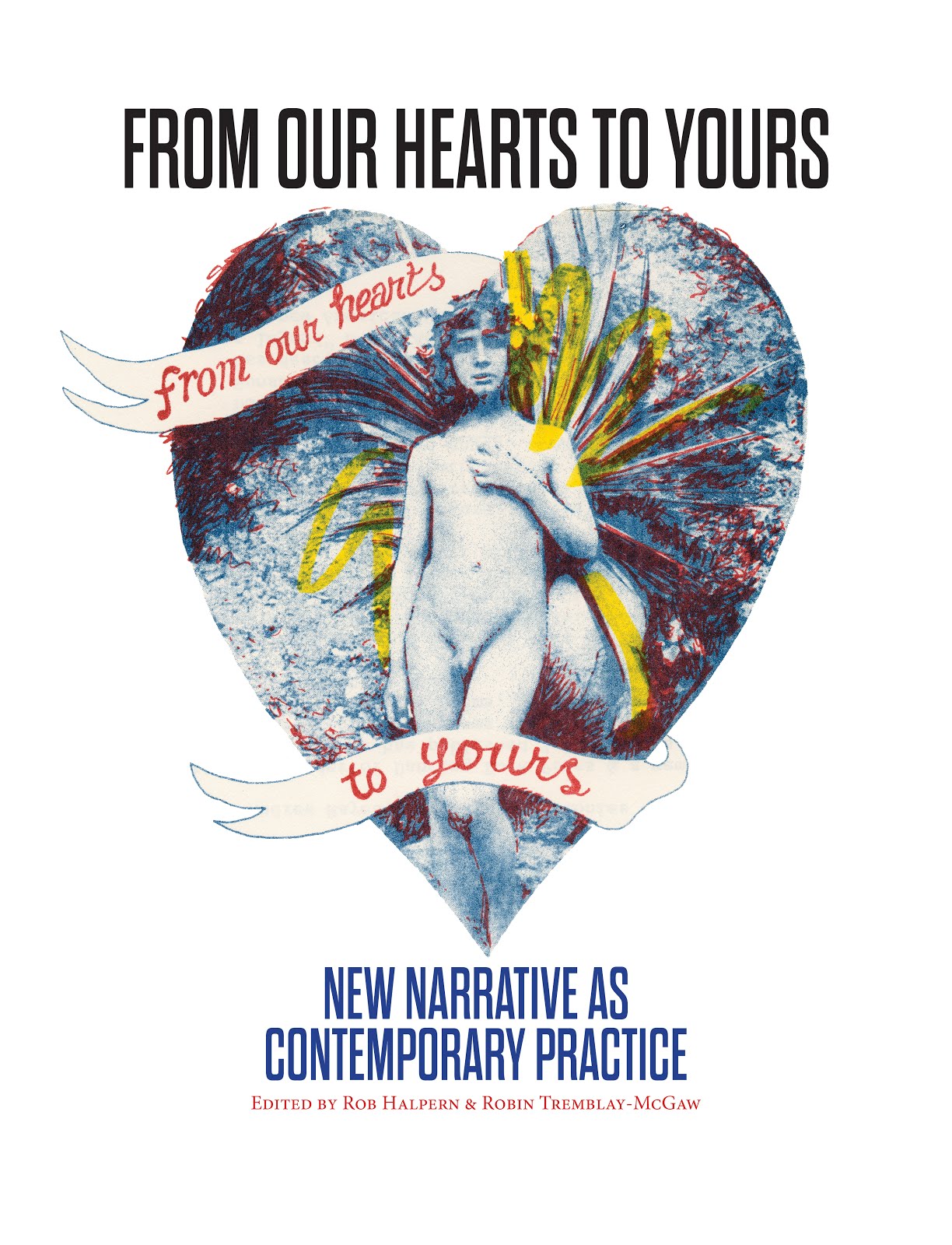
ON features twenty-one essays by poets on poets of their approximate generation. Come find out what's going on and celebrate this new publication featuring exchanges on contemporary poetry and poetics. Contributors include Taylor Brady, Brandon Brown, CAConrad, Jason Christie, Michael Cross, Thom Donovan, Eli Drabman, Rob Halpern, Jen Hofer, Alan Gilbert, Brenda Iijima, Andrew Levy, Edric Mesmer, Sawako Nakayasu, Tenney Nathanson, Richard Owens, Tim Peterson, Andrew Rippeon, Kyle Schlesinger, Jonathan Skinner, Dale Smith, Suzanne Stein, Ali Warren, Katie Yeats ON Arakawa/Gins, Taylor Brady, CAConrad, Michael Cross, Beverly Dahlen, Michael deBeyer, Mark Dickinson, kari edwards, DJ/Rupture, Thom Donovan, Belle Gironda, Brenda Iijima, CJ Martin, Emily McVarish, Yedda Morrison, Hoa Nguyen, Sawako Nakayasu, Julie Patton, Lauren Shufran, Suzanne Stein, Dana Ward, and Ali Warren. Confirmed readers include CAConrad, Thom Donovan, Alan Gilbert, Brenda Iijima, Julie Patton, Tim Peterson, Andrew Levy, Kyle Schlesinger and Katie Yates.

Copies of ON will be available for $12.
Also available from Small Press Distribution: http://spdbooks.org and Cuneiform Press: http://www.cuneiformpress.com
Submission guidelines and more available at: http://oncontemporaries.wordpress.com

The Poetry Project is located at St. Mark's Church-in-the-Bowery
131 East 10th Street at Second Avenue
New York City 10003
Trains: 6, F, N, R, and L.
info@poetryproject.com
www.poetryproject.com

Admission is $8, $7 for students/seniors and $5 for members (though now those who take out a membership at $95 or higher will get in FREE to all regular readings).

We are wheelchair accessible with assistance and advance notice. For more info call 212-674-0910.

Friday, January 02, 2009

Every Night

--for Charles

No foreclosure here, only aperture
No place to put the darkest conditions of possibility
Let the dead bury the living and shadows overlap
Let a little dark in since the light runs cold
In our blood beyond the falling snow of Central Park today
Everything is permitted since she is dead
I know your love for tradition in negative your love
For life itself which is not the denial of death
So much as the negation of negation
The snow as it burns in the photograph
Also the affirmation of a woman’s powers.

Wednesday, December 31, 2008

Kocik/Fain Interview at Critical Correspondence


Here is an interview I co-conducted with Daria Fain and Robert Kocik in early November. Thanks to Alejandra Martorell for including me in the interview, and doing the bulk of the editing/transcription. And, mainly, for bringing more of Robert's and Daria's words into print...

http://movementresearch.org/publishing/?q=node/438

Monday, December 29, 2008

Amy Balkin's Recommendation


Tuesday, 1/8, 6:30 pm: A Few Zines: Dispatches from the Edge of Architectural Production

In the 1990s, zines such as Lackluster, Infiltration, loud paper, Dodge City Journal and Monorail subverted traditional trade and academic architecture magazine trends by crossing the built environment with art, music, politics and pop culture--and by deliberately retaining and cultivating an underground presence. Much has been made of that decade’s zine phenomenon--inspiring academic studies, international conferences and DIY workshops--yet little attention has been paid to architecture zine culture specifically, or its resonance within architectural publishing today.

"A Few Zines: Dispatches from the Edge of Architectural Production does both." Rather than attempting to present an exhaustive retrospective of architecture zine culture, it highlights complete runs of several noted zines that began in the nineties. The exhibition also features contemporary publications that continue to draw inspiration from the self-publishing tradition, such as Pin-Up, Sumoscraper, and Thumb.

To launch this exhibit, curator Mimi Zeiger has published a new issue of loud paper and organized a party and panel discussion, including:

Luke Bulman, Thumb
Felix Burrichter, Pin-Up
Stephen Duncombe, NYU professor and author of Dream and Notes from Underground: Zines and the Politics of Alternative Culture
Mark Shepard, Situated Technologies
Mimi Zeiger, loud paper

Moderated by Kazys Varnelis, AUDC

RSVP: gdb2106@columbia.edu
Free and open to the public

This exhibition will run from January 8-February 28, 2009

Participation

All I ever wanted was your participation
Both a weapon and a ribbon yield participation
Both the sky and the earth imminently
We will no longer sing we will be
A carnival instead we will be a farm on the outskirts
Of which highway subtending a disaster
Of feelings singularity will be interrupted
By a fantasy of becoming
On the edge of another’s skin a portal like
The past enveloping these future words
The book we could make and be bright
All I ever wanted was your blood to beat
With mine we made a quilt we made a sign
We set up a booth and amplified through
Simple signals our causes
The Round Table was once an image
Of this such utopias that pink
Table didn’t do enough to save
Some names from their oblivion
Some shapes we recuperated from malice
There will be new names for your participation
Whole worlds secreted by what
You decide
Entire universes simulcast.

Sunday, December 28, 2008

Hearing Boccaccio

The sound of this singing out there in
Your mouth what hails us and halos
Are both constructed from the sun kill

The lights all I get is this shallow sense
Of cause the bawdiness in your socius
Sniffs a story not a moral obligation your

Penchant for evidence of Italian dick and
Young pretty things may their flesh be
With us is what you seem to say placating

What is realer inside you visions of older
Stories that are also real hearing Boccaccio
No thing operative except that it is trans

missible so the muse is said the young
Marxist grows-up all he cares about
That history entertain our future anterior.

Monday, December 22, 2008

Come Out, Again

If you were pointing here
To this histrionics in my
Hand blood ruptures esse
nce and sound erupts all

Around as witness is not
What we understand or a
Theory under seeing’s th
umbs I heard your screa

ming move left to right in
My ears and be of neither
Hemisphere of the brain
Since chiasmus is always

Elsewhere a pinch of the
Bruise or a squatting for
The bowels points to this
Legal sense we must all

Be heard that this hearing
Must become us I taste
Your blood as singly as I
Hear that there is singing.

Saturday, December 20, 2008

To John and Taylor

There are walls that
Do fall because in

That falling we are
A community without

Disposable wings
Or limbs like a mon

ster we must carry
With us everywhere

A protuberance this
Remaining which

Was never the given
ness of form or in

novation our various
complicities with the

Real a sky for your
Crying a hell for your

Song but as you also
Say birdsong some

where in between
Falling and rising in

Its different motions
We live & die by this.

Friday, December 19, 2008

Suzanne's Reply to My Meme


Suzanne Stein has replied to a meme I sent to her about a month ago after a reading she gave at St. Mark's:

http://i-caved.blogspot.com/2008/12/hi-thom-today-is-dec-17-exactly-month.html

My response is pending due to end of the year business, but thank you Suzanne!

Sunday, December 14, 2008

Dawn Lundy Martin SEGUE intro

A couple summers ago, teaching a translation of Sophocles’ Antigone at Bard College’s Language and Thinking workshop, instead of reading the play linearly, I circled every instance of negation in Antigone’s speeches. From these moments of Sophocles’ text—no doubt a translation of a translation of a translation—was born a new text distilled from the force of Antigone’s famous refusal. Approcahing Dawn Lundy Martin’s work I also want to highlight the moments of negation, which are many, and which cumulatively effect a power of refusal comparable to Antigone’s own:

“…an unforgiving, inchoate world.”
“No mold to make…”
“…I cannot tell you because it is not known.”
“But the body will not be buried there”
“Hands are scarred, almost dead.”
“You write “grandmother” and cross it out.”
“Finger pointed at the body and then at the sun, realized nothing and fell again taciturn”
“…as if I could, but could not”.*

Or perhaps it would be more appropriate to situate Lundy Martin’s negativity in writers closer to our own era, however no less mythical. In a tradition after the Negritude of Aime Cesaire, for instance, Lundy Martin’s work also journalizes her seasons in hell, making them literal joyrides, where to “go down” evokes literal encounter with one's lovers (women, in Lundy Martin’s case), and with the facts of one’s own gendered-racialized body.

Likewise, after poets as diverse as Myung Mi Kim, Theresa Hak Kyung Cha, Susan Howe and Audre Lorde, Lundy Martin dramatizes voices becoming articulate, wresting articulation from an empire of signs:

“All that has been spoken. All that threatens the legitimacy of that which is attempting to be said. Phonemic struggle—I’ll call it a precursor to blathering. Scintilla. Something dragged in the sand.”

“The fit is tight. Splitting into? Stiff cup. A dark mouth moves, enters the tremor of a voiced, Uh. But, all this is not love, not love in the way one milks the center. Instead, chronic terror stripped to bone grating upon bone. Of down home, twang twang, and promise. My knees pressed behind ears.”

And as in Kim, Howe, Cha, and Lorde, in Lundy Martin’s work any coming into voice presents many difficulties, as it involves the presencing of irreconcilable social antagonisms and considerable personal suffering. But whereas Kim et al broach despair through the voices they undertake and inform through their writing, Lundy Martin’s writing winks at its reader knowingly, as though having already passed through affirmation, or being upon a threshold of that moment so central to overcoming—a conversion where “a no becomes a yes,” as Wallace Stevens might have it. That in her poem “Negrotizing in Five or How to Write a Black Poem,” Lundy Martin references the Negritude and Black Arts movements, Third Wave Feminism, femme ecriture, LANGUAGE writing and Susan Bee’s and Mira Schor’s arts journal M/E/A/N/I/N/G, pays homage to a continuum of radical arts communities while working in relation to these cultural formations from a revisionary distance.

What, in turn, rears its head necessarily in Lundy Martin’s writing is the specter of various struggles for recognition and liberation as they are given form by singularities—by the particular experiences and percepts of one’s autobiography, their life. Through Lundy Martin’s work, a work that can neither be said to be merely “experimental” or concerned with identity politics per se (though experimentalism and a politics of identity both inform that work’s authority), a culture work concerned to presence the stakes of particular identities within larger cultural formations becomes simultaneously legible and ambivalent.

*all quotations taken from Lundy Martin’s poems “Negrotizing in Five or How to Write a Black Poem” and “Unspeaking”.