There invariably comes a moment when what matters is to declare in one’s own name that what took place took place, and to do so because what one envisages with regard to the actual possibilities of a situation requires it. This is certainly Paul's conviction: the debate about the Resurrection is no more a debate between historians and witnesses in his eyes than that about the existence of the gas chambers is in mine. We will not ask for proofs and counterproofs. We will not enter into debate with erudite anti-Semites, Nazis under the skin, with their superabundance of "proofs" that no Jew was ever mistreated by Hitler.
To which it is necessary to add that the Resurrection--which is the point at which our comparison obviously collapses--is not, in Paul's own eyes, of the order of fact, falsifiable or demonstrable. It is a pure event, opening of an epoch, transformation of the relations between the possible and the impossible. For the interest of Christ's resurrection does not lie in itself, as it would in the case of a particular, or miraculous, fact. Its genuine meaning is that it testifies to the possible victory over death, a death that Paul envisages, as we shall see later in detail, not in terms of facticity, but in terms of subjective disposition. Whence the necessity of constantly linking resurrection to *our* resurrection, of proceeding from singularity to universality and vice versa: "If the dead do not resurrect, Christ is not resurrected either. And if Christ is not resurrected, your faith is in vain" (Cor. I.15.16). In contrast to the fact, the event is measurable only in accordance with the universal multiplicity whose possibility it prescribes. It is in this sense that it is grace, and not history.
The apostle is then he who names this possibility (the Gospels, the Good News, comes down to this: we *can* vanquish death). His discourse is one of pure fidelity to the possibility opened by the event. It cannot, therefore, in any way (and this is the upshot of Paul's philosophy) fall under the remit of knowledge. The philosopher knows eternal truths; the prophet knows the univocal sense of what will come (even if he only delivers it through figures, through signs). The apostle, who declares an unheard-of possibility, one dependent on an eventual grace, properly speaking knows nothing. To imagine that one knows, when it is a question of subjective possibilities, is fraudulent: "He who thinks he knows something [...], does not yet know as he ought to know" (Cor. I.8.2). How is one to know when one is an apostle? According to the truth of the declaration and its consequences, which, being without proof or visibility, emerges at that point where knowledge , be it empirical or conceptual, breaks down. In characterizing Christian discourse from the point of salvation, Paul does not hesitate to say: "Knowledge[...] will disappear"(Cor. I.13.8).
--Alain Badiou
Thursday, January 04, 2007


A Pricksong
--for Harry Partch & Aaron Moore
Some stray notes help
The open cope
A locomotion
Coats
The clouds
As they American
Pass
With strings detached
The least is the highest
The last shall
Be fast
Croons hobo neckbones
At long last.
The Man Without Hands cont'd
Without hands
But a mold
Still wet
From where
It fell
From a discontent
About description
About movement
A place ideas
Can continue
To move
Not for long blank
Nor for long similar
To themselves
This is the frame in an egg or a shell like a shack you forgot in the uncartooned desert
This is the bulk of dark the delving into it as it separates an optics from a prism of control
An ascendence a whereabouts an operation overlooking this operation
The model exits the picture and enters and exists this is a grasping of that model's animation
But eyes failed
To touch eyes
In the space remaining
Before eyes
Or after knowing was for
The reflection of flecks
The wings seeming
To touch
The symbolic haste
Of these wings
The uncasing of stars
An animation
Sings of pinpricks
Starts and stops
Wednesday, December 27, 2006
Rob Halpern's Disaster Suite

Experiences are not "as if." The disappearance of the I in the moment of the shudder is not real; but delirium, which has a similar aspect, is nevertheless incompatible with artistic experience. For a few moments the I becomes aware, in real terms, of the possibility of letting self-preservation fall away, though it does not actually succeed in realizing this possibility. It is not the aesthetic shudder that is semblance but rather its attitude to objectivity: In its immediacy the shudder feels the potential as if it were actual.
--Theodor Adorno
We are on the edge of disaster without being able to situate it in the future: it is rather always already past, and yet we are on the edge or under the threat, all formulations which would imply the future--that which is yet to come--if the diaster were not that which does not come, that which has put a stop to every arrival. To think the disaster (if this is possible, and it is not possible inasmuch as we suspect that the disaster is thought) is to have no longer any future in which to think it.
--Maurice Blanchot
An adequate response after a surpassing disaster cannot be only political and economic, but has to include a specifically cultural and artistic component. A distinction has to be maintained between an understandable willful rejection by some of the defeated of what they associate with the defeat; and an objective withdrawal that has nothing to do with the intentions of individuals, although the later can be read as a symptom of this objective withdrawal....
--Jalal Toufic
So far I have received three books from Vigilance Press, a press without authorization or bibliographically established origin. The third of these books is Rob Halpern's *Disaster Suite*, whose epigraph reads *No 'force of nature ' did this* and is attributed to (an) "Unauthorized Report". Having been struck by Halpern's powerful first trade editon book off Krupskaya, *Rumored Place,* I am dumbstruck by Halpern's eerie epigraph and succinct, following text...
*Disaster Suite* is labored, if not enviably "fucked with". Which is to say, I read it as a text of found and altered language materials--a textual "non-site" (Smithson)--but also a text, like *Rumored Place*, of one incredibly skilled and intellective eye/ear. I have no doubt that Halpern is among the foremost of a new lyrical poetry (and "lyrical" in the most exalted sense of such a stigmatized term), and an appropriate edition to the other texts so far published by Vigilance: Michael Cross' *cede* & Craig Dworkin's *All Saints*.
If I could guess at the way the text was made I would say that Halpern took much time to re-work a group of texts found and composed, "playing" with their sequencing, their "mixing" and re-mixing. This is a poem one must read not only backwards and forwards, but non-linearly--each line seems so much to set off each other line, each punctuation mark and spacing every other.
Wetlands and marshes slow.
But my poems, like *phynance*
---- this accumulation of waste ----
I mean *this*, you and "the cranes
Like ships," they're relentless
---- targeting flows, pipelines ----
Thru which the silence, too,
Has slowed, tho it's still refining
---- me, I'm down to prewar levels.
When I read the "disaster" of Halpern's title I read *disaster* in terms of at least two souces: after Maurice Blanchot for whom *disaster* refers to an ontological *inter-ruption* by which time has ceased to "flow" chronologically and/or synchronically and remains as a *trace*--an anachronistic event or anarchism deferring sequential beginning (*arche*). I also read the term where Jalal Toufic more recently refers to a *surpassing disaster* as a time *at* or *after* the "end of [a/the] world," a period of "withdrawal" whereby cultural traditions are occulted by a social disaster, or disaster otherwise.
The disaster I believe Halpern to "actually" refer to in his text I don't doubt to be local and global at once; it is one of widespread and emergent economic-ecological catastrophe. The locale I continually picture reading his text is the Pacific U.S. coast where I know him to currently live. And yet there is an effective sense of the occult and ubiquitous infusing his text: that this disaster is everywhere and nowhere, that like all disasters that of *Disaster Suite* both immaneticizes and transcends space-time. Halpern's is a global and local disaster concomitantly, a disaster of the universal and the particular in the worst possible (*nouveau-*) Hegelian sense.
Over and above the market, I'm off trade
Now, without exchange means nothing
Like 'the dawn' has no commercial plot
Not belonging to itself, my value affirms
What goes unfounded and this won't count
As one subtracted from prevailing orders
Of inclusion, a unit has no real unity
I mean artifically difference just can't be
Spreading in a tree is not a rock, a bird
The formal rigors of Halpern's text valuably contribute to a textual experience of *this* disaster as well as a melancholy, Janus-faced hopefulness there may be ways to (re)establish (a/the) world(s)--regain sensation, spiritual and material well-being. One feels and thinks disaster in the writer's persistent concatenations of syntax, his sensitivity to caesura and sonorous dislexical sequentiality. Conveying emergent and harrowing contents form itself manifests disaster. Halpern (like a Celan or Oppen or Susan Howe or Mackey) shows us we are diasaster-ed by surpassing measure. Such recourse to surpassing is perhaps all we can hope for lyrically to embody what is happening and what keeps happening to the brink of despair: the Bush administration, unwaning global capitalism, national complancency, Iraq, unprecedented environmental mistake, religious-political nihilism. Formal experiment and radicalism itself must not compromise after the last seven years (nor the upcoming years of that much greater challenge), and Halpern's verses fortunately insist the effort of "shuddering" (Adorno), a shaping in disaster towards word-forms so we are haunted, expressed and potentialized towards action.
Then his voice just petered-out becoming
Strands of pale blue smoke he was gaunt
As an old crane and just as wild as what
I'd be anything to wind you back around
Reaquaint ourselves with lost sensation
Invent a world to save us from the world
Just feel this ---- *damaged roadside fringe*
The Man Without Hands (Weeping As Not Weeping)
In one of the earliest stages, when I was doing the scenario, I thought when one comes to the far top of this gigantic house, to an attic room, a last character would appear, some kind of a giant with barely discernible wings, some kind of angelic figure. He would lift the arm of the phonograph, the music would stop, and one would see all the film's scenes in still-frames.
~ Patrick Bokanowski
To keep grasping at hands the pitcher
breaks time's immediacy an egg of reason clicks
we are an image-track of cause we are the sound-
image of grace voluntarily sucked-up
into things into a world phonographically
removed from the suddeness of place.
A reverse-shot for description
following the light a serial
light the motion of actors unacted
the dancers undanced the film
unfilmed the workers in this
country of the undead
an involuntary appearance
serials light the motion
This man-god kills itself again
this man-god rising without hands
these signs were put down
in books the miraculous
stop-action of pages never ceasing
to amaze us believers
all words were meant to be read
and sung but this ladder
can never be unclimbed twice
A plaster for movement
A mold for dance
A thought-perimeter
A mulled mold
A degree holder
A modal desiring function...
Smallest when we see
Smallest when we leave
Smallest when we concept
The world leaves
me a miniature
to operate a machine
of no desire any longer
a mother fucker
just floating there un-
beknownst to itself
or any first mover
for that matter
Grace suffices to move nothing but itself
as a movement of thought it removes
everything but the necessary as a movement
of words it requires a mind so readied
to think with words (materials) that the sense
that words are being used falls away
leaving only the feeling for expression
the attempt to express adequate ideas themselves.
Sunday, December 17, 2006
The idea of "world"

[Mulla] Sadra responds to the argument that paradise and hell cannot be located in this world with an admirable analysis of the very notion of "world." The idea of "world" is the idea of an absolute totality, such that there is nothing external to it. Consequently, a "world" has no place. Understood correctly, the "world" is perfect and complete in itself and, consequently, has neither a "where" nor a "place." On this point, he says, Aristotle is right. From this it follows that it is absurb to ask where hell is or where paradise is. They form a world in and of themselves and are not "parts" of this world; they constitute "the land of the otherworld." This land is the land of the soul; and it is in the world of the soul that the torments of hell and the joys of paradise take place--physical torments and sensible joys that occur through the intermediary of the senses of the soul, that is, through the sensibility internal to the soul. These sensations are infinitely more intense than what we feel with our physical bodies, and that is the truth of the Qur'anic promises and the divine warnings. At stake in moral life is something that ordinary people understand very well and that philosophy must take into account: the soul's eternal suffering or permanent enjoyment [*jouissance*], in the singular mode of its "resurrection."
--Christian Jambet's *The Act of Being*
Saturday, December 16, 2006
Inland Empire

A hole on the way to heaven
The real face is made of tears
Lightning strikes the real
Voice summoning our substitution
A hole on the way to hell
Tears remove the face
From the face monitors remain
Within monitors this is our thesis
Of forthcoming a hole on the way
Skyward speak the static
Set theory close your eyes
If you believe yourself to be.
Michael Cross & Myung Mi Kim (@ St. Mark's)
This entire week I have wanted to post something to mark the occasion of Myung Mi Kim's and Michael Cross' reading together at the Poetry Project this past Monday. With the exception of myself, Cathy Park Hong, Eliza Newman-Saul, Stacy Szymaszek, Brenda Ijiima, a creative writing workshop from Fordham and a handfull of PP regulars there was an unusually small turn-out for the reading. This seems to me a curious fact where Kim is at the top of her game, and Cross has emerged as a significant younger poet and seminally artful publisher of new writing.
I have already written something at this blog about Kim's recent book with Cross, *River Antes*, a book which no doubt furthers Kim's serialist project and should, with any luck, come out soon with a major academic or trade publisher to reinforce Kim's reputation as one of a handfull of American poets at middle-age thinking across their books in rigorous ways. After hearing Kim read again last Monday, I also recognize Kim to be entirely singular in her off-page delivery. Very few readers give such vigilant* attention to their presentation, where the decisive pauses in Kim's reading create an auditory situation necessary to hear what is being read--and therefore for the work to convey maximal meaning, to onto-acoustically (less than psychologically) maintain the tenuous relationship between reader and audience. What is also consistently striking to me is Kim's ability to change tones and registers as quickly as she does, and to maintain her voice at a threshold of audibility. Where the voice remains at this threshold the audience "leans in" heightening its own listening powers, making a room ring with language-presence: a decisive Pneumatology, a relation within which to dwell...
Of Michael Cross I will only say now that he is one of my most valued contemporaries. This value issues mainly from the intensity of his writing and revision practice, as well as the difficulties of his thinking. Cross's recent poems "Sacred" & "cede" (now out as a chapbook with Vigilance press) display the tuitions of Cross's efforts. Each word feels here as if a nail driven into the page, and the rhythms of the poems cleave a modal, inter-textual quickness of a hearing-brain making caesuras within longer lines--nearly punctuationless, antinomian, utterly obediant and potential (free?). The importance of caesura in Cross's poetics points to what is for me a dual problem of Grace and intention in certain ongoing poetics. How the en-Graced writer may move as a vitual automaton in the language, going beyond mechanism in mechanism itself, emptying knowledge of a knowing or knowable content. A poetics of Kleist's God-Marionette, of Event, of Cartesian-cinematic phantoms. Inasmuch as Cross approaches his work like a (Matthew) Barney or (Rachel) Whiteread, or before them Robert Smithson, making molds as "Non-Sites" by which to process language-materials, his work also admits a continuation of some of the great living artist-poets: Acconci, Coolidge, Darragh, (Susan) Howe, Mayer, P. Inman, Retallack, Taggart.
*I borrow this word from Stacy Szymaszek's concise introduction for Cross and Kim last Monday.
Thursday, December 14, 2006
True Name
--for kari edwards
At its moment of conception
The angel falls
For itself the immortal
Thought-body falling
Into the socius for
Itself a body
Smoked its last breath
Your Soteriology
Both brave and frightened
The bright words splay
Our sex the body
Is really a symbol of itself
Singular before its true name.
2nd Ave. Poetry Vol. II

Kinda last minute I have work in Paolo Javier's 2nd Ave. Poetry webzine, and will attend the launch party Sat. Check http://www.2ndavepoetry.com/ for details...
Saturday, December 02, 2006
de Certeau on "Mystical Speech"

For mysticism, unlike theology, it is not a matter of constructing a particular, coherent set of statements organized according to "truth" criteria; and, unlike theosophy, there is no interest in letting the violent order of the world reveal itself in the form of a general account (which makes personal experience irrelevant), but it is a matter of dealing with ordinary language (not the technical sectors) from an inquiry that questions the possibility of transforming that language into a network of allocutions and present alliances. A double cleavage. The initial division spearates the *said* (what has been or is stated) from the *saying* (the act of speaking [*l'acte de se parler*]). The second, produced by "spiritual" labor, cuts into the density of the world to make of it a *dialogic* discourse: *I* and *thou* seeking one another in the thickness of the same language [...] *I* and *thou*: two terms whose difference, regained and maintained, will be lost in the relation that posits them.
A certain number of mechanisms necessarily follow. Analogous to the linguistic signs of utterance, these terms do not refer to an object or entity (they are not referential or denominative), but to the agency of discourse itself. "I" is an "empty" form that simply announces the speaker. It is a "siteless site" realted to the fragility of social position or the uncertainty of institutional referents. The question addressed is not one of "competance." It targets the *exercise* of language, performance, and thus, in the strictest sense, the "reestablishment of language within the context of discourse." Of the elements in mystical texts related to utterance, I will cite only three--decisive--examples. They concern the precondition of discourse (a locus where the Spirit speaks), and the figuration of discourse as a content (an image of the "I"). In these three modes--convenetions to be established, a place of locution to circumscribed, and a representation on which to base a narrative--the realtion of a traditional language to the possibility of its being spoken is renewed. More fundamentally still, what is renewed is the relation between the signifier and the constitution of the subject: do we exist to speak to the other, or be spoken by him?"
--Michel de Certeau
I don't know for sure
where your hand is
and breath
begins I don't know
what's up when words pivot
in salt or taste
like ask
or generate content
there is no such difference
between believer and believe.
I have fallen through
these lines notes
I have fallen
with you I break
my lines like I break my love.
Where have you come
from my daughter
the piano escapes
the violin
the violin
the piano.
There is recourse
to speak to you in a poem...
If I was you if you were me.
As if.
Friday, December 01, 2006
A note before teaching Langston Hughes again

Every poem is critical, an act of criticism before Criticism.
Every poem is rhetorical. Poems can be especially rhetorical in their lack or evasions of rhetoric.
Beyond a content or structure per se, the formal qualities of language objects fulfill or bear a critique. These forms are both cultural, historical and personal (involving a personality or person as complex).
The sound and rhythmic values of poems are especially meaningful. They may in fact be *all* the meaning of the poem really is "in the end". Nothing is denoted, conveyed, messaged so much as it is timed, sounded, sensed, measured, rhymed, spaced. In this the poem fails or doesn't fail to become articulate--meaningful, and valauble as such.
I am struck by a lyrical tradition in respects to the above. The Anglophone ballad at some point needs to be broken. There are many complicated reasons for the need of this breaking, not least of which is the oppression of so many singularities who account for liberation struggles and struggles for recognition, representation, power.
To derationalize, to stutter, to cry, to say saying, to break, to shatter, to make shudder, to unmeasure, to unwork, to make ex-centric, to make caesuras, to intensify, to hybridize, to over-determine are some of the various responses to this lyric necessity.
After Nathaniel Mackey, Susan Howe, David Lynch, and others, I am interested in an over-determination of "the voice" (if only a "voice blown from print"[Zukofsky], the printed and/or written word as Pneumatological). This question can be called one of ventriloquism and/or (lip-)synching of perceived authorized language uses. In doing the voice(s) as such too well, by imitating it/them too accurately, one over-determines its construction, bringing into relief fictions of authority, discipline, domination, identity. To accurately observe this synching may involve "over" sensitivity in Jalal Toufic's parlance; or an attention to "discrepent engagement" in Mackey's.
Reading Hughes again (and Reznikoff and Rukeyser) specifically, have also thinking about words as documentary eruptions--as eruptions, or events, of historical specificity (as opposed to non-historcity: traumatic structures, structures of ontological rupture). Much of Hughes' and Reznikoff's language (as a language of document, and "lived" speech) manifests such eruptions. How a word used particularly can form a pivot or hinge-work in time. How it can puncture. How in its opaqueness it can stare at us--not so much a blindspot, as a winking back or smudge on an otherwise too-lucid glass of progress and memory.
Thursday, November 30, 2006
FLYING TO HEAVEN

Soteriology of what a body can do
One sings not only singing
with the mouth no not this haunted
house a home for bright vicissitudes
One sings not only singing with
the head the words we sing divide
I hope we are not so divided
A politics of what these wings must
Wednesday, November 29, 2006
A Note on John Taggart & Grace

The primary image of Taggart's poetic theogony is that of "the" Cross/crosses. For Taggart, the poet is one who makes crosses on the ground, manifesting eternity in caesura (cf. "Jesus' Blood" in *Crosses*). In crosses/crossing (a (Dickinsonian) law(n) of (the) father(s)) is grace. Taggart makes an effort (such an effort!)--daily, momentarily, incrementally. If he has become overly self-involved I forgive him, where (over-)involvement necessarily loops (back)--proceeding. Onwards!/Backwards!
Crosses are the embodied language marks of movement--movement in place. Olson dances in place while Kierkegaard despairs, becoming in despair. Despair must be a productive force the inverse of joy...
A velocity of moving in place, the motor moving inside the machine of l'Esprit. That we are *all* spiritual automatons. No one.
This is where Kleist comes in.... The sense of falling within the line like the "zips" of a Barnett Newman or his counterpart, Rothko. The mystical *Tsim Tsum* is a crossing in inter-ruption. The sense of being all-knowing (a God) or unknowing (a marionette)(ac-)counts infinitely. In number we are (star-)crossed. Dis-asters.
So this is a discourse of grace and of becoming automatically moved in effort and procedure. I am reminded Robert Bresson chose his actors for their modelesqueness, that they were less like characters than types or ideas to be set into motion--little machines. I like the notion of being set in motion as opposed to being willed or willing one's self. To accomplish such a movement takes discipline and devotion (or habit) primarily, not knowledge, intelligence or wisdom per se.
Reading Alain Badiou's *St. Paul* recently he evokes the figure of the apostle as a limit figure of non-knowledge, that whom circumscribes a discourse game of non-knowledge different than Greek Wisdom (Philosophy/Rhetoric) and Jewish Propheticism (Law, Ethics). The apostle I find comparable to Badiou's dancer in his *Handbook of Inaesthethics*. Giorgio Agamben raises another figure of non-knowldege through his book *The Open*, where at the end of all anthropological projects one discovers a ceasura between the animal and the human wherein un-knowing dwells and issues...
I am interested in these marks of not-knowing as they manifest grace as a form of intention...
Tuesday, November 28, 2006
Corbin on "Renewed Creation"
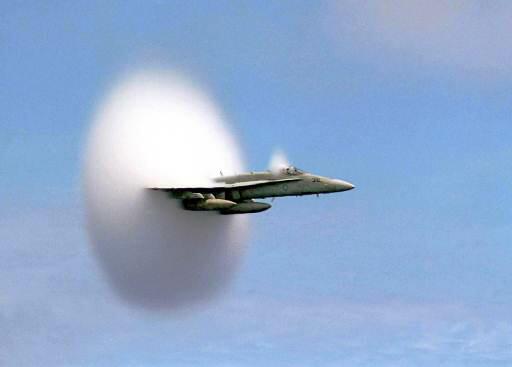
Nevertheless, we never cease to see what we are seeing; we do not notice that there is existentiation and passing away at every moment, because when something passes away, something like it is existentiated at the same moment. We look upon existence, our own for example, as continuous, past-present-future, and yet at every moment the world puts on a "new creation," which veils our consciousness because we do not perceive the incessant renewal. At every *breath* of the "Sign of the Divine Compassion" (*Nafas al-Rahman*) being ceases and then is; we cease to be, then come into being. In reality there is no "then," for there is no interval. The moment of passing away is the moment in which the like is existentiated [...]. For the "Effusion of being" that is the "Sigh of Compassion" flows through the things of the world like the waters of a river and is unceasingly renewed. An eternal hexeity takes on one existential determination after another, or changes places, yet remains what is in the world of Mystery. And all this happens in the instant (*al-an*), a unit of time that is indivisible *in concerto* (though divisible in thought), the atom of temporality which we designate as the "present" (*zaman hadir*, not as the *nunc*, the ideal limit between the past and the future, which is pure negativity), though the senses perceive no interval.
--Henry Corbin, *Alone With the Alone*
Monday, November 20, 2006
Flim Forum
I am publishing some of my serial poem *Devotions* with Flim Forum come February 2007.
Check out the editorial debut of Adam Golaski and Matthew Klane at: http://www.flimforum.blogspot.com
Sunday, November 19, 2006
Zukofsky's Literal Hallucination
"*free*, i.e.
'That thing is said to be FREE which exists by the mere necessity of its own nature and is determined in its actions by itself alone.'[Spinoza's *Ethics*, Part I, Def . 7]
This understanding of the processes of the imagination is conveniently applicable to the unity that Shakespeare's writing attains. Considered as an order of words and of drama, it has, at best, the quality of imagination sufficient in itself; but when the characters--both of words and of people--want 'the idea which cuts off the sufficiency of those things' that make for valid imaginings, they err from the sufficiency implied in the theme of the writing--'Nor hath Love's mind of any judgment taste.' This definition of love as applied to the words and the characters is tragic, not the thoroughness of its presentation. For its projection brings into light the mere necessity of its own nature, which is complete and therefore free. Nor do the failures of Shakespeare's imagination in the writing prove a personal tragedy. It can safely be said of him, whoever he was, with respect to these failures, as Homer said of his minstrel: 'the Muse's darling, but she had given him evil mixed with good: she took away the sight of his eyes, but she gave him the lovely gift of song.'
Comparison with Ovid, previously suggested, may help chart the imaginations of Shakespeare's mind that do not err. Ovid establishes his metamorphoses so that they are not hallucinations. Their dramatic conflicts are resolved into natural counterparts. In the telling, *The Metamorphosis* are true stories, whether Ovid saw the point of believing them or not. Their invention resembles those aspects of Cocteau's film 'Beauty and the Beast' which say that it is more salutary for intelligent beings to see their behavior literally than to let it cower in figurative thought: so that an American child of four, not knowing a word of French, may sit through most of the film before he asks, 'When will the beast become fancy?' Apparently, the story has been told as truthfully as when he first heard it read, and he means, of course, when will the good Beast look as good as he is. This is Ovid's method and not, as may be hastily conjectured, Shakespeare's. In the *Works* the adequate faculty of imagining establishes hallucinations (either sur- or sub-natural counterparts of the dramatic conflicts) so that they are literal only because they are successful."
--from Louis Zukofsky's *Bottom: on Shakespeare*
Subscribe to:
Posts (Atom)