Sunday, April 01, 2007

Peace On A presents Wayne Koestenbaum & Douglas Martin*


Peace On A

presents

Wayne Koestenbaum & Douglas A. Martin

Friday, April 6th 2007 8PM
BYOB & recommended donation: $5

hosted by Thom Donovan at:

166 Avenue A, Apartment #2
New York, NY 10009

about the readers:

Wayne Koestenbaum has published five books of poetry: *Best-Selling Jewish Porn Films*, *Model Homes*, *The Milk of Inquiry*, *Rhapsodies of a Repeat Offender*, and *Ode to Anna Moffo and Other Poems*. He has also published a novel, *Moira Orfei in Aigues-Mortes*, and five books of nonfiction: *Andy Warhol*, *Cleavage*, *Jackie Under My Skin*, *The Queen’s Throat* (a National Book Critics Circle Award finalist), and *Double Talk*. He wrote the libretto for Michael Daugherty’s opera, *Jackie O*. Koestenbaum’s next book, *Hotel Theory*, will be published in May 2007. He is a Distinguished Professor of English at the CUNY Graduate Center, and currently also a Visiting Professor in the painting department of the Yale School of Art.

But I made it far enough through the first act to be struck, when Anna Moffo entered, with a sensation I’ve tried to describe before, and may never adequately name. Her timbre was separate from its surroundings. Her voice wasn’t the canopy, the column, the architrave; gravely self-sufficient, it seemed not a copy of life, but life itself, and, like a breathing property, it entered my system with a vector so naïve, unadulterated, and elemental, that my drab bedroom shifted on its axis.
~ from Wayne Koestenbaum’s *The Queen’s Throat*

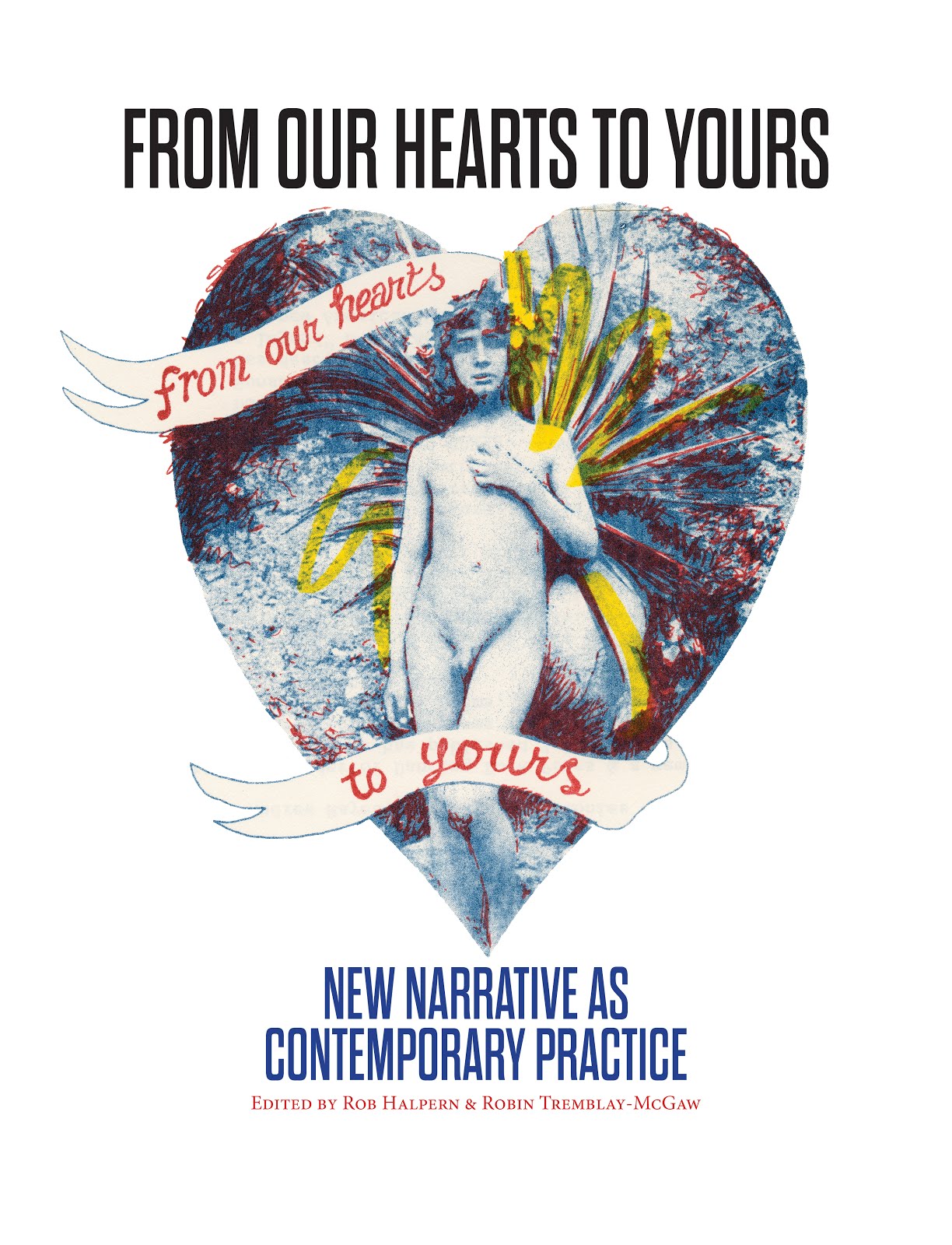
Douglas A. Martin's most recent books are *Branwell*, a novel of the Bronte brother, and a collection of stories, *They Change the Subject*. His first novel, *Outline of My Lover*, was named an International Book of the Year in the Times Literary Supplement and adapted in part by the Forsythe Company for their multimedia dance-theater piece "Kammer/Kammer." He is also the author of two collections of poetry and a co-author of *the haiku year*. In 2008, he will publish *Last Early Poems* and a work of lyric prose, *Your Body Figured*.

To not believe there’s goodness where he sees what he does. How could I be wary of someone he trusts? He likes, has allowed to be his friend. Someone who will be connected. Again and again, in this magazine and picture, this paper and book.

Someone he will let exist in a way I never do.
~ from Douglas A. Martin’s *Outline of My Lover*

Peace On A is an events series devoted to emergent work by writers, artists, performers and scholars. Past presenters at Peace on A include Alan Gilbert, E. Tracy Grinnell, Cathy Park Hong, Paolo Javier, Eléna Rivera, David Levi Strauss, Andrew Levy & Kyle Schlesinger. Scroll down Wild Horses of Fire weblog (whof.blogspot.com) for back advertisements, introductions and reading selections.

“stubborn with the stubbornness of water / that ‘lesser strength which explores / the edges and interstices of power’ / and comes on a different way.”—Daniel Berrigan

*

Intro: Douglas A. Martin

Reading Douglas A. Martin’s *Outline of My Lover* I am reminded of Medieval Theosophies whereof the mystical Truth-seeker prays for creator and created to be united, for the world to once again be whole (or whole for the first time) united as subject both *for* and *in* itself: a Parousia of deepest longings. But perhaps all any one can do, practically—as Martin’s book goes to show—is form an outline for this ultimate relation so as to demarcate the shadows and circumferences of an absolute cosmological garment. To presence this relation by expressing it.

Reading Martin I am also reminded of what I find most compelling about many of David Lynch’s characters. That they veil mysteries and interior states that can only be revealed *as* surface: through what is said , and what bodies say eruptive beyond intention in tics, blushes, tears, stray glances…. Isabella Rosellini’s, “Help me, I’m falling”; more recently, in *Mulholland Drive*, a character’s insistence while pointing at an actress’ headshot: “That’s the girl!” In Lynch’s weird speech-acts truly appear the mysteries of ourselves in relation, and beyond the relational. Mysteries of love born in sexual difference. How does the song go in *Blue Velvet*?: “Sometimes a wind blows / and you and I float in love / and kiss forever in a darkness / and the mysteries of love come clear.”

“Longer before he’s getting back the next time. I start turning over in the crowded bed that is his I‘m making, crowded with my mere presence. Bed becomes his I’m in it.”(101)

Where will interior become exposed? The beloved to the lover turning away where once “he was at home on my back”—not yet parted? How should we fathom it—what’s inside separate from other insides? It is unfathomable. And if it can be located by any means, it will be here in passional and compelled writing—Martin’s profession. Beyond being a fragmentary and autobiographical memoir, what defines *Outline of My Lover* in its form is a passionate grammar marking place-holders and pivots for emotional states, phases, modes. Just as soon as any banality of confession or diarism threatens to take over, there is the writing itself—what is does, lovingly—that recalls the attention. Flips a switch for the mind’s heart, makes the world quicken. More so twists, providing for the active interest. Involving it.

“Life that does not sink back to from where it came, corner crawled back into, curled up when all it seems you will ever know is all you ever did.

If I was caught in a moment, any, I don’t think I would ever come across like him.” (160)

Likely it is this twisting—scored by periods and commas—which afterall defines “New Narrative” since Bruce Boone, Robert Gluck, Dodie Belamy and Dennis Cooper. To place the reader into occurrence by inventing a new language for the heart’s obscurer *stimmung*; by inventing (post-Bataille, Blanchot, Klossowski, Acker) philosophical dialogues by deictical grunts, monosyllabics, affective syntactical shifts, language acting-up and out. Expression is maximal in bare wording; writing closest to how people talk who maintain our interest, are “interesting” as such. All the heart means is in the small words and phrasing of adult teenagers or teenage adults overtuning the most basic presuppositions of what a narrative writing for love would presently entail.

“We sit on a couch in one hotel and he cries with his arm around me. I’ve put on an album from his childhood. Before his life became this dream.
We are holding each other.
He says come over here, and he puts his arm around me. They’re happy tears for him.
In that hotel where he always stays, he is hearing his past mean something to him. The song about what a boy does when his father dies, how he dreams of recapturing that father’s body before it left.” (81)

*

Wayne Koestenbaum: Intro

Nearly a decade ago, when I was writing my senior thesis in college, a friend referred to my work as a devotional scholarship. I have often wondered at the meaning of this term since then, and may be able to define it after Wayne Koestenbaum’s work to date.

To devote: as in to become a devotee, intiated into a discourse or way; to transfer identity, as with an object of affection or worship. To be, finally, inseparable from this object, cathected, believing and clasped to it as such…

How one may go about writing for an object of discourse while not extricating one’s self as a subject is a question that haunts me long since college devotions, earlier ones than that. It is a problem I have hunted in books as various as Walter Benjamin’s *Berlin Childhood*, Lester Bangs’ rock criticism, Susan Howe’s writings on Emily Dickinson and others, films by Chris Marker and Trinh Min Ha, Leslie Scalapino’s recent experiments in autobiography, and Louis Zukofsky *Bottom: on Shakespeare*—for starters. Whatever should we call “I”—“the person,” “the life”—when one would seek after the life of something or someone else, that which should remain anterior to a self’s boundaries, terms, interior.

Returning to these problems in the past months, Wayne Koestenbaum’s 1993 book, *The Queen’s Throat*, has been a joy to read as well as an inexhaustibly generous text to discover in the ways the book insists (and practices) that the life of the poet-scholar should not be uninvolved with whatever it chooses to observe, or put down for the record decisively. At no turn of *The Queen’s Throat* do I sense a withdrawal of the personality, even where the person is frequently transcended, crossed by sublime thresholds:

“But I made it far enough through the first act to be struck, when Anna Moffo entered, with a sensation I’ve tried to describe before, and may never adequately name. Her timbre was separate from its surroundings. Her voice wasn’t the canopy, the column, the architrave; gravely self-sufficient, it seemed not the copy of life but life itself, and, like a breathing property, it entered my system with a vector so naïve, unadulterated, and elemental, so unpolluted by names I would later impose on the experience, that my drab bedroom shifted on its axis.” (10)

For the poet-scholar persists questions of tuning: how the eyes should be with the ear, experience with idea, mind with sense, nervous system with cerebellum, fact with percept, particularity with generality. Investigating music poses a special challenge of tuning inasmuch as music is probably the most elusive and yet immediate of the arts, and thus what most evades a critic’s ability to pin it down, evaluate, and classify adequately.

Somehow, miraculously, in *The Queen’s Throat*, Koestenbaum presences a music culture without ever losing sight (nor his finely tuned ear) in the face of what that culture offers him and others devoted to it: a means of both exploring identity, and maintaining identities in ambivalence; a means of maintaining that ultimate identity of ambivalence nominally called “queer” or “gay”.

Why should voice be the site for this identity claimed, salvaged, unannounced or renounced except for the fact that voice itself insistently projects its vicissitudes and fluctuating appearances (I dare not call them “false”) within any culture. In Koestenbaum’s book it is ultimately voice—that singular chiasmus of substances spiritual and material—that radicalizes how one should locate identity as identity is always discovered in the real and resemblance simultaneously. We lip-synch & ventriloquize; we throw our voices because there are things we love and want to be with inevitably, because we would like to become those objects of our affections and attention in some way. But in assuming voice as such we also identify beyond the thing-in-itself, and so spawn something unimaginable, unprecedented by whatever mutation or evolution. If there is anything I finally take to be essentially “queer” after Koestenbaum’s work it is this very over-determination beyond essence.

“’Vocal crisis’ means a crisis in the voice, but it also means articulate crisis, crisis given voice. Hardly an interruption of diva art, vocal crisis is the diva’s self-lacerating announcement that interruption has been, all along, her subject and method. And in her interruption, I hear the imagined nature of homosexuality as a rip in meaning, in coherence, in cultural systems, in vocal consistency. Homosexuality isn’t intrinsically an interruption; but society has characterized it as a break and a schism, and gay people, who are moulded in the image of crisis and emergency, who are associated with ‘crisis’ (Gay Men’s Health Crisis), may begin to identify with crisis and to hear the interrupted voice as our echo.”(129)

Beyond the incomparable richness and aristocracy of *The Queen’s Throat* as a masterpiece of artful criticism, I recognize Koestenbaum’s work at large to enact a crucial prosodic labor at cultural disaster sites. Where so many books after the ongoing AIDs pandemic have resorted, however understandably, to both narcissistic sentimentality and incommensurable melancholia, Koestenbaum recuperates crisis—creating out of it immanently—towards a future for cultural identities where identity must play between coming-to-be (being “soon-to-be” as the Arthur Russell song would have it) and being erased, silenced—doing the voices at the wings of semblance; between needing to become an interpollatable addresee, and wanting all address to recede into selfless ek-stases beyond persons or communities, singularity and unsubtractable multitude. To produce being in affirmation; to be articulate and heard, however often also overdubbed.

*"Luxury" image courtesy Anton Van Dalen

A Knock Made For the Eyes


a response to Rob Halpern’s “T H E B I R D S K N O W, S O”


The birds make their blood a portal
For stealthier air suddenly appears
Struck that is where a hurt was not

--And is a difference

So sited made and lost as suddenly
In sight we would count every name
In history like prayer-beads not yet

--Having been for themselves

Event contemporary with our weapons
Twice dying elsewhere what the birds
Know so we can’t also undergo them

--“whatever it is we’re not living it…”

--We can’t know so one shows instead…

*

Thus, the manifestation of being is so all-inclusive that, as we observed a short while back, it embraces both Light and Darkness simultaneously: the phenomenon of being manifests both apparition and occultation, visibility and invisibility. It is the total signature, the signature *without absence*. As for the phenomenon of the sacred Book, which is as it were a signature begotten on a signature (the phenomenon of the Book begotten on that of being), it consists of the manifestation of what is exoteric, but at the same time it is the occultation of what is esoteric, an esoteric which, as such, remains hidden. We are no longer dealing with an all-inclusive manifestation without absence, as in the case of the primary manifestation of being; we are dealing with a manifestation which includes an absence, because beneath the revealed appearance (the exoteric) lies the sense which remains concealed (the esoteric), and because you start off by *being absent* from this esoteric, just as it remains absent from you. In other words, the phenomenon of being reveals to us both apparition and occultation; it renders them *present* to us. The phenomenon of the Book reveals occultation to us as an *absence*, a veiling. How, then, is one to go beyond this *absence*, to cross the threshold of the esoteric?
~ from Henry Corbin’s “The Realism and Symbolism of Colours”


Color is therefore put
To the eye like a silenter
Wand assigning names to places
We are not

Signatures *on* real things
An oil liner if only
In eternity or of a sudden
Here in what appears for no one

Those coupling around
A fog their bodies make
Eyes in the least assuming things

Objects this is a grammar for clear
Seeing whenever
The eyes are decided
Color arrives so separate

A perceptive Shabbat
What provisional termini
Are for “us” where at once
Eyes were too removed.

*

An actual “radical closure”
For once the Sandinistas
Were another testing
Ground for terror our best
Export other “byproducts”
Of a culture.

Anyway = “viral” and “sudden”

Anytime labor masks virtual realities for real…

*

Enclosures surety | Give me the back

No name no face | In this particular

Wind inequals cite | What petals fall

From sense unsensing | Sense falls from

Petals beyond | What world reversed

In these similar distances is mutual?


What voices power giving body (directive)?

What interior noontide (inwardly falling)?

*

“a certain motor / helplessness” …as in Chaplin or Keaton or Tati. We are more or less predictable machines (big or small)made infinitely for Grace in the world….

But whereas the inconsequential accidents and mechanical incongruencies of a Tati are comic, however menacing at times (Monsieur Hulot’s car as it nearly runs down pedestrians—a typical Modernist “image of danger” (Benjamin)), this “certain motor helplessness” may pose the moral dilemma of what Paul Virilio terms the “imminence of the accident” (*Pure War*; interview with Sylvere Lotringer) and the need for a widespread dromology (the study of speed and its effects)…

In lieu of the motor helplessness of our “picnoleptic” culture (see Virilio’s *Aesthetics of Disappearance*) in relation to automation and prosthesis, the human is at once liberated from the “natural” limits of its “pre-modern”/”animal” life (and so radically potentialized); and yet at utmost risk insofar as technological reliance makes catastrophe imminent in the form of technological interruption or “melt down” (read: *grande mal*) beyond human containment.

Yet, I take you Rob, as wanting to put “motor helplessness” towards a radical interiority of mental images—the virtuality of an imagination by which the unprecedented may be disclosed, or arise as eventful. And I also want this, as Deleuze may also have wanted or merely observed it in his philosophy:

If this experience of thought essentially (but not exclusively) concerns modern cinema, it is first as a result of the change which affects the image: the image has ceased to be sensory-motor. If Artaud is a forerunner, from a specifically cinematographic perspective, it is because he points to ‘real psychic situations between which trapped thought looks for a subtle way out’, *purely visual situations* whose drama would flow from a knock made for the eyes, drawn out, if we may put it this way, in the very substance of the gaze’. Now this sensory-motor break finds its condition at a higher level and itself comes back to a break in the link between man and world. The sensory-motor break makes man a seer who finds himself struck by something intolerable in the world, and confronted by something unthinkable in thought. Between the two, thought undergoes a strange fossilization, which is as it were its powerlessness to function, to be, its dispossession of itself and the world. For it is not in the name of a better or truer world that thought captures the intolerable in this world, but, on the contrary, it is because this world is intolerable that it can no longer think a world or think itself…
~ from Gilles Deluze’s *Cinema 2*

So a cinema of “mental images” is one of the most radical explorations Deleuze comes to in *Cinema 2*, where to produce such images is truly to invent a cinema for thinking itself—that is, thinking as it is made and arrives through the qualities of sound-images as they interact with mind and sense, reconstituting them… Deleuze calls this place the *Noosphere*.

*

I am thus led to indicate how, in a way completely different from this usage, the sadism which is not completely different from that which existed before Sade appears positively, on the one hand, as an irruption of excremental forces (the excessive violation of modesty, positive algolagnia, the violent excretion of the sexual object coinciding with a powerful or tortured ejaculation, the libidinal interest in cadavers, vomiting, defecation . . . ) –and on the other as a corresponding limitation, a narrow enslavement of everything that is opposed to this irruption. It is only in these concrete conditions that sad social necessity, human dignity, fatherland and family, as well as poetic sentiments, appear without a mask and without any play of light and shadow; it is finally impossible to see in those things anything other than subordinate forces: so many slaves working like cowards to prepare the beautiful blustering eruptions that alone are capable of answering the needs that torment the bowels of most men.
~ Georges Bataille, from “The Use Value of D.A.F. De Sade”

There must be a written form, then, for this waste – opposed the various irresponsibilities of others who shall remain nameless; can we come up with our own “mud extraction plans” (Smithson) for image and text: to deploy words elsewhere for creative reuse/tactical shift? This, an unfulfilled promise of LANGUAGE. An achieved and effective re-use of language material as cultural biproduct/waste…

*

“can we even say
the word ‘grace’?”

We should *act* in Grace.

Grace need not be said—say in its place “unforced” or “blank”; or that there remains a radical lightness during privileged intervals of relation…

*

“…that they / would not return…”

But we must bring
Them to this resurrection
At any number of moments

Not merely one, any
One being for All…

A disjunctive synthesis for the resurrection of all our moments, every number and name recalled.

Friday, March 30, 2007

No Not Nothings


~ after Brenda Iijima's "Rock Facings Many Days"

We are these mirrors to the world fissured birds make us move
Where in sympathetic brain tracts action thought-paths are for firing
Neurons friendlier spring stuttered under the gun again wake
The animal like it should act instead of eyes adjusted to save the Law
From laws justice from our jurisdiction so make caesuras here
Extract plans from I for you inspire spine heart our vertical relation
Conceals movement in motion weeds rapture to no not nothings
Sing of these beams too weeds strewn for virtual v's other wing
Formations substituted as ever the other is with us shuddering.

This is Vicki Hearne's Poem: an Ethology


Someone's got to give a shit about horses
Or develop a better framework
Why can't a framework be made for horses?
Their flesh "rippling" as you say
Who has been inveterately their rider

What golden rings abound in that Open
Ground the animal being coeval
To which ignited birth what Spinoza promised
A socius first for our powers to be so attuned
So as to discover what a body can do
To be for power and to praise

Horses joyful of each element their own
As they gallop they offend no body
No thing do they defeat but a nature
No thing is heir to no air too much
For breath nor silicone exigent to merely be

Giving Back


~ after Théo Angelopoulos

And all that whiteness sheets
We elapse for frames or windows
Open where eyes were not

Encamped burnt to their own
Refuge or flames in wandering

Fly as we like flags to this end

Less nuptial travel is as flame
Afterall to this theme fugal

Keep light occuring one was
Equally to dance not keeping
Time like history so overcast

*

While upon what white
Music leads you back
Blank upon a sea or that

River nearly between
Revolutions refuge lead
You back from the back

Or so close where you were
Called by name nearly
The same insofar as we are

These notes but always an-
Other stream leads us
Back to the flood which shame

Of all to write the disuniting
Under another phrase
Of darkness their bodies

Pursue as if after the gaze
Of fathers more was lost
Than a future music.

*

I also want them flung...

The blank flags of those
People shoreless the sky
Without expression or
Face those white sheets like
Flags suddenly for them-
Selves the any-place-what-
Ever before each wave is
Named by number.

The listener's inner body is illuminated...

The listener's inner body is illuminated, opened: a singer doesn't expose her own throat, she exposes the listener's interior. Her voice enters me, makes me a "me," an interior, by the fact that I have been entered. The singer, through osmosis, passes through the self's porous membrane, and discredits the fiction that bodies are separate, boundaried packages. The singer destroys the division between her body and our own, for her sound enters our system. I am sitting at the Met at Leontyne Price's recital in 1985 and Price's vibrations are *inside my body*, dressing it up with the accoutrements of interiority. Am I listening to Leontyne Price, or am I incorporating her, swallowing her, memorizing her? She becomes part of my brain. And I begin to believe--sheer illusion!-- that she spins out of *my* self, not hers, as Walt Whitman, Ancient-of-Days opera queen, implied when he apostrophized a singer in "Out of the Cradle Endlessly Rocking": "O you singer solitary, singing by yourself, projecting me, / O solitary me listening, never more shall I cease perpetuating you. . . ."

I follow a singer toward her climax, I will it to happen, and feel myself "made" when she attains her note.
~ from Wayne Koestenbaum's *The Queen's Throat*

Thursday, March 29, 2007

Win ch O n Poli tics


~ after J. Goldman

These invisible hands are made
Visible unpointed to or unworked

To relate our reification in reverse
Is mirror case (portmanteau) to *this*

Inversion an obscurer camera for
Which camera obscura once...

Gordon Matta-Clark: A Taxonomy for Total Process*


Seeing Gordon Matta-Clark’s exhibition at the Whitney recently, Matta-Clark’s body of work seems more than ever a perfect example of a total process turned towards the actualities of social, political, economic and spiritual relation. The scope of this process can be located in Matta-Clark’s documentation of his otherwise ephemeral, “dematerialized” works—works that would exist as pure traces of performance actions, architectural deconstructions and communally decisive “business” adventures were they not so deliberately recorded by various means. Matta-Clark no doubt took his lead for an artwork of total process from Robert Smithson and other "earthwork" artists, whose works he first encountered as a student at Cornell University. In the drawing and film works accompanying the performance of “Tree Dance,” where for days Matta-Clark and others inhabited a tree on the Cornell campus through a series of cots, ladders and nets, a total process projects itself as that which may give presence to ephemeral and “anti-material” or "aproductive" works—works that should otherwise not survive but through hearsay as a trace of historical occurrence erased before the fact of its historical existence.

The following is a taxonomy which may be helpful to initially mapping the various moments in a process supplementing Matta-Clark’s a-productive works. I put it forward towards a larger work on Matta-Clark as a case for what I am calling “total process”.

I. “Original” work: the work of an action, performance, social transaction, or architectural action before they should be erased, more or less entirely, from their physically-bound historicities.

II. Reliquary; Metonymically “present” objects, and secondary orders of objects (photos, films, written description / commentary / discursus):
a. First order reliquary:
1. ex., the hair of “Hair Piece”;
2. ex., the corners from the “Splitting” house, and other parts of structures from “Bingo” and “Office Baroque”;
b. Second order reliquary:
1. The newpapers an audience is allowed to take from “Wallspaper”;

III. Film documents:
a. Those films recording an action or performance; after the fact of the film being “shoot” one notices in all film documents the importance of the editing to inflect the meaning of the action, as in the abrupt/accidental edits of “Fresh Kills,” and the camera work of “Splitting,” which would place itself very much in the action, resting within the splitting of the house as the house is being split: that is, as taking place *with* that action.

IV. Photo-documents:
a. Photo. of an ethnographic significance: “Hair-Piece,” “Reality Properties: Fake Estates,” graffiti works;
b. Anarchitecture: photos of sites of “anarchitecture,” where anarchitecture presents sites of social antagonism thru photo. processes—cropping, contrast, etc.
c. Photos with diagrams: in some photos a diagram drawn on the photo will actually highlight a potential intervention in a site, projecting this potential towards an actual intervention—as in “Arc de Triomph For Workers”…
d. Photo as mimetic: as in the case of the photos of pipes along the wall and ceiling of the Holly Solomon Gallery (1974);
e. Photo-collage: where the collage attempts to express a spatial-aural property of actual interventions (as in “Splitting” photo-docs.); or to “deconstruct” a content (as in “Reality Properties” and grafitti works—the horizontal photo.-collages producing disjuncture between each single photo in the series: a form for social antinomy/rupture?).

V. Drawings:
a. Drawings as sketches towards a performance or intervention;
b. Sculptural drawings: where cuts are made in a stack of paper projecting a cut in an (an)architectural object;
c. Drawings made diagramatically on photos: as in “Arc de Triomph”;

VI. Written documents:
a. Legal/business: documentation for “Food” restaurant—including menus, recipes, receipts, in addition to film footage of the restaurant atmosphere, staff, and clientele;
b. Psuedo-ethnographic: the documentation for “Hair,” which ironically reflects anthropological systems of representation: numbering zones of hair; graphing the human head phrenologically; recording “before,” “after” and in between and, as such, subjecting the human-object (—only subject/object turns back upen itself, becoming chiasmic, as Matta-Clark is both subject and object for himself, artist and art-work…)

VII. Correspondence:
a. “Photo-Fry” to Robert Smithson: product of “alchemical” processes;
b. Letters, drawings, and photos to projected “anarchitecturalists,” others…

*composed 3/10/07-present

Wednesday, March 28, 2007

If these tears are us. . .


~ for Daniel Berrigan & Douglas A. Martin

"... and drew my eyes a space
that had seen God, back to His human face?"
~ from Daniel Berrigan's "Lazarus"

"... Description is
Composed of a sight indifferent to the eye."
~ from Wallace Stevens' "Description Without Place"

If these tears are us no longer
Seeing before or after any "God"
So-called the socius ONE otherwise
Might witness that blood bath this
Distance from "us" the undead thus

Occlude no place can't imagine its
Description like a pen before
A draft whose skies should disappear
For movement to occur "for future
Generations" be of our beginning

In ink beyond what sounds string
Between whose souls strummed
To their adjacencies which can't
Hear none sung --that portal tracing
What blood back around the air.

To Tim Peterson


I think I want to turn the body into a voice...

Tuesday, March 27, 2007

America is Hard to Find

"A nightmare is its own legitimation."

...

"Political man is a synonym for believing man."

~ Daniel Berrigan from *America is Hard to Find*