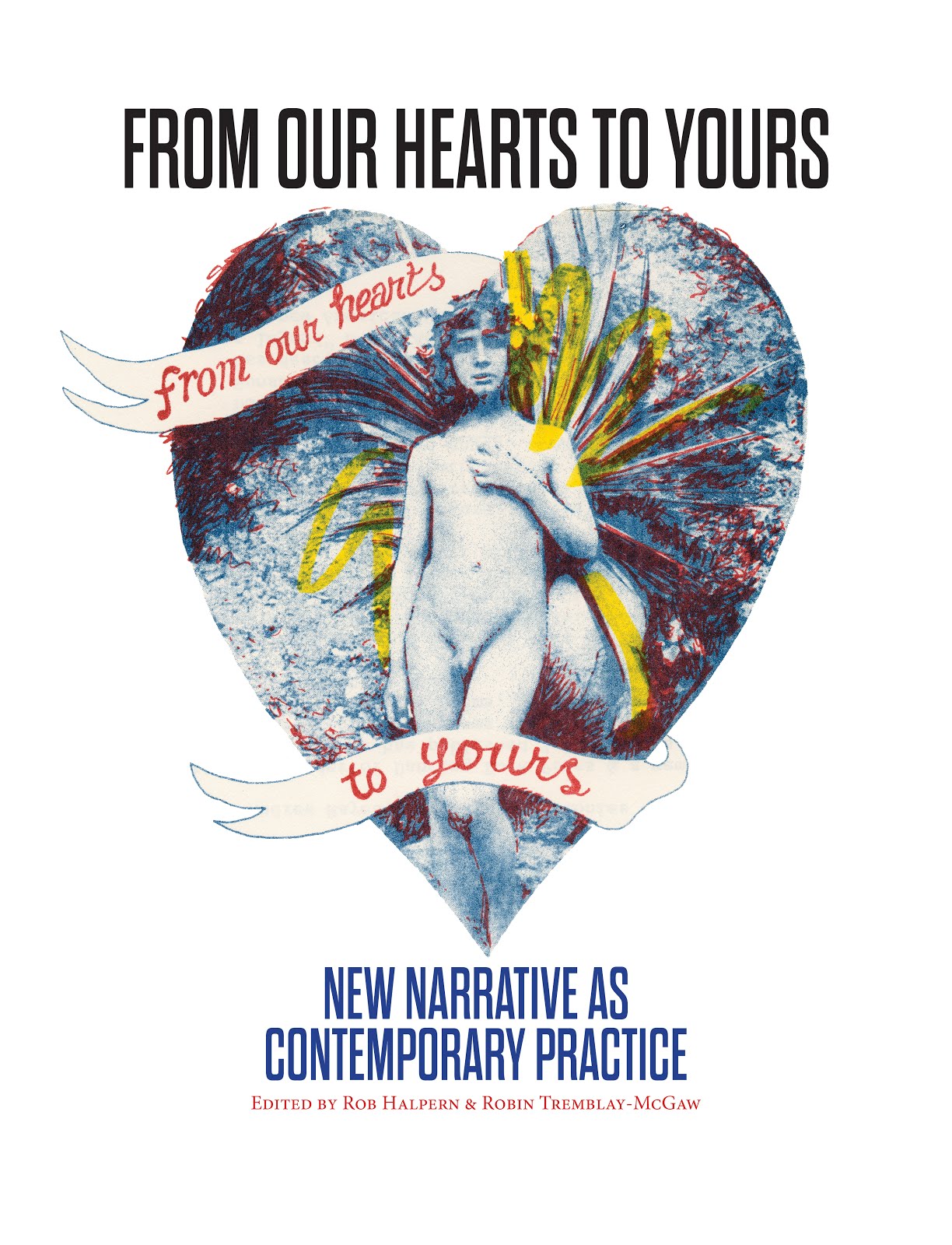
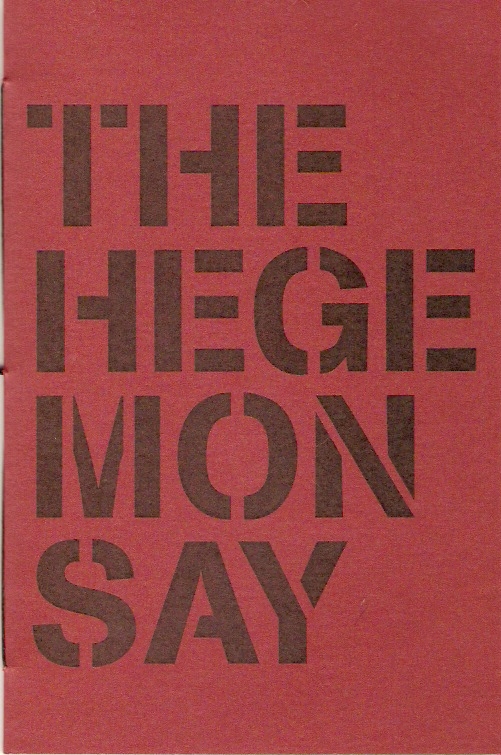
I am publishing some of my serial poem *Devotions* with Flim Forum come February 2007.
Check out the editorial debut of Adam Golaski and Matthew Klane at: http://www.flimforum.blogspot.com
Monday, November 20, 2006


Sunday, November 19, 2006
Zukofsky's Literal Hallucination
"*free*, i.e.
'That thing is said to be FREE which exists by the mere necessity of its own nature and is determined in its actions by itself alone.'[Spinoza's *Ethics*, Part I, Def . 7]
This understanding of the processes of the imagination is conveniently applicable to the unity that Shakespeare's writing attains. Considered as an order of words and of drama, it has, at best, the quality of imagination sufficient in itself; but when the characters--both of words and of people--want 'the idea which cuts off the sufficiency of those things' that make for valid imaginings, they err from the sufficiency implied in the theme of the writing--'Nor hath Love's mind of any judgment taste.' This definition of love as applied to the words and the characters is tragic, not the thoroughness of its presentation. For its projection brings into light the mere necessity of its own nature, which is complete and therefore free. Nor do the failures of Shakespeare's imagination in the writing prove a personal tragedy. It can safely be said of him, whoever he was, with respect to these failures, as Homer said of his minstrel: 'the Muse's darling, but she had given him evil mixed with good: she took away the sight of his eyes, but she gave him the lovely gift of song.'
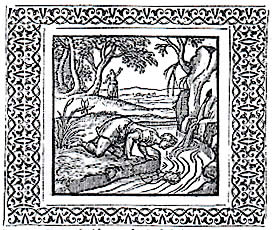
Comparison with Ovid, previously suggested, may help chart the imaginations of Shakespeare's mind that do not err. Ovid establishes his metamorphoses so that they are not hallucinations. Their dramatic conflicts are resolved into natural counterparts. In the telling, *The Metamorphosis* are true stories, whether Ovid saw the point of believing them or not. Their invention resembles those aspects of Cocteau's film 'Beauty and the Beast' which say that it is more salutary for intelligent beings to see their behavior literally than to let it cower in figurative thought: so that an American child of four, not knowing a word of French, may sit through most of the film before he asks, 'When will the beast become fancy?' Apparently, the story has been told as truthfully as when he first heard it read, and he means, of course, when will the good Beast look as good as he is. This is Ovid's method and not, as may be hastily conjectured, Shakespeare's. In the *Works* the adequate faculty of imagining establishes hallucinations (either sur- or sub-natural counterparts of the dramatic conflicts) so that they are literal only because they are successful."
--from Louis Zukofsky's *Bottom: on Shakespeare*
Friday, November 17, 2006
Old Growth
Old Growth
"Trees stay outside one's thought"
--Robert Creeley
A forest grows between us
Metaphors other inadequacies
Trauma bound when a wild
Mole the world was
Blind as such and silent
I touched you there
Then swelled now dimpled
So the forest fell to sleep
And saw its double there
It saw its double there spelling
All the alabaster to come
The feathers of down
The feathers loved ones
Chasing this course
Cleaving this caesura's course
The forest is a tendency
A force of things in history
With a little "h" enactments
And powers if Lear
Could have just ceased gravity
If naturans could have its way
Grace would say farewell
Farewell farewell the forest dispersed
All force the forest solved
In disappearance
We would lay down to bed
And the world and breath would sleep
The breath would forget
Kissing you
Animals laying
down
to bed in dow
n
animals without
history crying re
al
tears no there
is real feeling we h
ave names
the forms of our built a
nd broken
belief O interior recede
risk antecede zip
promise to recover me
So the forest fell to sleep
And saw its double there
It saw its double there sp
elling
All the alabaster to come
The feathers of down
The feather's loved ones chasing
Caesura this course
The forest is a tendency
A force of things in history
With a little "h" enactments and
Powers if Lear could have just
Ceased gravity if naturans
Could have its way
Grace would say farewell
Our bed disappears
But we remain
In metaphors forest confiding
Our coming allegory.
"Trees stay outside one's thought"
--Robert Creeley
A forest grows between us
Metaphors other inadequacies
Trauma bound when a wild
Mole the world was
Blind as such and silent
I touched you there
Then swelled now dimpled
So the forest fell to sleep
And saw its double there
It saw its double there spelling
All the alabaster to come
The feathers of down
The feathers loved ones
Chasing this course
Cleaving this caesura's course
The forest is a tendency
A force of things in history
With a little "h" enactments
And powers if Lear
Could have just ceased gravity
If naturans could have its way
Grace would say farewell
Farewell farewell the forest dispersed
All force the forest solved
In disappearance
We would lay down to bed
And the world and breath would sleep
The breath would forget
Kissing you
Animals laying
down
to bed in dow
n
animals without
history crying re
al
tears no there
is real feeling we h
ave names
the forms of our built a
nd broken
belief O interior recede
risk antecede zip
promise to recover me
So the forest fell to sleep
And saw its double there
It saw its double there sp
elling
All the alabaster to come
The feathers of down
The feather's loved ones chasing
Caesura this course
The forest is a tendency
A force of things in history
With a little "h" enactments and
Powers if Lear could have just
Ceased gravity if naturans
Could have its way
Grace would say farewell
Our bed disappears
But we remain
In metaphors forest confiding
Our coming allegory.
Subscribe to:
Posts (Atom)