Wednesday, September 09, 2009

Paul Thek, Our Contemporary

The micro-management of meat
Under glass mistakes for orifices
Crises the sun where your eyes

Should have been because the dead
Are genderless because no one
Needed to know what's under the hood

Fingerless they can't i.d. you
Underground man hippie fingers
Are like little dicks you make of

Yourself a mask to hide within
Things to hide within the world
Abandoned to it like a tomb.


Some spaces distribute
The body in time was
Wax the body in space
Was a cast unsalvageable
Because no one wants
A masterpiece to be
A crypt of what we will
Have been a difference
Pink makes on your skin.


We cope this risk is an
Answer to the flesh
Anyone's analytic
Of the sublime

Any body's tomb
With whom do you
Identify who will
Not answer to 'me'?

Where bones are laid
To rest who will manage
The dead and those
Who cannot die

I am trying to tell
You something but am
Afraid the power of
Flesh overpowers me

The powers of reliquary
Do not remember me
Every name in history
How do we distribute

Petal pink makes
Malthus blush others
Do the math what you
Encase like head space

Thek the headless
Always our contemporary
Our savage contemporary
Tongue-ring sticks out

From missing prints
Pharaohs abscond
From historical sense
The sense of headlessness

Makes a tomb in the public
Pinko of the real
When fascism flares up
Your art withdraws.


That we are meat
And worship the fact
That God is also meat
A formal feeling comes

We call it a technology
Of the self remember
What we have become
A prayer to blood

A prayer to fake
Blood the mannerist
Sun still winking like
A hole that doesn't

Stink what totality
Doesn't stink of men
Mimics monuments re-
fuses to delay in glass.

The Mobile Archive at Parsons

The Mobile Archive: The Israeli Center for Digital Art, Holon
Tuesday, September 15, 2009 - 6:30-8:00 p.m.
Parsons The New School for Design
Kellen Auditorium, Sheila C. Johnson Design Center
66 Fifth Avenue, New York City
Admission: Free
www.newschool.edu/vlc

In conjunction with the North American debut of the Israeli Center for Digital Art’s Mobile Archive, Art in General and the Vera List Center for Art and Politics co-host a conversation between Galit Eilat, founder of the archive and director of the Israeli Center for Digital Art, and Ramallah-based curator and art historian, Reem Fadda.

Eilat and Fadda consider the role of art as a tool for civil disobedience and passive resistance that affects its surroundings, wielded by individuals during times of social or political distress. Within this context they discuss Liminal Spaces, a long-term project examining the possibility of joint action in light of the ever-growing existential hardship of Palestinians living under Israeli occupation. Video works that were produced during this project will be on view at Art in General as part of the Mobile Archive, a cross-national library of video art.

Galit Eilat is a writer, curator, and the founding director of the Israeli Center for Digital Art, Holon. She is co-editor in chief of Maarav, an online arts and culture magazine, as well as academic advisor of the curatorial program at the Technion Extension, Institute of Technology Israel. She lives and works in Tel Aviv. Recently, she has curated and co-curated exhibitions including: Speed of Light, VideoZone, the Fourth International Video Art Biennial in Israel; Never Looked Better, the Nahum Goldmann Museum of the Jewish Diaspora Tel-Aviv; and Chosen, a collaboration between Wyspa Institute of Art and the Israeli Center for Digital Art. Eilat has written for several books, catalogues, and magazines such as ArtPress, Vector Magazine, Lettre International and more. She has co-edited the books 'Never Looked Better' and the recently published 'Liminal Spaces'. She has participated in numerous panel discussions and given lectures and screening programs at Kuda, Centre Pompidou, Van Abbemuseum, Nova Gallery, and other venues and festivals.

Reem Fadda is a Ramallah-based curator and art historian. Fadda was Director of the Palestinian Association for Contemporary Art (PACA) between 2005-07 and worked as Academic Director to the International Academy of Art – Palestine, which she helped found in 2006, as part of her approach in broadening the perimeters of curatorial experience towards education. She co-curated and been involved in many projects revolving on contemporary topics in the Middle East, especially those pertaining to architecture, space and geopolitics, such as Liminal Spaces 2005-08, Ramallah Syndrome, which is showcased in the Venice Biennial 2009 and Tarjama/Translation currently on view in the Queens Museum of Art. She is the author of "Palestinian Women Artists: The Land = The Body = The Narrative", 2007. She received her MA in Curating from Goldsmiths College, London and was currently awarded the Fulbright Scholarship to pursue her PhD in History of Art and Visual Studies at Cornell University, where her research focus is contemporary aesthetic theory and practice of the Middle East.

About the Mobile Archive exhibition at Art in General
From September 24 to October 17, 2009, Art in General will present the North American debut of the Mobile Archive, an international collection of hundreds of video artworks assembled by the Israeli Center for Digital Art, Holon. The Mobile Archive has been traveling the world since its first stop at the Kunstverein in Hamburg in 2007 and includes artists such as Candice Breitz, Koken Ergun, Guy Ben-Ner, Jumana Emil Abboud, Omer Fast, Ruti Sela, Yoshua Okon, Yael Bartana, and Mark Lewis.

Art in General is the only U.S. venue for the Mobile Archive. The exhibition will be presented in multiple formats: visitors will be able to select and watch any video from the archive in the Project Space; view specially curated screenings by independent curators Regine Basha, Adina Popescu and Chen Tamir; as well as attend daily screenings of work by featured artists from the archive.

Opening Reception Thursday, September 24, 2009 from 6-9 pm
Please check www.artingeneral.org for further information.

Tuesday, September 08, 2009

For Bob Flanagan

We have not yet determined
What a body can do
What death can do

One’s own death indefinitely
Deferred yet certain
Pain becomes the only thing

We can control we have not
Yet determined what the body
Can do the body in pain

Sculpting it surviving despite
Other acts of grace
Drive a nail through your dick

You land on your feet
Pain is a dance with death
Piercing your life your

Lung-filled breasts live
Because you permit
The only mastery left to them.

Free As Air And Water

September 16 - October 27, 2009

Opening reception
Wednesday, September, 16, 7 - 9 pm

Allora & Calzadilla, Amy Balkin, Robert Bordo, The Bruce High Quality Foundation, Ross Cisneros, Amy Franceschini and Free Soil, Andrea Geyer, Hans Haacke, Paul Ramirez Jonas, Runo Lagomarsino, Andrea Polli, Marjetica PotrĨ, Simon Starling, Temporary Services, Oscar Tuazon, Lidwien Van de Ven

Curated by Saskia Bos and Steven Lam

41 Cooper Gallery
The Cooper Union
41 Cooper Square (lower level)
New York, NY 10003-7120

Phone: 212.353.4200
Email: artschool@cooper.edu
www.cooper.edu/art/exhibitions.html

Gallery Hours:
Tuesday - Saturday, 11am - 6pm
Mondays by appointment only


Free as Air and Water Symposium I:
Artistic responses to self-sustainability and climate change
Wednesday, September 16, 5 - 7pm (before the reception)
The Cooper Union, The Great Hall
7 East 7th Street
Amy Balkin, Hans Haacke, Yates McKee, Andrea Polli, Marjetica PotrĨ
Moderated by Doug Ashford

Free as Air and Water Symposium II:
Art in relation to human rights and the freedom of expression
Monday, October 12, 7 - 9pm
The Cooper Union, Frederick P. Rose Auditorium
41 Cooper Square
Doug Ashford, Andrea Geyer and Paul Ramirez Jonas, among others

A catalog will be produced documenting the symposia and exhibition and will be available to purchase after the exhibition. Please check the School of Art website for additional information.
This project was funded in part by generous support from the National Endowment for the Arts, the Robert Lehman Foundation, and Duggal Visual Solutions.

Thursday, September 03, 2009

America's "Weimar moment"

"...So how do we connect the reality of our dismal life-expectancy and health-cost statistics to the hysterical sobbing of people who come to town-hall meetings furious that "the insurance companies won't be able to make a profit"? Much of the epic woe is not about healthcare or public options. It's about roiling resentments that need to be dressed up as something else, the coded mummery of Halloween monsters hybridized into new chimeras of hate. It's about fear that precious resources are being transferred to "alien" others. Fear that the gains of others are ill-gotten, leaving the lonely patriot survivalist as victim, "thrown away," trash. In these fiery monologues, even our president is figured as conspiratorially alien-birthed, from a galaxy far, far away, who's just pretending to be one of "us."

This morning I saw a picture of President Obama dressed as Hitler, complete with little mustache, tacked high on a tree trunk. At first it seemed jaw-droppingly ridiculous, sociopathically paranoid. But if the rule of reversal is what's encoded in that image, all people of good will must worry that what's really at stake for some of our gun-toting, demagogic fellow citizens is nothing less than America's very own Weimar moment."
--Patricia J. Williams, from Reverse Nazism and the War on Universal Healthcare

Wednesday, September 02, 2009

The Coping Subject

I am currently starting a longer essay on Catherine Sullivan's work. Can the argument be made that the subject of contemporary life is one who, more than anything else, copes?

Literally, what the performers in my works are doing is coping. They are coping with instructions and demands, and whether this produces acting or dance, I don’t know. It’s grounded in their response to the task, and their perspective on it.
--Catherine Sullivan

I am interested in how Sullivan's work intersects with biopolitical procedures in the 20th century, and how avant garde experimentalism (Dada/Fluxus/Happenings to present) may both undermine and extend the procedures of biopolitical governance--what Foucault called "Governmentability" and Hannah Arendt cited as "a society of laborers without laboring." Which is to say, a society of managers and the micro-managed rather than lords/serfs, masters/slaves, bourgeoisie/workers, etc.

See also Paolo Virno's discussion of "virtuosity" in A Grammar of the Multitude. Sullivan's performers invert Virno's notion of virtuosity--the pereptual condition of a society lubricated by intellectual labor--by instructing her actors to give virtuosic perfromances of trauma--what becomes expressed as the remnant of a repressive social content. To virtuosically assume these roles would be to "survive" them (in Elias Canetti's sense of this term) or "cope," in the sense of the above quotation from Sullivan.

Sunday, August 30, 2009

MAKEBELIEVE chapbook

I am very pleased to announce that my e-chapbook, Make Believe, is now available as a PDF at Wheelhouse Press's website:

http://www.wheelhousemagazine.com/chapbook.html

Thank you to David Wolach and Gianna D'Emilio for co-designing and hosting the book. Make Believe collects poems that I began writing in the fall/winter of 2006 and did not complete until the offer from Wolach to publish a chap this past spring.

"Make Believe, broken into sections, each of which explores, plays with, and critiques specific filmic tropes and conventions, jumps from these explorations as more-than-ekphrastic-springboards into the oft ignored poetic waters of belief, event, and the material conditions of our epistemological assumptions around what is public and what is private, what is use and what is using, what is other and what is othering. With the deeply thoughtful poetics and politics Donovan is known for, these poems both attack and nurse the body-as-proprioceptive-reactive becoming. And as often the case with Donovan's work, the ear is shaken first."
--David Wolach, Wheelhouse Press editor

Nostalgia is not a groundwork

For this video no face will be

Healed by lines color hovers

For her eyes like a grief of names

Never given so unsalvagable

Did they open to these distances.
--from Make Believe

Saturday, August 29, 2009

Notes for The Hole

Over the past two and a half years I have been composing a manuscript called The Hole (formerly titled "Nonsite Poems"). Now I am trying to write an essay about it, particularly the mode(s) of subjectivity it may be embodying. Here are some notes so far:

"Words like moving dirt to where we/it was not before could be called “development” if it is for profit or a process by which “I” is discovered in relation to we, a relationship by which I and we coappear complicitous with one another.

In moving dirt—like moving word-like bodies or bodies like words because we feel something for them—the whole landscape changes, all the points in space shift as if one could ever draw an accurate map of the multitude—always occurring.

I have wanted the feeling for that moment—when an entire terrain both somatic and psychic and social—seems to slide beneath a reader's feet, no constellation, no conveying but where here is.

This manuscript would present movement —the moving of lines in a lineated, enjambed poem for instance—as a means of discovering what remains of “I” subtracted from social relations, public identities, participation in a community—the nearly total mediation of the subject in contemporary experience. After these processes follows a formal feeling that I is substantiated by loss—the loss implied by all holes but also by movements which will not develop."

Usufruct V

beginning with a phrase by Rob Halpern...

Value sings inside
The dead
and
Sings its heart out

There is no laboring
Here just us human
Animals with heads

For holes the whole
Asshole unquieted
Into spring

Where it burgeons
We were purlieus
Pleading multitude

Bleeding/bleating
We are not The People
Included yet enclosed.

Rachel Zolf's The Tolerance Project

I am happy to be a part of Rachel Zolf's The Tolerance Project, a welcome deterritorialization of the MFA.

"Each poetic trace donated to The Tolerance Project has been assigned its own barcode. Each poem written for the MFA will employ traces from the donated traces. The MFA poems will be restricted to The Tolerance Project archive (which also includes the Office of Institutional Research and the Department of Communications and External Affairs) for their content.

MFA poems written for class will be posted on this blog, along with workshop feedback received. The online public is welcome to add its own feedback in the comments section to the blog. Based on cumulative feedback, the MFA poems will be scrupulously revised toward the creation of The Writing Thesis.

Barcodes for the traces used will appear at the end of each MFA poem post, so that donors can monitor when their trace has been activated. Barcode identities will be revealed at the end of The Tolerance Project, by which time an aspect of each piece of donated poetic DNA will have been happily redeployed."
--Rachel Zolf, on The Tolerance Project

Friday, August 28, 2009

For a remarkable critique of Bourriaud’s Relational Aesthetics

click here:

"In this sense I think we can bridge the gap between Bourriaud’s relational aesthetics and his later book, *Postproduction*. [Nicolas Bourriaud, *Postproduction. Culture as Screenplay: How Art Reprograms the World*. trans. Jeanine Herman (New York: Lukas & Sternberg, 2002)] Are not the key concepts of this book, the *use *of cultural artefacts, from toasting to recycling, cutting, playlisting, do-it-yourselfing, colliding and mashing, etc, not the same modalities as those that are applied to people in relational works? In this sense the micro-utopias that are envisioned are indeed utopian projections that are experienced not relationally, as in real life, with all of its traumatic contingencies and unexpected encounters, but at a meta level that is detached. As in a Tiravanija encounter, we observe ourselves being convivial, as if from the outside. Like ravers on ecstasy what we want is not connection but managed disconnection with the right kind of crowd, the right kind of music, disconnected from ourselves and our cares. Isn’t this an indication not that “art is definitely developing a political project” [RA 16] but rather a sign of dysfunction, a kind of sophisticated micro-political version of Celebration, Florida? Or, to put it more directly, a kind of gated interactionism that is fully complicit with behavioural science despite the fact that the scientists have all gone home?"
--from Marc Leger's "Queer Relational"

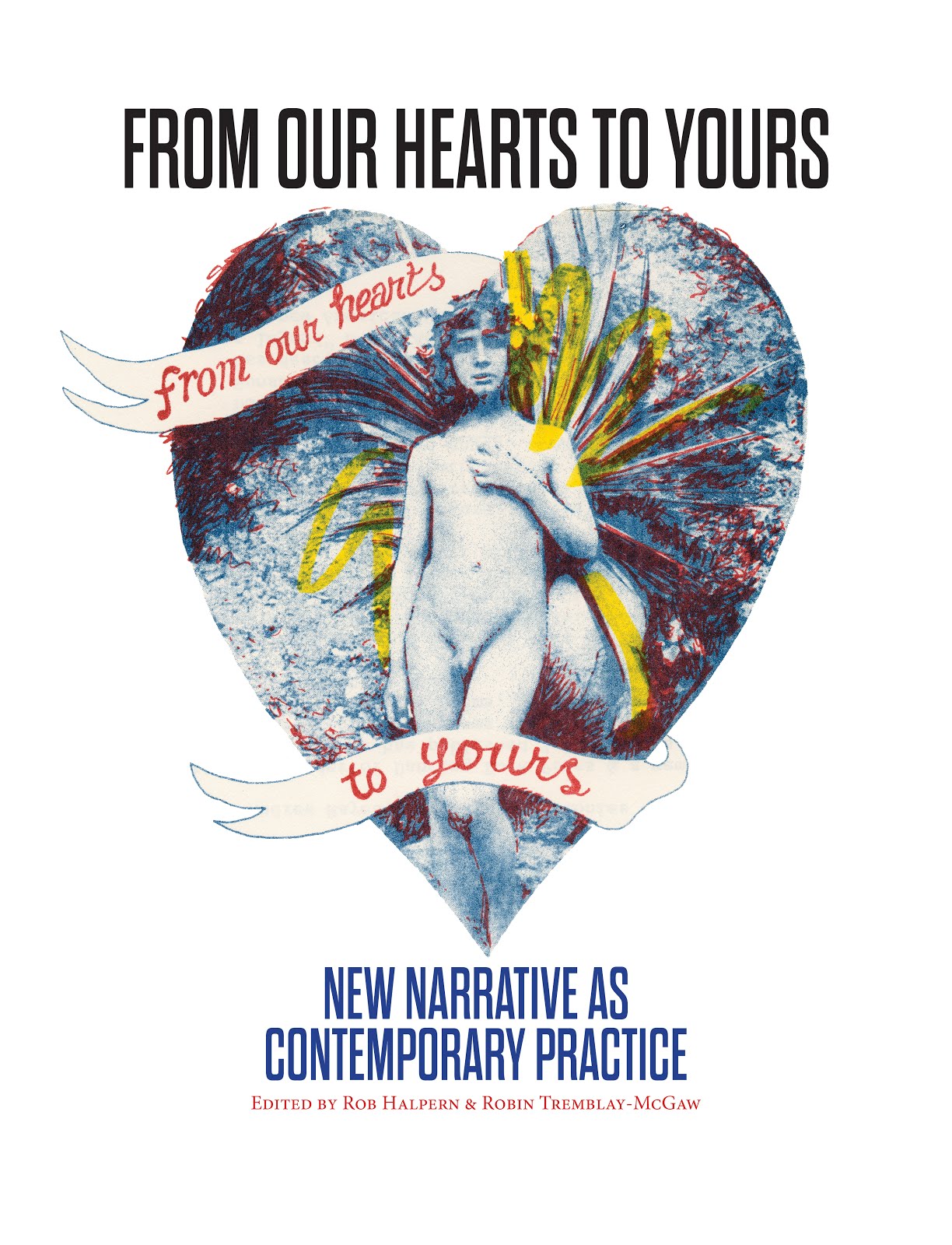
ON Contemporary Practice 1 PDF

For a downloadable version of ON Contemporary Practice 1 link here.

"In the dirt of the line": on Bhanu Kapil's intense autobiography

Here is a sneak peak at an essay I have been composing on Bhanu Kapil for ON Contemporary Practice 2--due out in early October:

To mark such a space Kapil “put[s] [her] knib on the page” (Humanimal, 38) to “let motion wreck the line” (38) producing written “arrhythmias” as “record[s] of travel.” (38) Through an arrhythmic writing—a writing paced by quickened heart rates—Kapil’s own body leaves the traces of its lines of flight through writing. The form of the writing—the sentences which stutter with commas, hyphens, and periods; the syllogistic/constellative movements of the sentences and paragraphs—chart intensities rather than represent where Kapil has ‘been’. Here, form becomes an extension of physical travel in space intermittent with writing as a form of travel—the “crossing of thresholds,” a “flight of intensities” —without moving. Making the body in-transit a site of autobiography (a la Thoreau’s “Walking” or Kerouac’s On the Road), Kapil’s body also extends writing as a means of mourning, where mourning is successfully negotiated through itinerancy. “In the quick, black take of a body’s flight, a body’s eviction or sudden loss of place, the memory of descent functions as a subliminal flash.” (Humanimal, 26) Although travel and motion result in perpetual loss, in Kapil’s work they also accomplish an unforeclosed work of healing.

Usufruct (IV)

Where the sky is not one and
The earth is not one no totality
Locks us into place like the same
Product existing everywhere
Ubiquity of property ubiquity
Of territory does not become
A proper name or pronouns soaked
In blood the blood of soil blood
Of family for the abstract love
Of this family we call nation
A name can fail us in this outside.


Whatever genes have their way
(And they do have their way)
However we grasp essences
(And we can't help grasping)
Other echoes inhabit what
We would call the self seeking
Its mobile edge call it a marsh
For what we would have
Wanted to have been a mirror
Where I can't see my reflection
Staring at me where the tain
Was the case of everything.


A risk worth taking
Not up into the wild
Blue yonder Western move-
ment of all things history
So far as a kind of
Deathwish but what if we
All kept moving the
Boundaries and survived by
These land grabs only
These lands which grab
Us where I patiently waits
To be you there would be
The faintest distance of
Caring there.


For the people who seem
Ungeheuer we are not The
People the multitude blows
Through a thousand holes
In the wind whistles where
A polis isn't those common
Places and place holders
Their bodies were the case
For everything which persists
Like a kind of remnant the
World before the world was
The world what people would
Only seem to be missing.


For Joan Retallack

Needless to say
Everything is changed
By saying

Needless to say every
Letter is a loss
Accumulated on the page

Needless to say
We are scared and yet
Heedless
Complicitous yet porous
To the wishes
Of the world

Needless to say
Everything moves
All things move
And in their separate
Distances
Soundlessly
There is care.

Wheelhouse Magazine #8

Thanks to David Wolach and designers for including my work in the latest issue of Wheelhouse.

Wheelhouse Magazine Issue 8 features work by Zachary Buscher, Joel Chace, Cecilia Chapman, K.R. Copeland, Ryan Daley, Thom Donovan, Emily Kendal Frey & Zachary Schomburg, Garth Graeper, Marja Hagborg, Summer Block Kumar, Dorothee Lang & Jeff Crouch, Travis Macdonald, Karen Neuberg, Deborah Poe, Nicole Steinberg, Edith Sˆdergran, English translation by Christian Ward, John Moore Williams, and Changming Yuan.

Saturday, August 15, 2009

Franco Berardi (Bifo) at 16 Beaver

This Monday we are happy to meet at the Autonomedia warehouse in Williamsburg, Brooklyn (55 South 11th Street 4th Floor, Brooklyn – nearest train JMZ to Marcy Avenue). The meeting is the first chance to publicly discuss the upcoming seminar we have organized with Franco Berardi (Bifo) at 16 Beaver Street (Sept. 3-6). This event is meant to be an occasion to meet people who would like to participate, to distribute some copies of Bifo's most recent book (Precarious Rhapsody) and begin some discussions / formulate questions that we may want to explore in the seminar.

To orient our conversation, we will be considering “Technology and Knowledge in a Universe of Indetermination” which appeared in the journal SubStance several years ago.

To download this week's reading, please visit:

http://www.16beavergroup.org/bifo/berardi.pdf

Usufruct (III)

Where there is no going away
Is a stain on our national debate
The spectacle of how we care
For everyone no one is prepared

By the law since we portends
This wound not a projection
Others win awards while you
Get the prize still writing the

Particulars of that storm in that
Storm history is always near
We seems this distance from it
Events receding into our present

Present a certain not yet me
An unprecedentedness the ele-
ments partake of this nature
This all-too-human nature.


The recognition that history is always near.

The recognition that events recede into the present.


We lay our bodies down
Preenact gestures no speech
Will suffice for

And this was we we first
Were this
Art this tool that
Discovers a use


The recognition that form is never more than an extension of the body.

The recognition that form is never more than an extension of interacting bodies.

The recognition that form is never more than an extension of body bags.


We touch there is
A paradise after all
The last judgment is for the

Living
tunneling
Towards these straight
Gates all translation

Work is a warp
In the dirt of the line

Bearing across our survival.


The recognition that form is never more than an extension of how one feels.

The recognition that form is never more than an extension of how every one feels.


Migration says I when
What it means to say
Is are we still living

Mastery—the primary stressor

We is not we whenever
We see

Like some
Identity formation
Winged
—Rarer sightings
Of being

(repeat insistently)
He was just a Black
Man who liked to
Write sonnets.


We not I becomes
A question for “myself.”


The recognition that forms are not unlike arable land ripe for usufruct--for common use and enjoyment.

The recognition that there are forms we have yet to recognize because the people from whom they arise are not yet
recognized.

The recognition that there are forms we can't imagine yet because the circumstances which would make possible their existence have yet to arise.

The recognition that there are forms we can't imagine yet because the circumstances which would make legible their existence have yet to arrive.

Thursday, August 13, 2009

Usufruct (II)

The yeomanry of the open
Spaces they may subside
Or be usurped then what
Will be what will possess
What once possessed us

Be become so great devourers
Be become so great men
They will pass into another
Ditch not us not another

Night and so deeply enjoy
What we cannot own
Be become so great devourers
Be become so great men.


Not a forest in sight
We should call a forest
A euphemism for being
And property what has
Discovered me that
I am composed

Of waste lands and
What may not be en-
closed the toxins
That one breathes
The media we can’t see.


Your bruise blood
Martyrs the human-animal
There is no our here yet
No we shit except when we hear

What red dominates
And what black
Dominates what blue comes out
To children

Comes home to children

One weeps because their
Bodies were the case
One cries because mediation
Becomes a muddle.

Wednesday, August 12, 2009

Usufruct (I)

Out in that field and you’re not
Even tired of your laboring yet
Under it the sun there is no
Food or suffering there we didn’t

Seem to make and no longer
Telic did we create the many
Mores no one would touch
The wastes the arable earth

They had to create a thousand
Myths to keep us in place
To make a fence around our
Crumbling sensate light.


Of that land grab and when we
Were stranded by property
Men were enlisted go site which
Cataclysm the abandoned earth
Nature could not even dream-up
The dreams of those giants
The plans of those last men.


An instinctual notion of existence
This is where particulars come in

Ask yourself whether language
Will ever be complete all the words

For snow words for feelings we
Haven’t considered metaphor of

The buildings we are bound
To the structure of these things.

ECOPOETICS 6/7

featuring writing by: Emily Abendroth, Fatho Amoy, mIEKAL aND, Kristen Andersen, Karen Leona Anderson, Stan Apps, Robert Ashton, Mei-mei Berssenbrugge, Christine Boileau, Timothy Bradford, Pam Brown, Julieann Brownton, James Bunn, Andrew Burke, Michael Basinski, Charles Bernstein, Bonny Cassidy, Louise Crisp, Justin Clemens, Jon Cone, Jack Collom, Matthew Cooperman, Gregory Day, Tyler Doherty, Thom Donovan, Rachel Blau DuPlessis, Theodore Enslin, John Estes, Kate Fagan, Michael Farrell, Alec Finlay, Lisa Fishman, Benjamin Friedlander, Forrest Gander, Jody Gladding, Liberty Heise, Krista Ingebretson, Jill Jones, Patrick Jones, Michael Kelleher, John Kinsella, Kyhl Lyndgaard, James Koller, JosĆ© MartĆ­, John McBain, Ray Meeks, Graeme Miles, Stuart Mills, Peter Minter, Luis-Aguilar Moreno, Derek Motion, Jesse Nissim, Alistair Noon, Lucas North, Antonio Ochoa, Peter O’Mara, Isabelle Pelissier, Carol Quinn, JosĆ© RabĆ©arivelo, Daniel W. Rasmus, Joan Retallack, Sarah Rosenthal, Linda Russo, Kate Schapira, Andrew Schelling, Jared Schickling, Jonathan Skinner, Gary Snyder, Juliana Spahr, James Stuart, Alf Taylor, AngĆ©lica Tornero, Rodrigo Toscano, Lauren Tyers, Erica Van Horn, Stephen Vincent, Damian Weber, Simon West, Les Wicks

318 pp. $15 PUBLICATION DATE AUGUST 20, 2009 (order here)

BACK ISSUE REPRINTS ARE ALSO AVAILABLE

ECOPOETICS: Poetry, essays, fiction, translation, interviews.

"A (more or less) annual journal dedicated to exploring creative-critical edges between making (with an emphasis on writing) and ecology (the theory and praxis of deliberate earthlings)."
--Ecopoetics editor, Jonathan Skinner